Deep-Sea Revelation: French Mission Uncovers Secrets of a 16th-Century Mediterranean Shipwreck
A groundbreaking French high-tech mission is currently exploring a 16th-century shipwreck resting 2.5 kilometers beneath the Mediterranean Sea. Utilizing advanced remotely operated submarines, researchers are meticulously recovering remarkably preserved ceramic treasures, offering an unprecedented glimpse into maritime trade and daily life from over 400 years ago. This deep-sea archaeological endeavor promises to rewrite chapters of history, revealing intricate details about a pivotal era of global exploration and commerce.
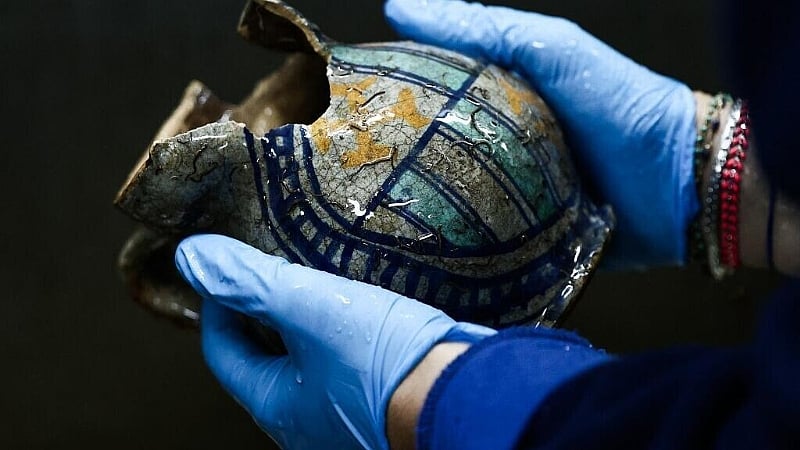
In the silent, crushing depths of the Mediterranean, 2.5 kilometers below the shimmering surface off the southern coast of France, a 16th-century shipwreck is slowly yielding its long-held secrets. This is not a typical archaeological dig; it is a pioneering, high-tech mission, pushing the boundaries of deep-sea exploration and promising to redefine our understanding of a pivotal era in human history. A remotely operated submarine, equipped with an array of sophisticated sensors and delicate manipulators, has embarked on a painstaking journey to uncover and recover artifacts from a vessel lost centuries ago, offering an unprecedented window into the past.
The initial discoveries are nothing short of spectacular: brightly colored ceramic treasures, remarkably preserved by the anoxic conditions of the abyssal plain, are being carefully brought to the surface. These aren't just relics; they are tangible fragments of a bygone world, each piece whispering tales of maritime trade routes, cultural exchange, and the daily lives of those who sailed the treacherous seas of the 16th century. This ambitious undertaking, led by French researchers, is more than just an excavation; it's a testament to human ingenuity and our insatiable desire to connect with our shared heritage, even when it lies buried in the deepest, darkest corners of our oceans.
The Unseen World: Technology Meets History
The challenges of deep-sea archaeology are immense, far surpassing those of land-based or even shallow-water excavations. The extreme pressure, freezing temperatures, and absolute darkness demand specialized equipment and highly skilled operators. The French mission employs state-of-the-art remotely operated vehicles (ROVs) that act as the eyes and hands of the archaeologists on the surface. These ROVs are equipped with high-definition cameras, sonar systems, and robotic arms capable of intricate manipulation, allowing for precise documentation and recovery of fragile artifacts without disturbing the delicate wreck site.
This technological marvel represents a significant leap forward in our ability to access and study deep-sea environments. Historically, such depths were considered beyond reach, preserving shipwrecks and their contents in a time capsule. Now, with advancements in robotics and subsea engineering, these sites are becoming accessible, opening up vast new territories for historical research. The ROVs can operate for extended periods, meticulously mapping the site, identifying anomalies, and carefully extracting objects that would otherwise remain lost forever. The data collected – including 3D models of the wreck and its surroundings, high-resolution imagery, and environmental parameters – provides a holistic view of the site, crucial for understanding the context of the discoveries.
A Glimpse into 16th-Century Maritime Life and Trade
The 16th century was an era of profound global change, marked by intense exploration, burgeoning trade networks, and significant geopolitical shifts. The discovery of this shipwreck offers a unique opportunity to study these dynamics firsthand. The ceramic artifacts recovered so far are particularly illuminating. Their vibrant colors and intricate designs suggest origins from various regions, hinting at the vast reach of 16th-century trade routes across the Mediterranean and beyond. These could include wares from Italy, Spain, North Africa, or even further afield, illustrating the interconnectedness of the world centuries before globalization became a buzzword.
Beyond their aesthetic value, these ceramics can provide invaluable information about the ship's provenance, its cargo, and the daily lives of its crew and passengers. The type of pottery, its manufacturing techniques, and decorative styles are like fingerprints, allowing archaeologists to trace their origins and understand the economic and cultural exchanges of the period. Was this a merchant vessel laden with goods for distant markets? A naval ship carrying supplies? Or perhaps a passenger vessel transporting people and their possessions? Each recovered piece adds another stroke to the historical canvas, helping to paint a clearer picture of this mysterious vessel and its final voyage. The excellent preservation due to the deep, cold, and oxygen-poor environment means that organic materials, often lost in shallower wrecks, might also be present, offering even richer insights into diet, clothing, and shipbuilding techniques.
The Significance of Deep-Sea Preservation
One of the most remarkable aspects of this discovery is the exceptional state of preservation of the artifacts. Unlike shipwrecks in shallower waters, which are often ravaged by currents, marine life, and human activity, deep-sea wrecks benefit from a unique set of environmental conditions. The absence of light, low oxygen levels (anoxia), and stable, cold temperatures create an ideal environment for preservation. Organic materials, such as wood, textiles, and even food remains, which would typically decompose rapidly, can survive for centuries, offering an unparalleled level of detail.
This preservation allows archaeologists to study objects in their original context, providing a more accurate understanding of their function and significance. For instance, if wooden components of the ship are found intact, they can reveal shipbuilding techniques and materials used during the 16th century. Textile fragments could offer insights into clothing and trade goods. Even the contents of storage jars could provide data on dietary habits or traded commodities. The deep sea acts as a natural time capsule, safeguarding historical evidence in a way that few other environments can. This particular site, therefore, holds the potential to be a veritable treasure trove of historical and scientific data, far beyond just the ceramic finds.
Rewriting History: Implications for Future Research
The findings from this French high-tech mission have profound implications for historical and archaeological research. Firstly, they demonstrate the immense potential of deep-sea archaeology to uncover previously unknown aspects of human history. As technology continues to advance, more and more of the ocean's floor will become accessible, promising a continuous stream of new discoveries that could challenge existing historical narratives.
Secondly, the detailed analysis of the recovered artifacts and the wreck itself will provide invaluable data for understanding 16th-century maritime technology, trade routes, and cultural interactions. This could lead to a re-evaluation of economic models, social structures, and political influences of the period. For example, if the ship's origin or cargo reveals unexpected trade links, it could necessitate a revision of our understanding of global commerce during the Age of Exploration.
Finally, this mission serves as a powerful reminder of the fragility of our underwater heritage and the importance of its careful study and preservation. Each artifact recovered is a piece of a global puzzle, contributing to a more complete and nuanced understanding of our shared past. As the mission continues, the world watches with anticipation, eager to see what further secrets this silent sentinel of the deep will reveal, promising to enrich our collective knowledge for generations to come. The delicate dance between human curiosity and technological prowess continues, illuminating the forgotten chapters of our maritime legacy.
Stay Informed
Get the world's most important stories delivered to your inbox.
No spam, unsubscribe anytime.
Comments
No comments yet. Be the first to share your thoughts!