Diving into the Future: ACHTEL 3Deep and Apple Vision Pro Unlock Underwater Immersive Worlds
The advent of Apple Vision Pro has ignited a demand for ultra-high-fidelity 180° stereoscopic immersive video, a challenge amplified exponentially underwater. Historically deemed an optical impossibility, capturing such content beneath the waves is now a reality thanks to the revolutionary ACHTEL 3Deep Immersive housing. This groundbreaking technology promises to transform marine exploration, education, and entertainment, offering unparalleled access to the ocean's hidden wonders.
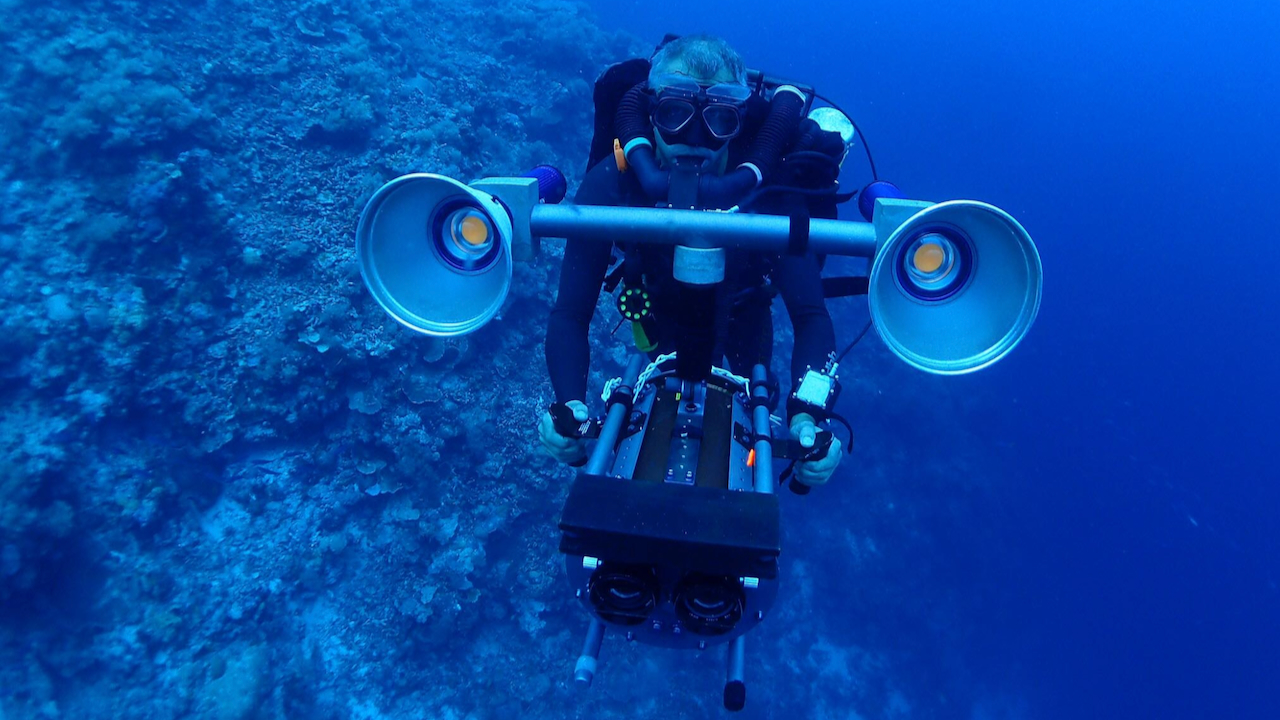
The ocean, a realm of unparalleled mystery and beauty, has long resisted our attempts to fully capture its immersive grandeur. While terrestrial virtual reality and augmented reality experiences have steadily advanced, the underwater domain remained a formidable frontier for high-fidelity stereoscopic video. The very physics of light and water conspired against us, making the dream of truly immersive underwater content seem like an optical impossibility. That is, until now. The recent launch of Apple Vision Pro, with its promise of spatial computing and a hunger for premium 180° stereoscopic video, has not only highlighted this void but also accelerated the innovation needed to fill it. Enter the ACHTEL 3Deep Immersive, a revolutionary underwater housing that is single-handedly rewriting the rules of marine cinematography and opening up an entirely new dimension of experiential content.
The Unseen Challenge: Why Underwater Immersive Video Was So Hard
For decades, capturing high-quality video underwater has been a specialized art form, requiring robust housings, powerful lights, and skilled operators. However, the leap from standard 2D or even flat 3D video to truly immersive 180° stereoscopic content presented a unique set of hurdles. The primary antagonist is water itself. Light behaves differently underwater; it refracts, absorbs, and scatters, leading to color shifts, reduced clarity, and distortion. These issues are compounded when attempting to capture a wide field of view for stereoscopic purposes, where precise alignment of two separate camera lenses is paramount for creating a convincing sense of depth. Traditional underwater optics often struggle with maintaining image quality across such a wide angle, leading to chromatic aberrations, soft edges, and a general lack of the crispness required for an immersive experience.
Moreover, the sheer volume of data required for high-fidelity 180° stereoscopic video is immense. Capturing this data with sufficient resolution and frame rate, while simultaneously managing the technical complexities of an underwater environment – pressure, temperature, salinity, and limited communication – pushed existing technology to its limits. The goal was not just to see underwater, but to feel like you were there, a feat that demanded a radical rethinking of camera housing design and optical engineering.
ACHTEL 3Deep: A Paradigm Shift in Underwater Optics
The ACHTEL 3Deep Immersive housing represents a monumental leap forward, specifically engineered to meet the exacting demands of Apple Vision Pro and other high-end immersive platforms. Its core innovation lies in its bespoke optical design, which meticulously corrects for the distortions inherent in underwater wide-angle capture. Unlike conventional flat or dome ports that introduce various optical compromises, the 3Deep system employs a sophisticated, multi-element optical system that effectively negates the refractive index differences between water and air. This results in incredibly sharp, distortion-free images across the entire 180° field of view, maintaining perfect stereoscopic alignment.
Key features that set the ACHTEL 3Deep apart include: * Precision Optics: Custom-designed lenses and ports that deliver unparalleled clarity and color accuracy, even at extreme wide angles. * Robust Engineering: Built to withstand the immense pressures of deep-sea environments, ensuring reliability and durability. * Integrated Solutions: Designed to house high-end cinema cameras, often paired with specialized sensors, to capture the necessary resolution and dynamic range. * Streamlined Workflow: While complex internally, the system aims to simplify the capture process for filmmakers, allowing them to focus on storytelling rather than fighting optical limitations.
This technology isn't just an incremental improvement; it's a fundamental re-engineering of how we interact with and record the underwater world. It transforms what was once a technical impossibility into a tangible reality, opening doors for filmmakers, scientists, and explorers alike.
Implications for Exploration, Education, and Entertainment
The advent of the ACHTEL 3Deep, coupled with the immersive power of devices like the Apple Vision Pro, has profound implications across multiple sectors:
* Marine Science and Conservation: Researchers can now conduct virtual expeditions into delicate coral reefs, deep-sea trenches, or remote marine ecosystems without physical intrusion. This allows for detailed observation, monitoring, and educational outreach on an unprecedented scale. Imagine scientists worldwide collaboratively studying a newly discovered species in a virtual, stereoscopic environment, or conservationists showcasing the devastating effects of climate change with visceral impact. * Education and Tourism: Schools can offer virtual field trips to the Great Barrier Reef or the Titanic wreck, providing students with experiences previously reserved for elite divers. The tourism industry can create breathtaking virtual tours, allowing potential travelers to 'try before they buy' or offering accessible experiences for those unable to dive physically. This democratizes access to the ocean's wonders. * Filmmaking and Entertainment: Documentaries will reach new heights of immersion, placing viewers directly into the heart of marine life dramas. Gaming and interactive experiences can leverage real-world footage, blurring the lines between reality and simulation. The storytelling potential is limitless, moving beyond passive viewing to active participation in underwater narratives. * Military and Industrial Applications: Training for underwater operations, inspection of subsea infrastructure, and remote monitoring can all benefit from high-fidelity immersive data, improving safety and efficiency.
The ability to capture and deliver such realistic underwater experiences will foster a deeper connection between humanity and the ocean, potentially inspiring a new generation of marine advocates and scientists. According to a recent survey by the Pew Research Center, public engagement with environmental issues significantly increases when individuals feel a personal connection to the subject matter. Immersive content provides that connection.
The Road Ahead: Challenges and Opportunities
While the ACHTEL 3Deep has solved a critical optical puzzle, the journey towards widespread underwater immersive content is still unfolding. Challenges remain, including the significant cost of such specialized equipment, the expertise required to operate it, and the logistical complexities of deploying high-end cinema cameras underwater. Data management and post-production workflows for 180° stereoscopic content are also more demanding than traditional formats.
However, the opportunities far outweigh these challenges. As the technology matures and becomes more accessible, we can anticipate a surge in creative content. We might see: * Democratization of Tools: Miniaturization and cost reduction will eventually bring similar capabilities to a broader range of users. * AI-Enhanced Workflows: Artificial intelligence could assist in correcting minor optical imperfections, optimizing data compression, and even generating synthetic elements to enhance realism. * Global Collaboration: Scientists and filmmakers from different continents could collaborate on virtual underwater expeditions in real-time, sharing data and insights in an immersive environment.
The convergence of advanced optics, powerful computing platforms like Apple Vision Pro, and a growing global appetite for immersive experiences is creating a fertile ground for innovation. The ACHTEL 3Deep is not just a piece of equipment; it's a key that unlocks previously inaccessible visual narratives, inviting us to plunge into the depths and experience the ocean's majesty as never before. The future of underwater exploration and storytelling is here, and it is profoundly immersive.
Stay Informed
Get the world's most important stories delivered to your inbox.
No spam, unsubscribe anytime.
Comments
No comments yet. Be the first to share your thoughts!