Elon Musk's Bold Vision: AI to Render Retirement Savings 'Irrelevant' in a World of Abundance
Elon Musk has once again challenged conventional wisdom, suggesting that the advent of advanced AI and robotics will create a world of such abundance that traditional retirement savings will become obsolete. While acknowledging his optimistic stance, the tech mogul argues against stressing over building a nest egg, predicting a 'supersonic tsunami' of technological progress that will eliminate scarcity. This perspective sharply contrasts with established financial advice, sparking a global debate on the future of work, wealth, and human purpose in an AI-driven era.
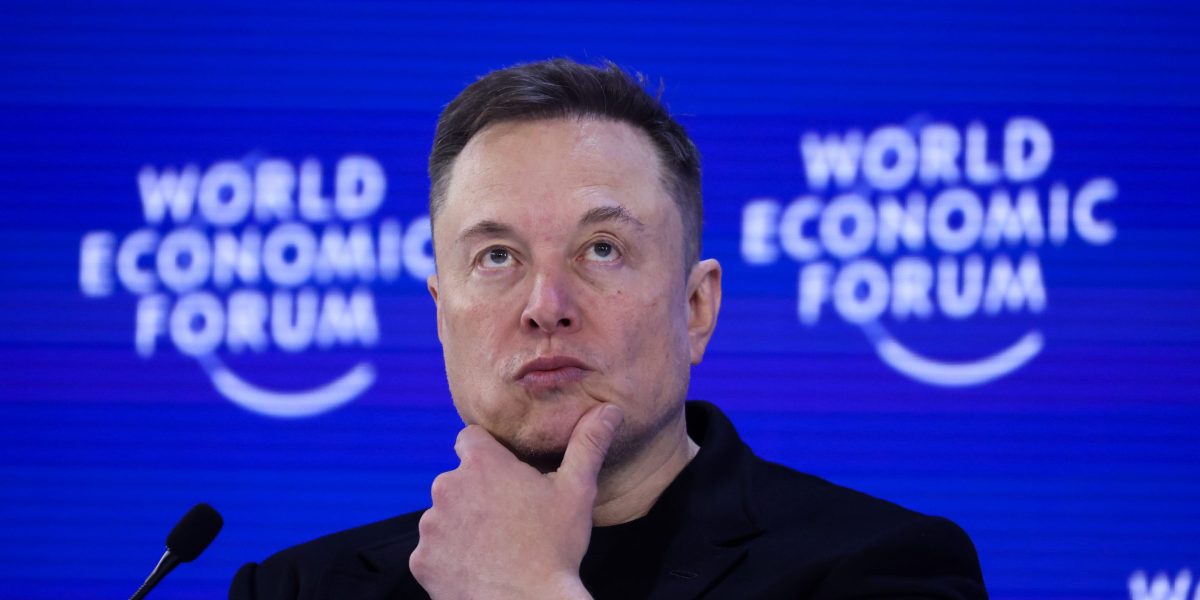
In a world increasingly grappling with economic uncertainty, inflation, and the ever-present pressure to secure one's financial future, a statement from one of the most influential figures of our time has sent ripples across the globe. Elon Musk, the visionary CEO behind Tesla, SpaceX, and X, has put forth a provocative assertion: saving for retirement, as we know it, will soon be rendered irrelevant. His reasoning? An impending 'supersonic tsunami' of artificial intelligence and robotics, poised to usher in an era of unprecedented abundance, effectively eliminating scarcity.
This declaration, while characteristic of Musk's often audacious predictions, challenges the very bedrock of modern financial planning. For generations, the mantra of diligent saving, prudent investment, and the careful cultivation of a 'nest egg' has been the cornerstone of preparing for one's golden years. Yet, Musk, ever the disruptor, suggests that this age-old wisdom is about to be swept away by the relentless tide of technological progress. While admitting he's "more optimistic" than most, his message is clear: don't fret over distant financial futures, for AI will take care of it.
The Dawn of Abundance: Musk's AI Utopia
Musk's vision hinges on the transformative power of advanced AI. He posits that the rapid evolution of artificial intelligence, coupled with sophisticated robotics, will lead to a future where goods and services are produced with such efficiency and at such scale that their cost approaches zero. Imagine a world where basic necessities – food, shelter, energy, healthcare – are virtually free, and even luxury items become widely accessible. In such a paradigm, the traditional economic models built on scarcity and labor-for-wage would crumble, giving way to an economy of super-abundance.
This isn't merely about automation replacing human jobs; it's about a fundamental shift in the very nature of economic value. If AI can design, produce, and distribute everything society needs with minimal human intervention, the need for individuals to accumulate vast sums of capital for their later years diminishes significantly. The concept of a 'retirement age' itself might become an anachronism, as the necessity of working for survival fades. Musk's narrative paints a picture of a post-scarcity society, where human ingenuity is freed from the shackles of economic anxiety, redirected towards creative pursuits, exploration, and self-actualization.
Challenging Conventional Wisdom: A Financial Heresy?
Musk's pronouncement stands in stark contrast to the unanimous advice of financial professionals worldwide. For decades, institutions like the World Bank, the International Monetary Fund, and countless financial advisors have emphasized the critical importance of long-term savings, diversification, and early planning for retirement. Statistics consistently show that a significant portion of the global population struggles with insufficient retirement funds, leading to widespread concern about future elder care and economic stability.
For instance, a recent survey by the Federal Reserve indicated that 37% of non-retired adults feel their retirement savings are not on track. The average American household, according to the Economic Policy Institute, has a median retirement savings of just $87,000, far below what's needed for a comfortable post-work life. These figures underscore the very real and pressing challenge of retirement planning that millions face. To suggest that these concerns will simply vanish due to AI is, for many, not just optimistic but potentially reckless advice, especially for those who lack the financial cushion to weather unforeseen economic shifts.
Financial experts argue that while AI will undoubtedly reshape industries and job markets, the transition will be complex and potentially fraught with challenges. Issues such as wealth distribution, the retraining of a displaced workforce, and the ethical implications of autonomous systems are just a few of the hurdles that need to be addressed long before a true post-scarcity economy can materialize. Moreover, the timeline for such a radical transformation remains highly speculative, making it imprudent to abandon established financial strategies based on future predictions.
The Socio-Economic Implications: Beyond the Nest Egg
If Musk's vision were to materialize, the implications would extend far beyond individual retirement accounts. The very fabric of society, built on principles of labor, reward, and economic competition, would undergo a profound metamorphosis. Consider the following potential shifts:
* Universal Basic Income (UBI): A post-scarcity world would likely necessitate a robust UBI system to ensure everyone's basic needs are met, decoupling income from work. * Redefinition of Work: Human labor would shift from necessity to passion, focusing on creative, social, and exploratory endeavors that AI cannot replicate. * Geopolitical Power Dynamics: Nations with advanced AI capabilities could gain unprecedented economic and strategic advantages, potentially exacerbating existing global inequalities. * Existential Questions: With the struggle for survival largely removed, humanity would confront deeper questions about purpose, meaning, and the nature of happiness.
However, the path to this future is fraught with peril. The 'supersonic tsunami' could also bring about widespread job displacement, social unrest, and an unprecedented concentration of power in the hands of those who control the AI. The ethical frameworks, regulatory bodies, and societal safety nets required to navigate such a transition are currently nascent at best. The debate isn't just about whether AI can create abundance, but how humanity will manage that abundance and its disruptive consequences.
A Forward-Looking Perspective: Navigating the AI Frontier
Elon Musk's statements, while controversial, serve as a powerful catalyst for a much-needed global conversation. They force us to confront not just the immediate challenges of AI integration but also its ultimate potential to reshape human civilization. While it would be premature and risky to abandon traditional financial planning based on these long-term predictions, it is equally short-sighted to ignore the profound implications of rapidly advancing AI.
For individuals, the prudent approach remains a balance: continue to plan for your financial future with diligence, but also stay informed and adaptable to the evolving technological landscape. Invest in skills that are resilient to automation, cultivate critical thinking, and engage in the societal discourse surrounding AI's development and deployment. For policymakers and economists, the challenge is to proactively design frameworks that can harness AI's potential for abundance while mitigating its risks, ensuring a just and equitable transition. The future may indeed hold a world of abundance, but reaching it safely and fairly will require foresight, collaboration, and a willingness to rethink fundamental societal structures. Musk's 'supersonic tsunami' is coming; whether it brings salvation or chaos depends on how we prepare for its arrival.
Stay Informed
Get the world's most important stories delivered to your inbox.
No spam, unsubscribe anytime.
Comments
No comments yet. Be the first to share your thoughts!