Escalating Tensions: Second French Peacekeeper Dies in Lebanon Ambush Amidst Regional Volatility
The death of a second French peacekeeper in Lebanon following a weekend ambush, allegedly by Hezbollah, has ignited fears of escalating regional instability. This incident marks a grim milestone, raising urgent questions about the safety of UN forces and the fragile peace in the Middle East. As France mourns its fallen soldiers, the international community watches closely, concerned about the potential for broader conflict in an already volatile region.
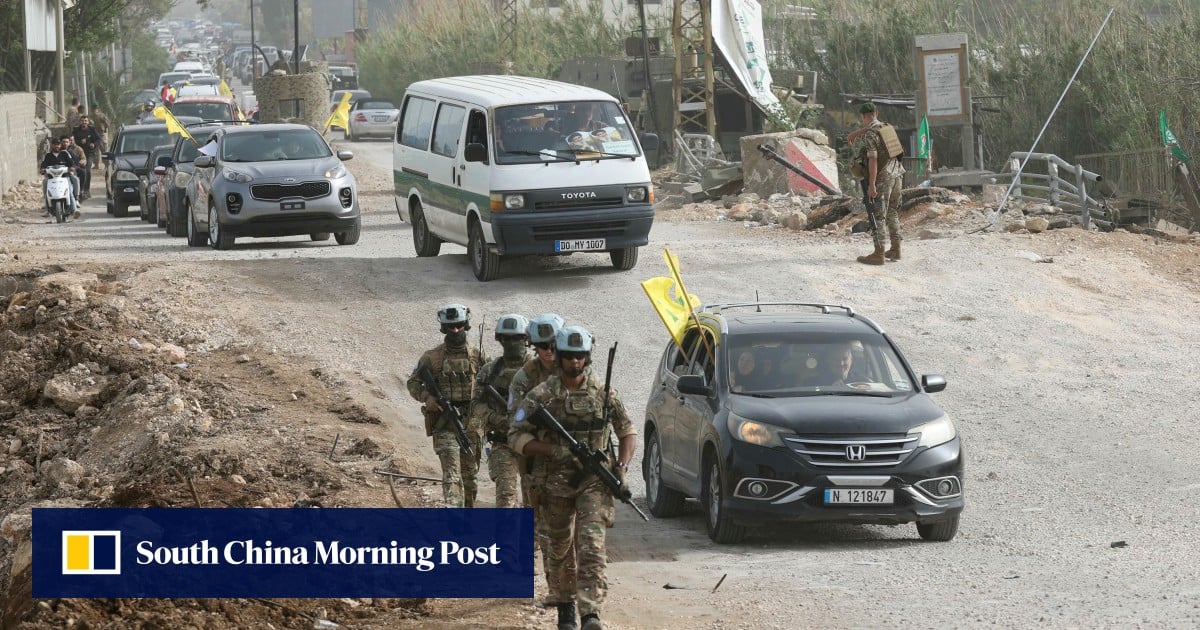
The fragile peace in Lebanon, long a crucible of regional tensions, has been shattered once again by a deadly ambush targeting United Nations peacekeepers. On Wednesday, the French Ministry of Armed Forces confirmed the tragic death of a second French soldier, identified as Anicet Girardin, succumbing to wounds sustained during a weekend attack. This incident, which President Emmanuel Macron's office has attributed to Hezbollah, follows the immediate death of Staff Sergeant Florian Montorio on Saturday, bringing the toll to two French peacekeepers killed and several others wounded.
The ambush, which occurred in the volatile southern region of Lebanon, has sent shockwaves through international diplomatic circles and underscored the perilous environment in which UNIFIL (United Nations Interim Force in Lebanon) operates. Girardin and Montorio were part of a contingent dedicated to maintaining stability along the Blue Line, the demarcation line between Lebanon and Israel. Their deaths are not merely a statistic; they represent a significant escalation in the risks faced by international forces and highlight the deeply entrenched complexities of the Lebanese political and security landscape.
The Anatomy of an Ambush: A Dangerous Precedent
The details emerging from the attack paint a grim picture. The peacekeepers' convoy was reportedly ambushed with small arms fire and possibly improvised explosive devices, a tactic often employed by non-state actors in the region. While specific attribution to Hezbollah is a serious allegation, it aligns with the group's significant operational presence and influence in southern Lebanon. Hezbollah, a powerful Shiite political party and militant group backed by Iran, has long been a dominant force in the area, often operating with a degree of autonomy that challenges the authority of the Lebanese state.
This is not the first time UNIFIL forces have come under attack, but the direct targeting and lethality of this particular incident are deeply concerning. The UNIFIL mandate, established in 1978 and reinforced after the 2006 Israel-Hezbollah war, is to monitor the cessation of hostilities, assist the Lebanese armed forces, and ensure humanitarian access. Attacks on peacekeepers undermine this critical mission and threaten to destabilize an already delicate balance. The international community has unequivocally condemned the attack, with calls for a thorough investigation and accountability for those responsible. However, the intricate web of local and regional actors often makes such accountability elusive.
Lebanon's Precarious Position: A Nation on the Brink
Lebanon finds itself in an increasingly precarious position, caught between a crippling economic crisis, profound political paralysis, and the ever-present shadow of regional conflicts. The country's economy has been in freefall for years, with hyperinflation, widespread poverty, and a collapse of public services. This internal instability creates fertile ground for external interference and exacerbates sectarian divisions. The presence of powerful non-state actors like Hezbollah further complicates governance, often leading to a state within a state.
The political vacuum at the highest levels, with a prolonged inability to form a fully functional government and elect a president, means that critical decisions are delayed, and reforms are stalled. This lack of effective national governance leaves the country vulnerable to external pressures and makes it difficult to assert state control over all its territories, particularly in the south where Hezbollah's influence is paramount. The deaths of the French peacekeepers serve as a stark reminder of the consequences of this systemic weakness, where the state's inability to project its authority creates security gaps that can be exploited by militant groups.
France's Role and the Broader Geopolitical Implications
France has a long and complex historical relationship with Lebanon, dating back to its mandate period. It remains a significant international partner and a leading contributor to UNIFIL, reflecting its enduring commitment to Lebanese sovereignty and stability. President Macron's swift condemnation and direct attribution of blame to Hezbollah underscore the gravity with which Paris views this incident. For France, the loss of two soldiers is a profound blow, and it will undoubtedly prompt a reassessment of its engagement and the security protocols for its forces in the region.
Beyond France, the incident carries broader geopolitical implications. It occurs at a time when the Middle East is already grappling with heightened tensions, particularly in the wake of the ongoing conflict in Gaza and the Red Sea. Any escalation in Lebanon could easily ignite a wider regional conflagration, drawing in Israel, Iran, and other international players. The stability of the Blue Line is crucial for preventing a full-scale conflict between Israel and Hezbollah, a scenario that would have devastating consequences for the entire region and potentially beyond. The targeting of UN peacekeepers, who are meant to be neutral arbiters, is a dangerous precedent that could undermine the very mechanisms designed to prevent such conflicts.
The Future of UNIFIL and Regional Stability
The deaths of Anicet Girardin and Florian Montorio force a critical examination of the future of UNIFIL. While the mission remains vital, its effectiveness is intrinsically linked to the cooperation of all parties on the ground and the political will of the Lebanese government to assert its authority. If UNIFIL forces are perceived as vulnerable or unable to operate safely, their ability to fulfill their mandate will be severely compromised. There will be increased pressure from contributing nations to enhance security measures, review rules of engagement, and potentially reconsider the scope of the mission.
The path forward for Lebanon and the wider region remains fraught with challenges. Addressing the root causes of instability – including economic despair, political corruption, and the proliferation of armed groups – is paramount. For the international community, this incident serves as a stark reminder that peace in Lebanon is not merely a local issue but a cornerstone of regional security. The memory of the fallen peacekeepers must serve as a catalyst for renewed diplomatic efforts, stronger international cooperation, and a concerted push towards a sustainable resolution that respects Lebanese sovereignty and ensures the safety of those dedicated to maintaining peace.
The tragic loss of these two French soldiers underscores the immense sacrifices made by peacekeepers globally and highlights the urgent need for a more robust and unified approach to conflict resolution in the Middle East. Without genuine commitment from all stakeholders, the cycle of violence and instability will continue, threatening to engulf an already beleaguered region in further despair.
Stay Informed
Get the world's most important stories delivered to your inbox.
No spam, unsubscribe anytime.
Comments
No comments yet. Be the first to share your thoughts!