Far-Right Mobilization: Thousands March in London Protesting 'Erosion of British Identity'
Tens of thousands converged on central London for the "Unite the Kingdom" march, organized by far-right activist Tommy Robinson. This significant demonstration, estimated at 60,000 participants, represents one of Britain's largest right-wing mobilizations in recent years. Protesters voiced concerns over what they perceive as the erosion of British identity, highlighting deep societal divisions and rising nationalist sentiments across the UK.
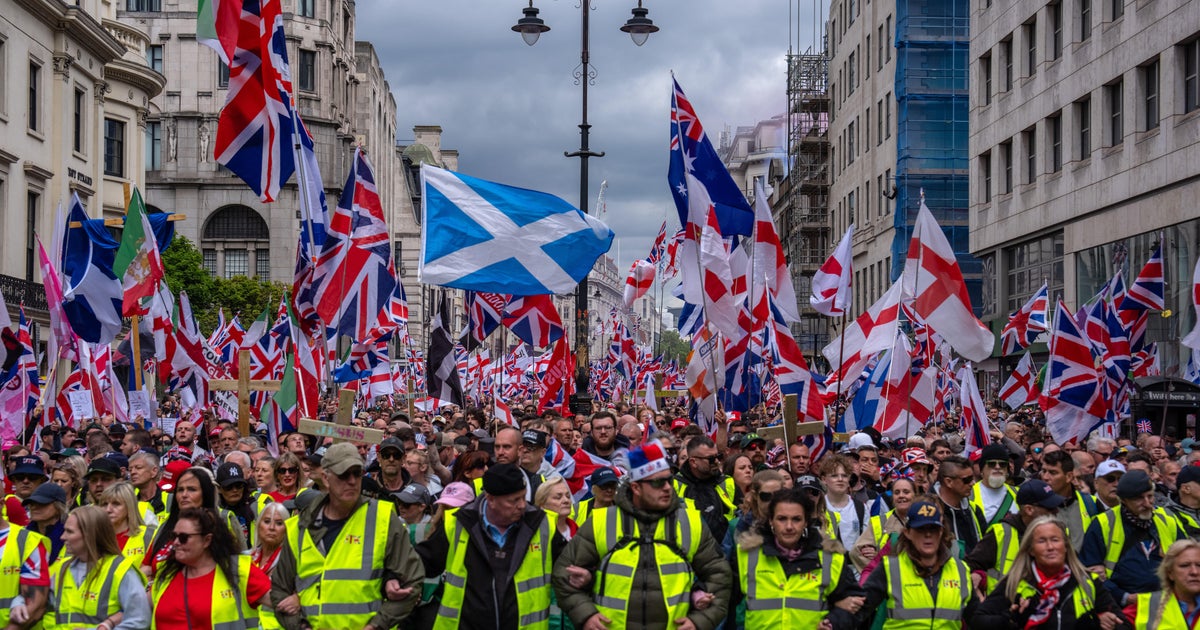
On a crisp Saturday, central London became the epicenter of a significant political demonstration, as tens of thousands of individuals, estimated by police to be around 60,000, marched under the banner of "Unite the Kingdom." Organized by controversial far-right activist Tommy Robinson, the event marked one of the largest right-wing mobilizations seen in Britain in recent years, drawing considerable attention and sparking widespread debate across the nation and beyond. Participants articulated a common concern: the perceived erosion of British identity, a sentiment that resonates deeply within certain segments of the population and reflects broader anxieties about cultural change, immigration, and national sovereignty.
The Roots of Discontent: A Shifting National Identity
The "Unite the Kingdom" march did not emerge in a vacuum. It is a symptom of a complex interplay of socio-economic factors, political shifts, and cultural anxieties that have been simmering in Britain for decades. The concept of British identity itself is multifaceted and has undergone significant transformations, particularly in the post-colonial era and with increased globalization. For many, this identity is intrinsically linked to historical narratives, traditional institutions, and a sense of shared heritage. However, rapid demographic shifts, the ongoing debate around multiculturalism, and the perceived challenges to traditional values have fueled a sense of unease among those who feel their national identity is under threat.
Tommy Robinson, whose real name is Stephen Yaxley-Lennon, has long positioned himself as a vocal critic of what he views as the Islamisation of Britain and a defender of 'free speech.' His activism often involves highly publicized demonstrations and media stunts, garnering both fervent support and fierce opposition. The scale of this particular march suggests that his message, or at least the underlying grievances he articulates, resonates with a substantial number of people who feel unrepresented by mainstream political discourse. The framing of the protest as a defense of "British identity" allowed for a broader appeal, drawing in individuals with diverse concerns ranging from immigration policies to cultural liberalism.
A Confluence of Grievances: Who Marched and Why?
The demographic of the marchers was reportedly diverse, extending beyond the traditional image of far-right supporters. While a core element undoubtedly comprised long-standing adherents of Robinson's views, the sheer numbers indicate a broader coalition. Many participants expressed frustration with the political establishment, feeling that their concerns about national security, cultural assimilation, and the pace of social change are being ignored. The march served as a platform for these grievances, allowing individuals to collectively voice their discontent.
Key themes articulated by participants included: * Concerns over immigration: A belief that current immigration levels are unsustainable and are altering the cultural fabric of Britain. * Critique of 'woke' culture: Opposition to progressive social policies and what they perceive as an overreach of political correctness. * Defense of traditional values: A desire to uphold historical British customs and institutions against perceived modern threats. * Distrust of mainstream media: A common sentiment among many populist movements, accusing established media outlets of bias and misrepresentation.
This convergence of varied concerns under a single banner highlights the complex and often fragmented nature of contemporary right-wing populism. It's less about a single issue and more about a general feeling of disenfranchisement and a desire for a return to what many perceive as a more stable, traditional past.
Historical Context: Echoes of Past Movements
Britain has a long and often turbulent history of right-wing political movements, from Oswald Mosley's British Union of Fascists in the 1930s to the National Front in the 1970s and the British National Party in the 1990s and 2000s. While the "Unite the Kingdom" march differs in its specific focus and organizational structure, it shares certain ideological threads with these predecessors: a strong emphasis on national identity, a suspicion of 'outsiders,' and a critique of the liberal establishment.
However, the current landscape is also distinct. The rise of social media has provided figures like Tommy Robinson with unprecedented platforms to mobilize supporters and disseminate their messages, bypassing traditional media gatekeepers. This digital infrastructure allows for rapid organization and the creation of echo chambers that reinforce existing beliefs. Furthermore, the political climate post-Brexit, characterized by heightened debates about sovereignty and national borders, has arguably created a more fertile ground for nationalist sentiments.
Implications for British Politics and Society
The scale of the "Unite the Kingdom" march carries significant implications for British politics and society. Firstly, it underscores the persistent and, arguably, growing appeal of right-wing populist narratives. While mainstream parties often shy away from directly addressing some of the more contentious issues raised by these movements, the large turnout suggests that these concerns cannot be simply dismissed as fringe.
Secondly, the event highlights the deepening polarization within British society. The march was met with counter-protests, albeit smaller, demonstrating a clear ideological divide. This polarization makes constructive dialogue and consensus-building increasingly challenging, potentially leading to further social fragmentation.
Thirdly, the march poses a challenge to law enforcement and public order. Managing such large-scale demonstrations, particularly those with a history of confrontational rhetoric, requires significant resources and careful planning to prevent violence and ensure public safety. The police estimate of 60,000 participants indicates a logistical challenge that speaks to the movement's capacity for mobilization.
Looking Ahead: The Future of British Identity and Populism
The "Unite the Kingdom" march is unlikely to be an isolated incident. As Britain navigates its post-Brexit future, grapples with economic challenges, and continues to evolve demographically, debates surrounding national identity, cultural values, and immigration are set to intensify. Figures like Tommy Robinson will likely continue to exploit these anxieties, seeking to channel discontent into further public demonstrations and political pressure.
For mainstream political parties, the challenge lies in understanding and addressing the legitimate concerns that fuel these movements, without legitimizing extremist views. This requires a nuanced approach that fosters inclusive national narratives, promotes social cohesion, and tackles the root causes of economic and cultural insecurity. Ignoring the sentiments expressed by tens of thousands on the streets of London would be a perilous oversight, potentially allowing these divisions to deepen and further reshape the political landscape of the United Kingdom.
The future of British identity will undoubtedly be forged in the crucible of these ongoing debates, with the "Unite the Kingdom" march serving as a stark reminder of the powerful currents of nationalism and cultural anxiety that continue to flow beneath the surface of modern Britain.
Stay Informed
Get the world's most important stories delivered to your inbox.
No spam, unsubscribe anytime.
Comments
No comments yet. Be the first to share your thoughts!