Israel's Strategic Shift: Weighing a Future Beyond US Military Aid
Israel is reportedly exploring a future with reduced reliance on the $3.8 billion annual US military aid, a move signaling a potential redefinition of its long-standing defense relationship with Washington. This strategic shift, while complex and far from a complete break, could open new avenues for defense cooperation with emerging global powers like India. Experts analyze the motivations, implications, and feasibility of such a significant geopolitical pivot for the Jewish state.
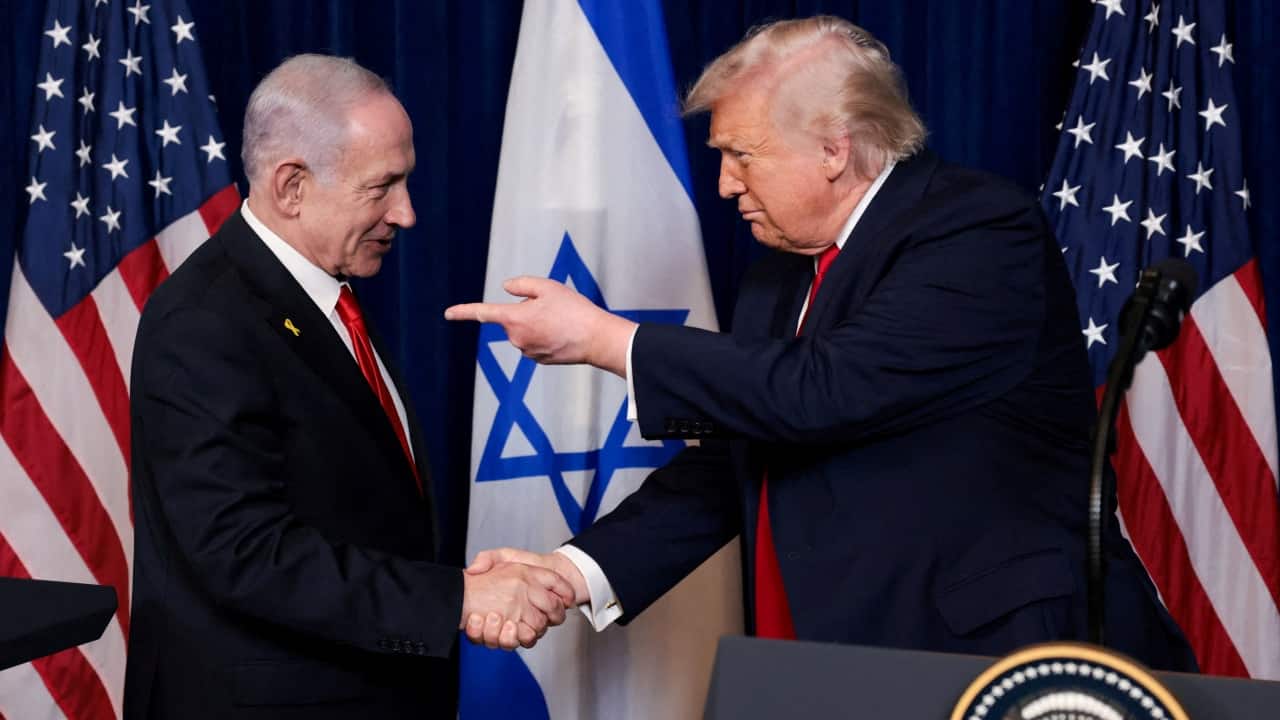
For decades, the bedrock of the strategic alliance between the United States and Israel has been cemented by substantial American military aid, totaling over $300 billion since 1946. This financial lifeline, currently standing at $3.8 billion annually, has equipped Israel with cutting-edge defense capabilities, ensuring its qualitative military edge in a volatile region. However, recent suggestions from Prime Minister Benjamin Netanyahu about phasing out US military assistance have sent ripples through diplomatic and defense circles, prompting a crucial question: Is Israel truly contemplating a future with less American military support, and what would that entail for its security and global standing?
This potential shift is not merely a budgetary consideration; it represents a profound re-evaluation of Israel's strategic autonomy and its place in a rapidly evolving geopolitical landscape. While a complete divorce from Washington's security umbrella is widely considered unrealistic by experts, the very discussion of reducing dependency underscores a growing desire within Israel to diversify its defense partnerships and assert greater independence in its foreign policy. The implications are vast, touching upon regional stability, global power dynamics, and the future of an alliance that has shaped the Middle East for generations.
The Historical Tapestry of US-Israel Aid
The relationship between the United States and Israel, particularly concerning military aid, is deeply rooted in shared strategic interests and historical circumstances. Beginning modestly after Israel's establishment, US assistance grew significantly following the 1967 Six-Day War and became a cornerstone of Israel's defense posture after the 1973 Yom Kippur War. The Camp David Accords in 1978-79 further institutionalized this aid, transforming it into a predictable, multi-year commitment. This assistance has primarily taken the form of Foreign Military Financing (FMF), allowing Israel to purchase US-made defense equipment and services, ensuring interoperability and technological superiority.
Over the years, this aid has been instrumental in developing Israel's formidable military, enabling it to acquire advanced fighter jets like the F-15s and F-16s, missile defense systems such as Iron Dome and Arrow, and a host of other sophisticated weaponry. The FMF program also includes provisions for Israel to spend a portion of the funds on its domestic defense industry, fostering innovation and self-reliance in certain areas. This unique arrangement has allowed Israel to maintain its Qualitative Military Edge (QME), a legal commitment by the US to ensure Israel's military superiority over potential adversaries in the region. The aid package is not just about hardware; it symbolizes a deep strategic bond, a commitment to Israel's security, and a mechanism for the US to exert influence and maintain stability in a critical region.
However, this dependency has also come with implicit constraints. While Israel values the aid, there's a growing sentiment among some Israeli leaders that it can limit their strategic flexibility and create a perception of subservience. The desire to reduce this reliance stems from a complex mix of factors, including Israel's robust economic growth, its burgeoning indigenous defense industry, and a strategic vision that seeks to project power and influence beyond the traditional US-centric framework.
Motivations Behind the Proposed Shift
Prime Minister Netanyahu's suggestion to gradually phase out US military aid is not a sudden whim but rather a reflection of several converging factors. Firstly, Israel's economy has matured significantly. Once heavily reliant on external assistance, Israel is now a high-tech powerhouse with a thriving innovation ecosystem. Its GDP per capita rivals many Western European nations, and its defense industry is a major global exporter. This economic strength provides a foundation for greater financial independence in defense procurement.
Secondly, there's a strategic imperative to diversify partnerships. The global geopolitical landscape is shifting, with the rise of new powers and the emergence of multi-polar dynamics. While the US remains a crucial ally, Israel recognizes the benefits of forging stronger defense and economic ties with countries beyond its traditional Western partners. Nations like India, which is rapidly modernizing its military and has a growing strategic alignment with Israel, present significant opportunities for collaboration, co-development, and arms sales. A reduced reliance on US aid could free Israel from certain restrictions on technology transfer or joint ventures that might be imposed by its primary benefactor.
Thirdly, a desire for greater strategic autonomy plays a significant role. While US aid ensures Israel's security, it also comes with a degree of American oversight and influence on Israeli foreign policy decisions. Some Israeli leaders believe that reducing this financial dependency could grant them more latitude in pursuing their national interests without perceived external pressures. This doesn't imply a rejection of the alliance but rather a recalibration of its terms, moving towards a more peer-to-peer relationship where Israel's contributions and capabilities are equally recognized.
Finally, there's a domestic political dimension. Advocating for reduced foreign aid can resonate with a nationalist base, signaling strength and self-reliance. It can also be framed as a responsible fiscal move, demonstrating that Israel is capable of standing on its own feet. However, this domestic appeal must be weighed against the very real strategic benefits and security guarantees that US aid provides.
The Path Forward: Challenges and Opportunities
While the concept of phasing out US aid holds appeal for some, the practicalities are fraught with challenges. The $3.8 billion annual aid package is not just a sum of money; it's deeply integrated into Israel's defense planning, procurement cycles, and technological development. Replacing this funding entirely with domestic resources would necessitate significant increases in Israel's defense budget, potentially impacting other sectors of the economy or requiring difficult political choices. Furthermore, the aid facilitates access to advanced US military technology that is often not available for purchase elsewhere or through independent development.
Experts like Ambassador Dennis Ross, a veteran Middle East negotiator, emphasize that a complete break is highly improbable. The strategic benefits of the alliance extend far beyond financial aid, encompassing intelligence sharing, diplomatic support, and a powerful deterrent against regional adversaries. "The relationship is much deeper than just the aid package," Ross noted in a recent discussion. "It's about shared values, intelligence cooperation, and a strategic dialogue that is invaluable to both countries."
However, a gradual reduction or a shift in the nature of aid could open new opportunities. It could incentivize Israel to further innovate its defense industry, potentially leading to more exports and collaborations. It could also accelerate the diversification of its defense partnerships, particularly with countries like India, which are keen to acquire advanced Israeli defense technology and expertise. Such partnerships could include joint research and development, co-production agreements, and expanded military exercises, creating a more multi-faceted security architecture for Israel.
Moreover, a move away from direct financial aid could transform the US-Israel relationship into one based more on strategic partnership and less on patronage. This could allow both nations to focus on shared threats and opportunities, such as countering Iranian aggression, promoting regional stability, and collaborating on emerging technologies, without the underlying dynamics of benefactor and recipient.
Conclusion: A Delicate Balancing Act
Israel's contemplation of a future with reduced US military aid represents a significant moment in its strategic evolution. It reflects a nation that has matured economically and militarily, seeking greater autonomy and diversification in its international relations. While the allure of complete independence is strong, the deep-seated strategic benefits of the US alliance, including intelligence sharing, diplomatic backing, and access to cutting-edge technology, make a complete severing of ties highly unlikely and potentially detrimental to Israel's security.
Instead, the most probable outcome is a nuanced recalibration. This could involve a gradual reduction in the financial component of the aid, coupled with an increased focus on strategic cooperation, joint R&D, and expanded defense trade with the US and other partners. The discussion itself serves as a powerful signal to Washington and the world: Israel is confident in its capabilities and is actively shaping its destiny in a complex global arena. The path ahead will require delicate diplomacy, astute strategic planning, and a clear understanding of both the opportunities and the inherent risks involved in redefining one of the world's most enduring strategic alliances. The ultimate goal remains Israel's long-term security and prosperity, achieved through a blend of self-reliance and robust international partnerships.
Stay Informed
Get the world's most important stories delivered to your inbox.
No spam, unsubscribe anytime.
Comments
No comments yet. Be the first to share your thoughts!