France's New Seabed Warfare Observatory: A Deep Dive into Geopolitical Strategy
France has established the Seabed Warfare Observatory (MFM) to bolster its understanding and capabilities in the critical underwater domain. This strategic move, driven by the Ministry of the Armed Forces, underscores a growing global concern over seabed infrastructure and potential conflicts. The MFM aims to integrate research, technology, and international cooperation to safeguard national interests in the deep sea, reflecting a new era of maritime security challenges.
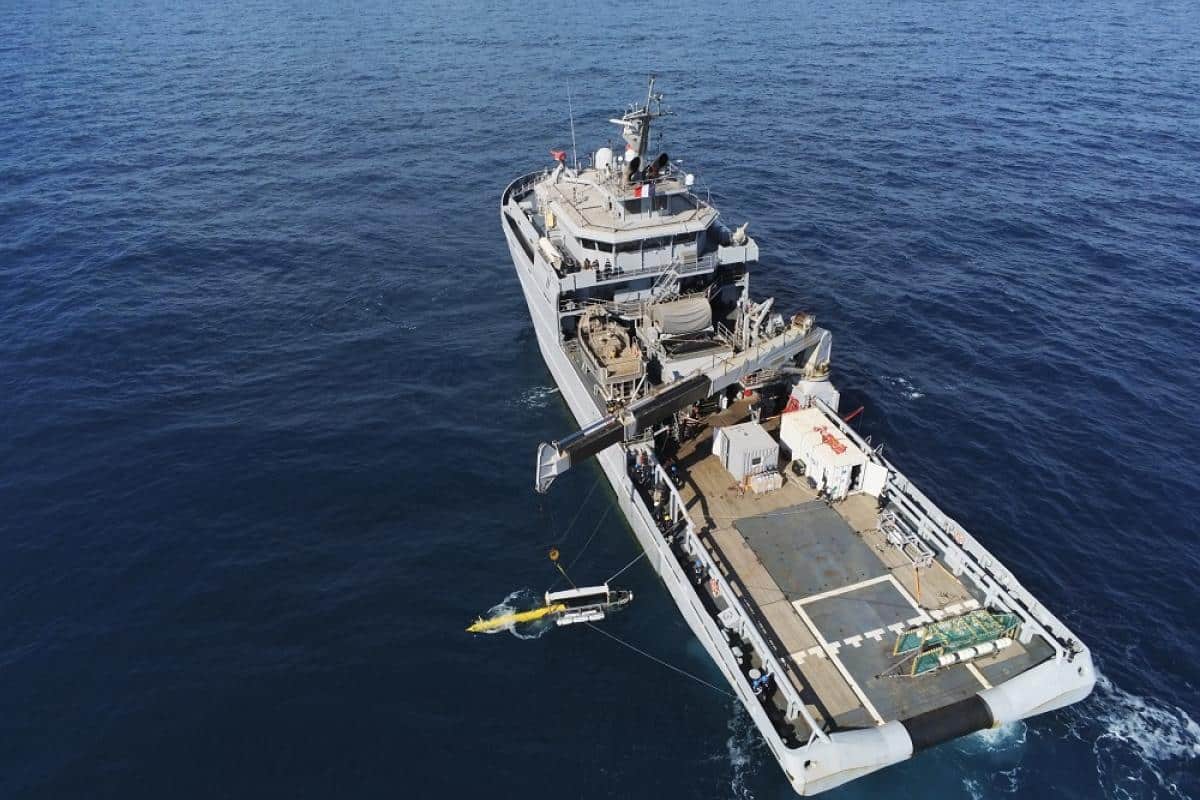
In an era increasingly defined by geopolitical competition extending into the deepest reaches of the ocean, France has taken a decisive step to safeguard its interests and enhance its strategic capabilities. The Seabed Warfare Observatory (L’Observatoire Maîtrise des Fonds Marins, or MFM) has been formally established within the strategic research support structure of the Directorate General for International Relations (DGRIS), acting on behalf of France’s Ministry of the Armed Forces. This initiative marks a significant turning point, signaling France's commitment to understanding, monitoring, and potentially defending its vast underwater domains and critical infrastructure.
The MFM is not merely another research body; it represents a comprehensive, forward-looking approach to a rapidly evolving strategic landscape. Its creation reflects a growing recognition among global powers that the seabed, once considered a remote and inaccessible frontier, is now a crucial arena for economic, scientific, and military competition. From vital communication cables to energy pipelines and potential mineral resources, the deep sea is teeming with assets whose security is paramount to national and international stability. France, with its extensive maritime zones and overseas territories, has a particularly vested interest in mastering this complex environment.
The Strategic Imperative: Why the Seabed Matters Now More Than Ever
The deep sea has long been a domain of scientific exploration and resource extraction, but its strategic importance has surged in recent years. Approximately 99% of global internet traffic traverses submarine communication cables, making them indispensable for modern economies and societies. Energy pipelines, often laid on the seabed, transport vast quantities of oil and gas. Beyond these critical infrastructures, the seabed holds immense potential for mineral resources, including rare earths, which are vital for advanced technologies. The vulnerability of these assets to sabotage, espionage, or disruption has become a pressing concern for nations worldwide.
Recent incidents, such as the mysterious damage to the Nord Stream pipelines in the Baltic Sea, have starkly highlighted these vulnerabilities. While the exact causes remain under investigation, the events underscored the potential for state and non-state actors to target underwater infrastructure, with far-reaching economic and geopolitical consequences. Furthermore, advances in underwater technology – including autonomous underwater vehicles (AUVs), remotely operated vehicles (ROVs), and sophisticated sonar systems – have made it easier to access, map, and manipulate the deep-sea environment, blurring the lines between traditional naval warfare and clandestine operations.
For France, a nation with the second-largest exclusive economic zone (EEZ) in the world, spanning over 11 million square kilometers across the Atlantic, Pacific, and Indian Oceans, the security of its maritime territories and access to global sea lanes is fundamental to its sovereignty and economic prosperity. The MFM's establishment is a direct response to these evolving threats and opportunities, aiming to provide a holistic understanding of the challenges and to develop appropriate responses.
A Multi-faceted Approach: Research, Technology, and International Cooperation
The MFM's mandate is broad and ambitious. It is designed to be a hub for interdisciplinary research, bringing together experts from various fields, including oceanography, international law, cybersecurity, defense technology, and geopolitics. The observatory will focus on several key areas:
* Technological Monitoring and Foresight: Tracking advancements in underwater robotics, sensors, communication systems, and counter-measures. This includes assessing the capabilities of potential adversaries and identifying emerging threats. * Legal and Normative Frameworks: Analyzing international law pertaining to the seabed, identifying gaps, and contributing to the development of norms of behavior in this complex domain. The legal status of seabed activities, particularly those with military implications, remains an area of ongoing debate. * Geopolitical Analysis: Understanding the strategic interests and activities of other global powers in the deep sea, including China, Russia, and the United States, and their implications for French security. * Infrastructure Protection: Developing strategies and technologies to protect critical underwater cables, pipelines, and other assets from sabotage or surveillance. * Environmental Impact: While focused on security, the MFM is also expected to consider the environmental implications of increased activity in the deep sea, ensuring that strategic interests are balanced with ecological responsibility.
The observatory will foster collaboration between military intelligence, scientific institutions, industrial partners, and academic researchers. This integrated approach is crucial, as no single entity possesses all the necessary expertise to tackle the multifaceted challenges of seabed warfare. By pooling resources and knowledge, France aims to gain a significant strategic advantage.
Historical Context: France's Maritime Heritage and Future Ambitions
France has a long and proud maritime history, from its colonial empire to its modern naval power. In recent decades, it has maintained a strong focus on naval capabilities, including its nuclear-powered aircraft carrier, submarines, and advanced frigates. However, the emphasis on the deep seabed represents a new frontier in its strategic thinking. This shift is not unique to France; other nations, including the United States, the United Kingdom, and Australia, have also been investing heavily in their underwater capabilities and strategies.
President Emmanuel Macron has consistently articulated France's ambition to be a leading global power, capable of projecting influence and defending its interests across all domains, including space and the deep sea. The MFM aligns perfectly with this vision, positioning France at the forefront of a critical new dimension of international security. It underscores a proactive rather than reactive stance, seeking to shape the future of seabed governance and security rather than merely responding to events.
Implications for Global Security and International Relations
The establishment of the MFM carries significant implications for global security and international relations. Firstly, it signals an escalation in the militarization of the deep sea. As more nations develop sophisticated underwater capabilities, the risk of miscalculation or conflict in this previously unpoliced domain increases. The MFM's work on international law and norms will therefore be crucial in preventing an unregulated arms race beneath the waves.
Secondly, it highlights the growing importance of dual-use technologies. Many technologies developed for scientific exploration or commercial resource extraction can also have military applications. The MFM will likely play a role in distinguishing between legitimate and illicit activities, and in developing frameworks for responsible use.
Finally, the observatory could serve as a model for international cooperation in seabed security. While competition is inevitable, shared interests in protecting critical infrastructure and preserving the marine environment could foster collaboration among like-minded nations. France, with its diplomatic prowess and strong alliances, is well-positioned to lead such efforts, promoting transparency and confidence-building measures in the deep-sea domain.
In conclusion, France's Seabed Warfare Observatory is more than just a research body; it is a strategic declaration. It acknowledges that the future of global power and security will be profoundly shaped by what happens beneath the waves. By investing in knowledge, technology, and strategic foresight, France is not only protecting its own interests but also contributing to a broader understanding of the challenges and opportunities that lie in the vast, mysterious, and increasingly contested depths of our oceans. The MFM represents a critical step towards mastering this new frontier, ensuring that France remains a key player in the unfolding geopolitical drama of the deep sea.
Stay Informed
Get the world's most important stories delivered to your inbox.
No spam, unsubscribe anytime.
Comments
No comments yet. Be the first to share your thoughts!