Global South's Cry: Civil Society Slams IMF/World Bank for 'Rhetoric Over Reform' Amidst Mounting Crises
The recent IMF/World Bank Spring Meetings in Washington D.C. have drawn sharp criticism from civil society organizations, who argue that the outcomes failed to address the urgent needs of the Global South. Amidst escalating conflicts, climate change, and a widening debt crisis, critics contend that the institutions' rhetoric on reform and support falls short of meaningful action. This article delves into the persistent disconnect between promises and tangible solutions, highlighting the dire consequences for developing nations.
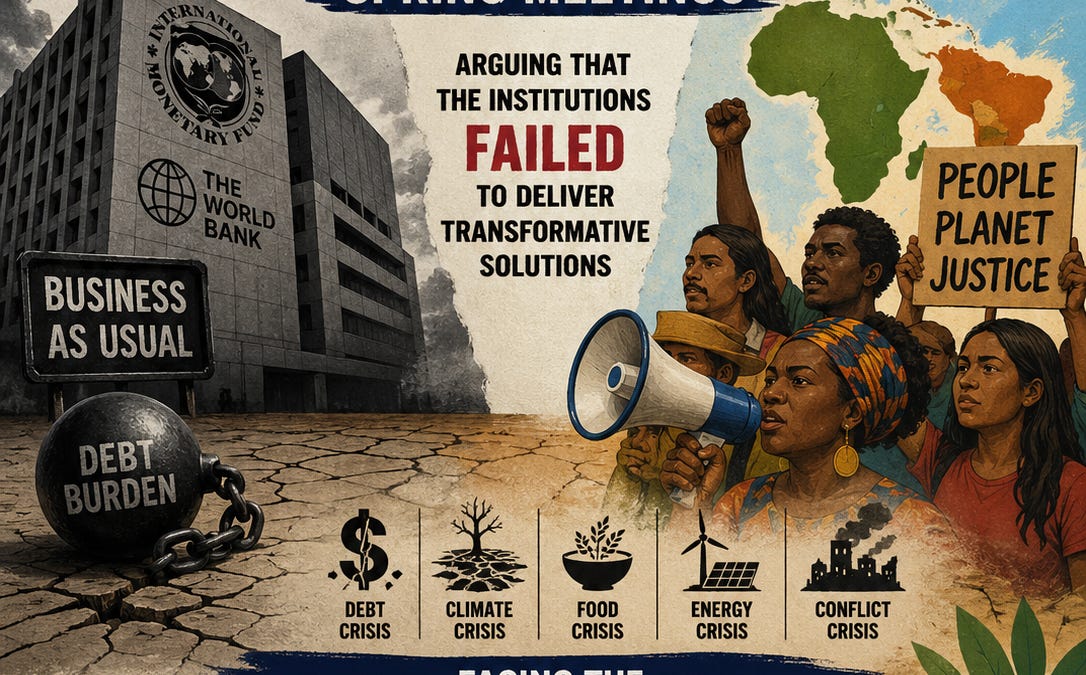
The halls of power in Washington D.C. recently echoed with familiar promises of global economic stability and support for developing nations during the IMF/World Bank Spring Meetings. Yet, for civil society organizations representing the Global South, these pronouncements rang hollow, a stark reminder of a widening chasm between rhetoric and meaningful reform. As countries across Africa, Latin America, and Asia grapple with shrinking fiscal space, escalating debt burdens, and the cascading impacts of climate change and geopolitical conflicts, the perceived inaction of these powerful financial institutions has ignited a fresh wave of frustration and calls for systemic change.
Mid-April 2026 saw leaders and policymakers convene against a backdrop of renewed global instability. The lingering economic fallout from the pandemic, coupled with the exacerbating effects of conflicts in the Middle East driving up energy and food prices, has pushed many developing nations to the brink. For these countries, often rich in resources but poor in financial resilience, the stakes could not be higher. Civil society groups, long advocating for a more equitable global financial architecture, have voiced a collective disappointment, asserting that the meetings offered little beyond superficial commitments.
The Widening Gap: Rhetoric vs. Reality
The core of the critique centers on the perceived lack of concrete action following years of discussions about debt relief, climate finance, and equitable development. While the IMF and World Bank frequently articulate a commitment to addressing these issues, civil society organizations point to a persistent implementation deficit. For instance, discussions around a new global financial architecture often remain theoretical, failing to translate into tangible mechanisms that genuinely rebalance power dynamics or provide sufficient, unconditional funding to vulnerable economies. The "multiple overlapping shocks" – from climate-induced disasters to supply chain disruptions and inflationary pressures – are not abstract concepts for the Global South; they are daily realities that demand immediate and robust intervention, not just pledges for future consideration.
One of the most pressing concerns is the debt crisis. Many developing nations are trapped in a vicious cycle of borrowing, with an increasing portion of their national budgets allocated to debt servicing rather than essential public services like healthcare, education, or infrastructure. Civil society groups have consistently called for comprehensive debt restructuring and cancellation, especially for countries facing unsustainable burdens. However, the outcomes of the meetings reportedly offered only incremental approaches, such as further lending or conditional relief, which often fail to address the root causes of indebtedness or provide genuine fiscal breathing room. The Common Framework for Debt Treatments, while a step in the right direction, has been criticized for its slow pace and limited scope, leaving many countries in limbo.
Climate Finance: A Broken Promise?
Climate change represents another critical area where the gap between promises and delivery is glaring. Developing nations, disproportionately affected by the impacts of global warming despite contributing least to its causes, desperately need substantial and accessible climate finance. The long-standing commitment by developed nations to provide $100 billion annually in climate finance has largely gone unfulfilled, and the mechanisms for accessing existing funds are often bureaucratic and laden with conditionalities. Civil society organizations emphasize that the World Bank and IMF, with their significant influence and lending power, could play a more transformative role in mobilizing and channeling these funds. Instead, critics argue, their initiatives often lean towards market-based solutions or loans that further exacerbate debt, rather than grants or concessional finance that truly empower adaptation and mitigation efforts in the most vulnerable regions. The discussions around a "just transition" for energy systems in the Global South, while conceptually appealing, frequently lack the financial instruments and political will to make them a reality on the ground.
Structural Vulnerabilities and the Call for Systemic Reform
The critiques extend beyond immediate financial concerns to the very structural vulnerabilities embedded within the global economic system. Many developing countries remain heavily reliant on commodity exports, making them susceptible to volatile global prices. The push for diversification and value addition is often hampered by limited access to technology, capital, and equitable trade agreements. Civil society groups argue that the IMF and World Bank, through their policy advice and lending conditions, often reinforce existing economic models rather than fostering genuinely transformative and sustainable development pathways. There's a persistent call for these institutions to move beyond a narrow focus on macroeconomic stability and embrace a more holistic approach that prioritizes social equity, environmental sustainability, and democratic governance.
Furthermore, the issue of representation and governance within the IMF and World Bank remains a contentious point. Developing nations often feel marginalized in decision-making processes, with voting power heavily skewed towards wealthier countries. This imbalance, critics argue, perpetuates a system where the interests and perspectives of the Global South are not adequately reflected in policy formulation. Calls for quota reforms and greater transparency have been ongoing for decades, yet progress remains painstakingly slow, reinforcing the perception of an entrenched, inequitable power structure.
Looking Ahead: A Call for Accountability and Action
The disappointment expressed by civil society organizations is not merely a complaint; it is a demand for accountability and urgent action. They advocate for a fundamental shift in the operational philosophy of the IMF and World Bank – from being primarily lenders of last resort with often stringent conditions, to becoming genuine partners in sustainable development. This shift would entail:
* Comprehensive Debt Restructuring and Cancellation: Moving beyond incremental measures to provide significant relief. * Increased Grant-Based Climate Finance: Prioritizing grants over loans for climate adaptation and mitigation. * Reformed Lending Policies: Ensuring conditions support social protection, public services, and green transitions. * Enhanced Global South Representation: Rebalancing power within governance structures. * Support for Domestic Resource Mobilization: Helping countries build robust tax systems and combat illicit financial flows.
The implications of continued inaction are severe. A deepening debt crisis could trigger widespread social unrest and political instability. The unchecked impacts of climate change will displace millions and decimate livelihoods. The persistent structural inequalities will only widen the gap between the rich and the poor, both within and between nations. As the world grapples with polycrises, the need for international financial institutions to evolve and respond effectively has never been more critical. The civil society voices from the Global South are not just critiquing; they are offering a roadmap for a more just, resilient, and sustainable global future, urging the IMF and World Bank to finally bridge the gap between their lofty rhetoric and the pressing realities on the ground.
Stay Informed
Get the world's most important stories delivered to your inbox.
No spam, unsubscribe anytime.
Comments
No comments yet. Be the first to share your thoughts!