Global Terror Blow: ISIS Second-in-Command Eliminated in Joint US-Nigerian Operation
In a significant victory against global terrorism, Abu-Bilal al-Minuki, ISIS's second-in-command, has been eliminated in a joint operation involving US and Nigerian forces. Announced by former President Donald Trump, this high-profile neutralization underscores the persistent international efforts to dismantle the terrorist organization's leadership. The operation highlights evolving counter-terrorism strategies and the critical role of international cooperation in combating extremist threats worldwide.
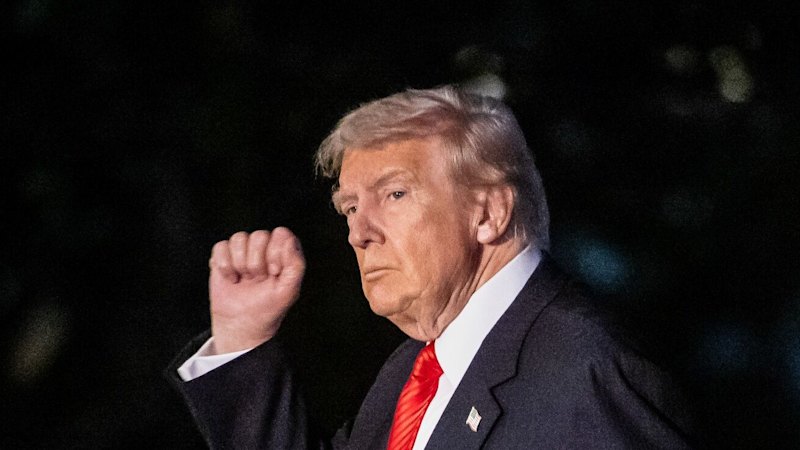
In a decisive blow to the global terrorist network, Abu-Bilal al-Minuki, the notorious second-in-command of the Islamic State (ISIS), has been eliminated in a joint operation conducted by United States and Nigerian forces. The announcement, made by former President Donald Trump, reverberated across international security circles, signaling a significant setback for the extremist group's operational capabilities and morale. This high-profile neutralization underscores the relentless pursuit of terrorist leaders and the intricate, often clandestine, collaborations required to safeguard global peace.
Al-Minuki's demise is not merely the removal of an individual; it represents the disruption of a critical node in ISIS's command structure. As the second-in-command, he was instrumental in orchestrating attacks, managing finances, and propagating the group's radical ideology across various affiliates, particularly in Africa and the Middle East. His elimination is expected to create a vacuum, potentially leading to internal power struggles and operational disarray within the already fractured organization.
The Anatomy of a Joint Operation
The operation that led to al-Minuki's death exemplifies the evolving landscape of counter-terrorism. While specific details remain under wraps due to operational security, the involvement of both US and Nigerian forces points to a sophisticated intelligence-gathering and execution process. The United States, with its advanced surveillance and special forces capabilities, likely provided critical intelligence, logistical support, and precision strike capabilities. Nigeria, on the other hand, brought invaluable local knowledge, ground forces, and an understanding of the regional dynamics where ISIS and its affiliates, such as Boko Haram and ISWAP (Islamic State's West Africa Province), have a significant presence.
This collaboration highlights a growing trend where international partners pool resources and expertise to tackle transnational threats. Such joint efforts are crucial in regions like the Sahel and West Africa, where extremist groups exploit porous borders, weak governance, and socio-economic vulnerabilities to establish footholds. The success of this operation sends a clear message: no sanctuary is truly safe for those who seek to destabilize global security.
ISIS's Shifting Landscape and African Expansion
The elimination of al-Minuki comes at a time when ISIS, though significantly weakened from its peak in Iraq and Syria, has been actively attempting to re-establish its global influence through regional affiliates. After the territorial defeat of its self-proclaimed caliphate in 2019, the group shifted its strategy, decentralizing its operations and empowering regional branches. Africa, in particular, has emerged as a critical battleground, with groups like ISWAP in Nigeria and the Islamic State Central Africa Province (ISCAP) in the Democratic Republic of Congo and Mozambique posing severe threats.
Al-Minuki's role was likely pivotal in coordinating these disparate cells, providing strategic guidance, and facilitating the flow of funds and propaganda. His death could severely hamper ISIS's efforts to consolidate its presence in Africa, disrupting recruitment drives and planned attacks. However, experts caution that while a significant victory, it does not signify the end of ISIS. The group's resilient, adaptive nature means new leaders will likely emerge, and the ideological threat persists.
Implications for Global Security and Counter-Terrorism Efforts
This successful operation carries several important implications for global security. Firstly, it reaffirms the commitment of major powers, like the US, to combating terrorism wherever it surfaces, irrespective of geographical distance. Secondly, it underscores the effectiveness of sustained international partnerships, demonstrating that local forces, when supported by advanced capabilities, can achieve decisive outcomes against well-entrenched terrorist groups. This model of cooperation could serve as a blueprint for future counter-terrorism initiatives.
However, challenges remain. The underlying socio-economic and political grievances that fuel extremism must be addressed. Poverty, lack of education, corruption, and political instability often create fertile ground for radical ideologies to take root. Military action alone, while necessary, is insufficient without comprehensive strategies that include development aid, governance reforms, and community engagement.
Moreover, the digital battleground continues to be critical. Terrorist groups effectively use social media and encrypted platforms for recruitment, propaganda, and operational planning. Countering this requires sophisticated cyber capabilities and a concerted effort to delegitimize extremist narratives online. The global community must remain vigilant, adapting its strategies to the ever-evolving tactics of terrorist organizations.
A Forward Look: The Enduring Fight Against Extremism
The elimination of Abu-Bilal al-Minuki is a testament to the dedication of intelligence agencies and military personnel worldwide. It offers a moment of triumph in the long and arduous fight against global terrorism. Yet, it also serves as a stark reminder that this fight is far from over. ISIS, much like its predecessor Al-Qaeda, is a hydra-headed monster; cut off one head, and another may grow in its place. The ideological underpinnings of such groups are deeply rooted and require a multi-faceted, long-term approach.
The focus must now shift to preventing the rise of new leaders, dismantling remaining networks, and addressing the root causes of extremism. Continued intelligence sharing, capacity building for local security forces, and robust socio-economic development programs are essential. The international community must maintain its resolve, understanding that sustained vigilance and adaptable strategies are the only path to truly mitigating the threat posed by groups like ISIS. This victory, while significant, is but one battle won in an ongoing war for global stability and peace.
Stay Informed
Get the world's most important stories delivered to your inbox.
No spam, unsubscribe anytime.
Comments
No comments yet. Be the first to share your thoughts!