Hezbollah's Drone Revolution: How Cheap Fiber-Optic UAVs Are Forcing Israel to Adapt
Hezbollah's deployment of inexpensive, fiber-optic guided drones is dramatically reshaping the battlefield in southern Lebanon, presenting unprecedented operational challenges for Israeli forces. These low-cost, high-impact devices bypass traditional countermeasures, compelling the IDF to rapidly innovate its tactical responses. The conflict highlights a pivotal shift in modern asymmetric warfare, where technological simplicity meets strategic effectiveness.
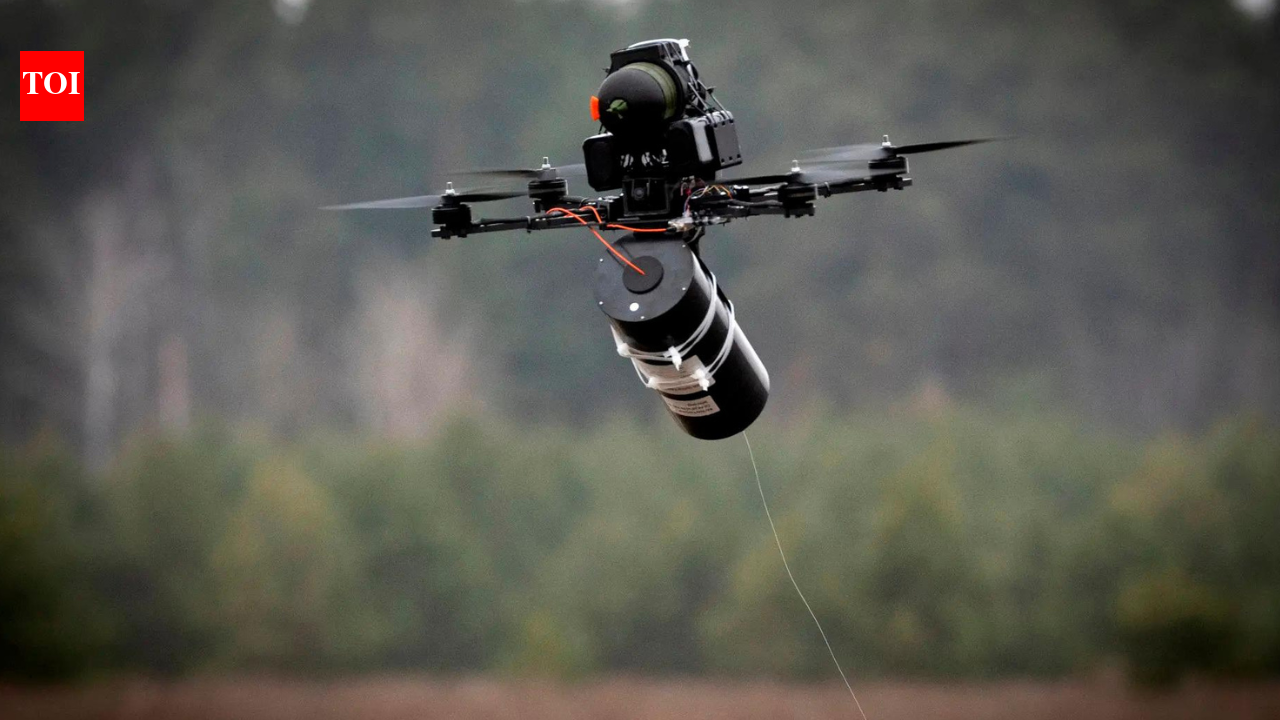
The skies over southern Lebanon are witnessing a silent revolution, one that is forcing one of the world's most technologically advanced militaries to rethink its core strategies. Hezbollah, the Iran-backed Shiite militant group, has deployed a new generation of cheap, fiber-optic guided drones that are proving remarkably effective against Israeli troops. These seemingly rudimentary devices are not just a nuisance; they are a game-changer, posing significant operational challenges and compelling the Israel Defense Forces (IDF) to rapidly adapt to an increasingly lethal and unpredictable threat.
This development underscores a critical evolution in asymmetric warfare, where sophisticated, multi-million-dollar defense systems are being challenged by ingenious, low-cost solutions. The implications extend far beyond the immediate conflict zone, offering a stark preview of future battlefields where technological parity is less about budget and more about innovation.
The Unseen Threat: Fiber-Optic Drones Explained
Unlike conventional drones that rely on radio frequencies or GPS for navigation and control, Hezbollah's new arsenal incorporates fiber-optic cables. This seemingly simple modification has profound tactical advantages. The drone, often small and difficult to detect, trails a thin fiber-optic cable behind it, through which it receives commands and transmits real-time video feedback to its operator. This method renders the drone impervious to electronic warfare (EW) jamming, a cornerstone of modern air defense systems designed to disrupt enemy communications and navigation.
Furthermore, the use of fiber optics makes these drones incredibly difficult to trace or intercept. Without a radio signature, they don't emit signals that can be easily detected by electronic intelligence (ELINT) systems. Their small size and low radar cross-section also make them challenging targets for traditional air defense missiles or anti-aircraft fire. This combination of low cost, stealth, and jam-proof operation creates a potent weapon that can deliver explosives with precision, conduct reconnaissance, or even act as a kamikaze munition, all while remaining largely invisible to conventional countermeasures.
Israel's Adaptation Challenge: A New Paradigm of Warfare
For decades, Israel has maintained a significant qualitative military edge (QME) over its adversaries, heavily investing in advanced technology, including sophisticated air defense systems like the Iron Dome. However, Hezbollah's fiber-optic drones represent a direct challenge to this technological superiority. The IDF is now grappling with a threat that bypasses its most advanced electronic defenses, forcing a fundamental reevaluation of its operational tactics in southern Lebanon.
Initial reports suggest that Israeli forces are exploring a variety of countermeasures. These include: * Enhanced visual detection: Relying more on human observation, specialized optics, and potentially AI-powered vision systems to spot the small, fast-moving drones. * Physical interception: Developing new kinetic solutions, possibly involving specialized anti-drone nets, directed energy weapons, or even modified small arms fire, though precision remains a challenge. * Tactical adjustments: Altering troop movements, deployment patterns, and defensive postures to mitigate the risk posed by these precision-strike weapons. * Intelligence gathering: Intensifying efforts to understand Hezbollah's supply chains, manufacturing capabilities, and operational doctrine for these drones.
The adaptation process is not merely technological; it's also doctrinal. The IDF, accustomed to dominating the airspace, must now contend with an adversary that can achieve local air superiority in specific, targeted engagements with minimal investment. This forces a shift from broad-spectrum electronic dominance to more localized, agile, and often physical responses.
Historical Context: The Evolution of Asymmetric Threats
This isn't the first time an advanced military has faced unexpected challenges from low-tech solutions. History is replete with examples where ingenuity trumped sheer technological might:
* Vietnam War: The Viet Cong's use of intricate tunnel networks and booby traps against the technologically superior US forces. * Afghanistan: Improvised Explosive Devices (IEDs) became the signature weapon against coalition forces, forcing massive investments in armored vehicles and counter-IED technologies. * Ukraine War: The widespread use of commercial off-the-shelf (COTS) drones by both sides for reconnaissance and weapon delivery has underscored the democratizing effect of drone technology.
Hezbollah's fiber-optic drones fit squarely into this tradition, representing a new frontier in the ongoing cat-and-mouse game between conventional armies and insurgent groups. The group's ability to innovate with readily available components, often with support and expertise from Iran, demonstrates a sophisticated understanding of exploiting vulnerabilities in advanced defense systems.
Implications for Future Warfare and Global Security
The lessons learned from Hezbollah's drone deployments in southern Lebanon will undoubtedly resonate across the globe. This conflict serves as a live laboratory for future military strategists and defense planners. The key takeaways are clear:
* The enduring power of simplicity: Complex problems don't always require complex solutions. Sometimes, a clever application of basic technology can bypass sophisticated defenses. * Democratization of precision strike: The cost barrier to deploying precision-guided munitions is rapidly eroding, making such capabilities accessible to a wider range of state and non-state actors. * The need for layered defenses: Relying solely on electronic warfare or traditional air defense is no longer sufficient. Future defense strategies must incorporate multiple layers, including physical interception, visual detection, and rapid tactical adaptation. * Intelligence and counter-proliferation: Understanding and disrupting the supply chains and technical expertise behind such innovations will become paramount.
As the conflict in southern Lebanon continues, the world watches closely. Israel's efforts to counter Hezbollah's fiber-optic drones will provide invaluable insights into the future of modern warfare. The battlefield is no longer solely defined by the most expensive hardware, but increasingly by the most ingenious application of available technology. The challenge for advanced militaries is not just to build better defenses, but to anticipate and adapt to the next, unforeseen low-cost innovation that could redefine the rules of engagement. The silent hum of these small drones carries a loud message: the future of warfare is here, and it's cheaper and harder to stop than ever before.
Stay Informed
Get the world's most important stories delivered to your inbox.
No spam, unsubscribe anytime.
Comments
No comments yet. Be the first to share your thoughts!