Hormuz at the Brink: Iran Warns US, UAE Against 'Quagmire' as Tensions Escalate
Iran's Foreign Minister has issued a stark warning to the United States and the UAE, cautioning against deeper military involvement in the Strait of Hormuz and dismissing any notion of a military solution to the ongoing crisis. This comes amidst escalating regional tensions, despite diplomatic channels reportedly remaining open. The warning underscores the precarious geopolitical balance in a vital global shipping lane, with severe implications for energy markets and international stability.
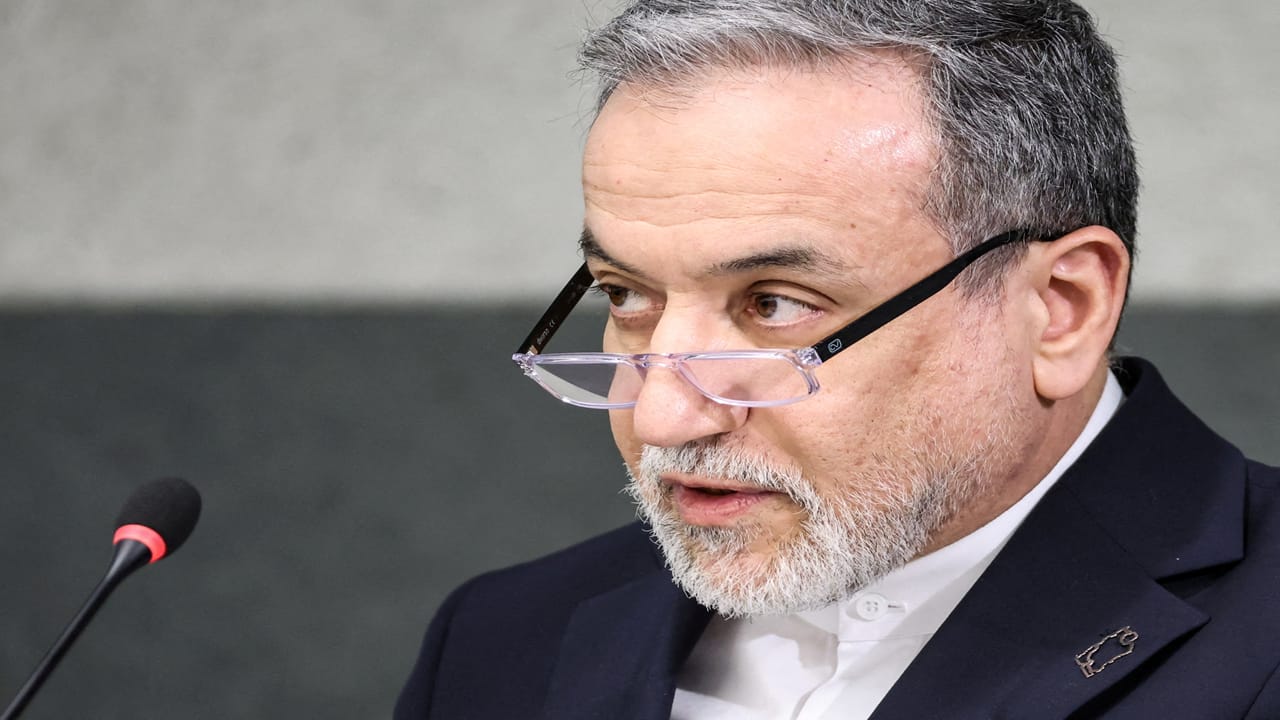
In the volatile theater of the Middle East, a familiar yet increasingly dangerous geopolitical chess match is unfolding in the Strait of Hormuz. Iran’s Foreign Minister, Abbas Araghchi, has delivered a pointed and unequivocal message to the United States and the United Arab Emirates: any further military escalation in the strategic waterway risks creating an intractable “quagmire.” His pronouncement, emphasizing that there is “no military solution” to the current standoff, arrives at a moment of heightened regional tension, even as whispers of ongoing diplomatic talks persist.
This isn't merely a rhetorical flourish; it's a direct challenge to the prevailing military postures and a stark reminder of the region’s historical propensity for protracted conflicts. The Strait of Hormuz, a narrow chokepoint through which roughly one-fifth of the world's total oil consumption passes daily, is not just a maritime route; it's the jugular vein of the global energy supply. Any disruption here sends immediate shockwaves through international markets, impacting everything from fuel prices to manufacturing costs worldwide.
The Historical Echoes of Conflict in the Gulf
The current crisis in Hormuz is deeply rooted in decades of complex geopolitical dynamics, marked by shifting alliances, economic sanctions, and ideological clashes. The relationship between Iran and the West, particularly the United States, has been fraught since the 1979 Islamic Revolution. The Strait itself has been a flashpoint multiple times, notably during the “Tanker War” of the 1980s, a phase of the Iran-Iraq War where both sides attacked oil tankers, leading to significant international intervention to protect shipping. That period serves as a chilling precedent, demonstrating how regional conflicts can quickly draw in global powers and threaten vital economic interests.
More recently, the withdrawal of the United States from the Joint Comprehensive Plan of Action (JCPOA), commonly known as the Iran nuclear deal, in 2018, and the subsequent re-imposition of crippling sanctions, dramatically ratcheted up tensions. Iran, feeling the immense economic pressure, has responded with a series of actions, including the seizure of foreign-flagged tankers and increased uranium enrichment, which it frames as defensive measures against economic warfare. The presence of a substantial US naval fleet in the region, alongside the UAE's significant military capabilities, creates a highly combustible environment where miscalculation could have catastrophic consequences.
Iran's Strategic Calculus: Deterrence and Diplomacy
Iran's warning of a “quagmire” is not just a threat; it's a strategic communication designed to deter. From Tehran's perspective, a direct military confrontation with the US and its allies would be devastating, but a prolonged, asymmetric conflict – a quagmire – is a scenario it believes it can manage, and one it hopes to avoid by signaling the high costs to its adversaries. Iran's military doctrine emphasizes asymmetric warfare capabilities, including: * Fast attack craft and missile technology capable of targeting shipping. * Naval mines to disrupt maritime traffic. * Proxy forces throughout the region (e.g., in Yemen, Lebanon, Iraq) that can be activated to create broader instability.
Foreign Minister Araghchi's insistence on “no military solution” also hints at a continued, albeit strained, openness to diplomatic avenues. Despite the fiery rhetoric, back-channel communications and indirect talks are reportedly ongoing, often mediated by European powers or regional actors like Oman. This dual approach – projecting strength while maintaining a sliver of diplomatic hope – is a hallmark of Iranian foreign policy. The goal is to alleviate sanctions and secure its regional interests without resorting to full-scale conflict.
The UAE and US: Navigating a Tightrope
For the United States, the challenge is to protect its interests and allies in the region, ensure freedom of navigation, and prevent Iran from developing nuclear weapons, all while avoiding another costly Middle Eastern war. The US has consistently stated its desire for a diplomatic resolution but has also maintained a robust military presence, which it argues is necessary for deterrence. The deployment of additional troops and assets to the region following recent incidents underscores this dual approach.
For the UAE, a key US ally and a major oil producer, the stakes are existential. Located directly across the Gulf from Iran, the UAE's economic prosperity and national security are intrinsically linked to regional stability. While aligned with US policy against Iranian aggression, the UAE also understands the devastating impact a regional conflict would have on its burgeoning economy and global standing. Its leaders are thus walking a tightrope, balancing security concerns with a desire to de-escalate and avoid being drawn into a wider conflict. Recent signals from the UAE suggest a cautious willingness to engage in dialogue with Iran, reflecting a pragmatic approach to regional security.
Implications for Global Stability and Energy Markets
The ongoing tensions in the Strait of Hormuz have far-reaching implications. For global energy markets, the risk premium on oil prices remains elevated. Any perceived threat to the flow of oil through Hormuz can cause immediate price spikes, impacting consumers and industries worldwide. Businesses reliant on global supply chains are also keenly watching, as disruptions could lead to increased shipping costs and delays.
Beyond economics, the crisis poses a significant threat to international law and maritime security. The principle of freedom of navigation is a cornerstone of global trade, and its erosion in such a critical waterway sets a dangerous precedent. Furthermore, the potential for a regional conflict to spiral out of control and draw in other actors, including Russia and China, cannot be discounted. Such a scenario would destabilize the entire Middle East, with humanitarian, economic, and security consequences that would reverberate globally.
The Path Forward: Diplomacy, De-escalation, and Dialogue
Foreign Minister Araghchi's warning serves as a critical juncture, urging all parties to reconsider the trajectory of escalation. The path forward, as he suggests, must be diplomatic. This requires: * Direct or indirect negotiations to address core grievances and security concerns. * Confidence-building measures to reduce the risk of accidental escalation. * A clear understanding of red lines and intentions from all sides.
The international community, including the UN and European powers, has a vital role to play in facilitating dialogue and de-escalation. The alternative – a military “quagmire” – is a prospect too grim to contemplate, promising only further instability, economic devastation, and human suffering in an already volatile region. The challenge now is for statesmanship to prevail over brinkmanship, steering the Strait of Hormuz away from the precipice of conflict and towards a more stable, albeit fragile, peace.
Stay Informed
Get the world's most important stories delivered to your inbox.
No spam, unsubscribe anytime.
Comments
No comments yet. Be the first to share your thoughts!