Hormuz Strait Closure: A Looming Crisis for ASEAN Nations, Warns Sultan Nazrin
The closure of the Strait of Hormuz poses an imminent and severe economic crisis for all ASEAN nations, according to Sultan Nazrin Shah of Perak. This critical choke point, vital for global energy and trade, has seen disruptions that ripple across Southeast Asia, threatening supply chains, energy security, and regional stability. Experts warn of escalating inflation, trade imbalances, and potential geopolitical realignments if the situation is not swiftly de-escalated.
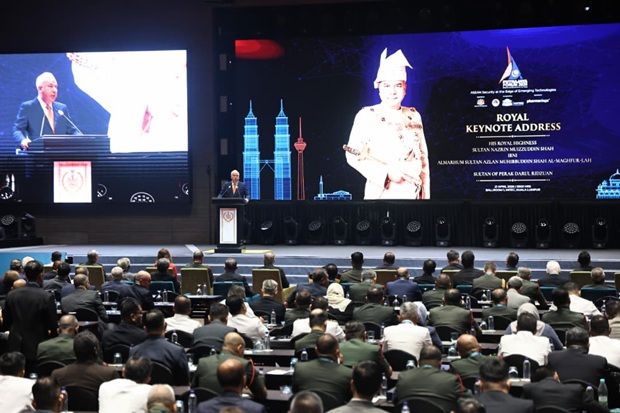
In the intricate web of global trade and energy, few passages hold as much strategic significance as the Strait of Hormuz. A narrow waterway connecting the Persian Gulf to the open ocean, it is the conduit for a substantial portion of the world's oil supply. When this vital artery faces disruption, the tremors are felt far and wide, and as Sultan Nazrin Shah of Perak, Malaysia, recently warned, the closure of the Strait of Hormuz is not just a regional issue but a looming crisis for all ASEAN nations. His stark assessment underscores the interconnectedness of the global economy and the profound vulnerabilities that arise when critical choke points are threatened.
The Geopolitical Crucible of Hormuz
The Strait of Hormuz is more than just a shipping lane; it is a geopolitical flashpoint. Bordered by Iran to the north and Oman's Musandam Governorate to the south, its strategic importance cannot be overstated. Approximately one-fifth of the world's total oil consumption and one-third of the world's liquefied natural gas (LNG) passes through this strait daily. For energy-hungry economies, particularly those in Asia, its uninterrupted flow is paramount. Any threat to this passage, whether from military conflict, political tension, or acts of piracy, sends immediate shockwaves through global energy markets, driving up crude oil prices and disrupting supply chains.
Historically, the strait has been a focal point of international tensions, particularly involving Iran. From the "Tanker War" during the Iran-Iraq War in the 1980s to more recent confrontations and seizures of vessels, the region remains volatile. Sultan Nazrin's warning comes amidst a backdrop of heightened geopolitical instability in the Middle East, where regional rivalries and international power plays often converge. The potential for a full-scale closure, even a temporary one, presents an existential threat to nations heavily reliant on imported energy and global trade routes.
ASEAN's Economic Vulnerability
The Association of Southeast Asian Nations (ASEAN) comprises ten diverse economies, many of which are net energy importers and heavily dependent on international trade. Countries like Singapore, Thailand, the Philippines, and even Malaysia (despite being an oil producer) rely on stable global energy prices and open shipping lanes for their economic prosperity. The Sultan of Perak highlighted that the ongoing conflict, presumably referring to broader Middle Eastern instability affecting the strait, would "directly affect the economies of countries in the ..." (referring to ASEAN). This direct impact manifests in several critical ways:
* Soaring Energy Costs: A disruption in Hormuz would immediately lead to a spike in global oil and gas prices. For ASEAN nations, this translates to higher import bills, increased operational costs for industries, and inflationary pressures on consumer goods. Fuel subsidies, if maintained, would strain national budgets, while their removal could spark social unrest. * Supply Chain Disruptions: Beyond energy, the strait is a key transit point for general cargo. Any closure would force ships to reroute, incurring longer transit times and higher freight costs. This would disrupt manufacturing supply chains, delay delivery of raw materials and finished goods, and potentially lead to shortages. * Trade Imbalances: Higher import costs and reduced export competitiveness due to increased shipping expenses could worsen trade balances for ASEAN members, depleting foreign exchange reserves and weakening local currencies. * Investment Climate Deterioration: Uncertainty and instability in global trade routes deter foreign direct investment (FDI), which is crucial for many developing ASEAN economies. Investors seek predictability, and a volatile energy market undermines that.
Historical Precedents and Future Projections
To understand the gravity of Sultan Nazrin's warning, one can look at historical precedents. The 1973 oil crisis, triggered by geopolitical events in the Middle East, demonstrated how energy supply shocks could plunge global economies into recession. While the context differs, the principle remains: disruption of critical energy pathways has cascading effects. More recently, the Suez Canal blockage by the Ever Given container ship, though temporary, offered a glimpse into the fragility of global supply chains, costing billions in delayed trade.
Future projections for ASEAN are grim if the Hormuz situation escalates. Economists predict that a sustained closure could shave multiple percentage points off regional GDP growth, push inflation into double digits, and potentially trigger recessions in the most vulnerable economies. The long-term implications include accelerated efforts by nations to diversify energy sources and trade routes, but such transitions are costly and time-consuming, offering little immediate relief in a crisis scenario.
Regional Responses and Mitigation Strategies
Given the severity of the potential crisis, ASEAN nations are not entirely without recourse, though their options are limited. Mitigation strategies typically involve a multi-pronged approach:
* Strategic Petroleum Reserves (SPR): Many ASEAN countries maintain SPRs, but these are designed for short-term disruptions, not prolonged closures. Their capacity might be insufficient to cushion a severe, extended shock. * Diversification of Energy Sources: Accelerating the transition to renewable energy and exploring alternative fossil fuel suppliers (e.g., from Africa or the Americas, though these routes are longer) can reduce reliance on Middle Eastern oil. * Diplomatic Engagement: ASEAN, as a bloc, can leverage its collective diplomatic weight to advocate for de-escalation and stability in the Middle East. Engaging with key global powers and regional stakeholders is crucial. * Enhanced Regional Cooperation: Strengthening intra-ASEAN trade and supply chain resilience could partially offset external shocks, though it cannot fully replace global connectivity. * Infrastructure Development: Investing in alternative pipelines or port infrastructure that bypasses certain choke points could be a long-term solution, albeit an expensive one.
Sultan Nazrin's warning serves as a critical reminder that regional stability in Southeast Asia is inextricably linked to geopolitical events far beyond its borders. The Strait of Hormuz, while geographically distant, is economically proximate to every ASEAN household and industry. The call for vigilance and proactive measures is not merely a political statement but an urgent plea for strategic foresight in a world increasingly defined by complex interdependencies and volatile flashpoints. The coming years will test the resilience and adaptability of ASEAN nations as they navigate these turbulent global waters, hoping to avert the looming crisis that threatens to engulf their hard-won economic progress.
Stay Informed
Get the world's most important stories delivered to your inbox.
No spam, unsubscribe anytime.
Comments
No comments yet. Be the first to share your thoughts!