Hormuz Strait: US-Iran Standoff Deepens as Truce Fails to Yield Peace
The strategic Strait of Hormuz remains a flashpoint as the US and Iran find themselves in a dangerous deadlock. Despite an extended ceasefire, peace talks have stalled, with both nations leveraging control over the vital waterway for geopolitical advantage. This high-stakes confrontation threatens global oil supplies and regional stability, demanding urgent diplomatic resolution.
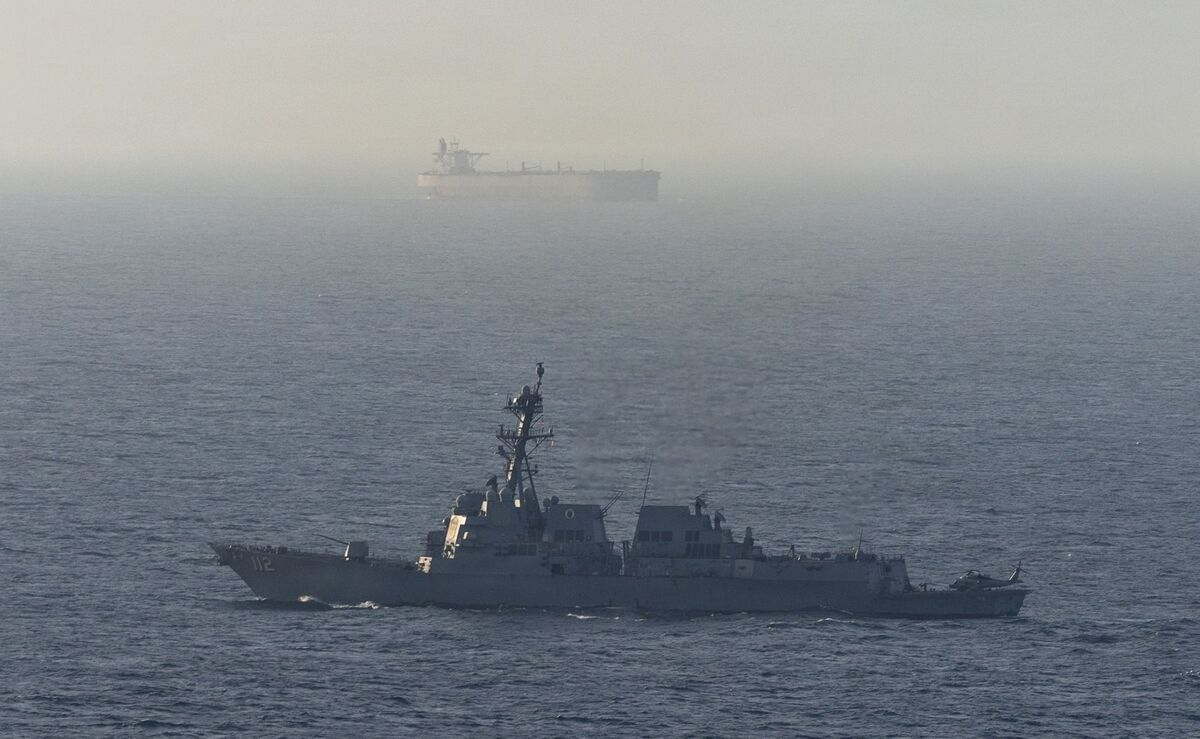
The shimmering waters of the Strait of Hormuz, a narrow choke point through which a fifth of the world's oil supply passes, have once again become the epicenter of a dangerous geopolitical standoff between the United States and Iran. What began as an extended ceasefire, intended to pave the way for fresh peace talks, has instead devolved into a precarious deadlock, with both nations employing a strategy of maritime obstruction to gain leverage. This escalating tension not only jeopardizes the fragile stability of the Middle East but also casts a long shadow over global energy markets and international trade.
The Anatomy of a Deadlock
The current impasse is rooted in a fundamental disagreement that has festered for decades, exacerbated by recent policy shifts. President Donald Trump's administration, having previously withdrawn from the 2015 Iran nuclear deal (JCPOA), has maintained a policy of "maximum pressure" on Tehran. This has included stringent sanctions aimed at crippling Iran's oil exports, its primary source of revenue. In response, Iran has increasingly asserted its control over the Strait, through which its own oil must also pass. The extended ceasefire, initially hailed as a potential de-escalation, has instead become a period of strategic maneuvering. Both sides are using the perceived threat of blockades – or actual, albeit temporary, disruptions – to signal their resolve and extract concessions. For the US, maintaining freedom of navigation is paramount, while for Iran, the Strait represents a potent bargaining chip against economic strangulation. The failure to meet for a new round of peace talks underscores the deep chasm of mistrust and conflicting objectives that separates Washington and Tehran.
A Historical Crucible: Hormuz's Strategic Significance
The Strait of Hormuz is not merely a geographical feature; it is a historical crucible of power, conflict, and economic destiny. Connecting the Persian Gulf to the Arabian Sea, it is the sole maritime passage from the oil-rich Gulf states to the open ocean. Approximately 21 million barrels of oil per day, or about 21% of global petroleum liquids consumption, transited the Strait in 2018, according to the U.S. Energy Information Administration (EIA). Any significant disruption here sends immediate shockwaves through global markets, driving up oil prices and threatening economic stability worldwide. Historically, control over this waterway has been a cornerstone of regional power projection. During the Iran-Iraq War in the 1980s, the "Tanker War" saw both sides attack merchant shipping, highlighting the vulnerability of this vital artery. More recently, incidents involving Iranian Revolutionary Guard Corps (IRGC) vessels and foreign tankers have kept international shipping companies on high alert. The Strait's strategic importance is further amplified by its narrowest point, just 21 nautical miles wide, with the shipping lanes themselves only two miles wide in each direction, making it highly susceptible to disruption.
Geopolitical Chessboard: Players and Motives
The current standoff involves a complex interplay of regional and international actors, each with their own motivations:
* United States: Aims to curb Iran's nuclear ambitions, destabilizing regional activities, and support its allies (Saudi Arabia, UAE, Israel). The Strait is crucial for global trade and energy security. The US maintains a significant naval presence in the region, including the Fifth Fleet, headquartered in Bahrain. * Iran: Seeks relief from crippling sanctions, recognition of its regional influence, and security against perceived external threats. It views the Strait as a sovereign asset and a tool to pressure international powers. Iran's naval strategy often involves asymmetric tactics, including fast attack craft, mines, and anti-ship missiles. * Regional Allies (Saudi Arabia, UAE): Heavily reliant on the Strait for oil exports, they view Iranian assertiveness with alarm and support US efforts to contain Tehran. They also invest in alternative pipeline routes to bypass the Strait, though these have limited capacity. * International Community: Concerned about the impact on global energy prices and the potential for broader conflict. Major oil importers like China, India, Japan, and European nations have a vested interest in ensuring freedom of navigation.
President Trump's decision to extend the truce, while ostensibly a gesture towards diplomacy, has been interpreted by some analysts as a tactic to maintain pressure while avoiding immediate military confrontation. However, without a clear path to negotiations, this extension risks prolonging the current state of dangerous ambiguity.
The Perils of Prolonged Uncertainty
The extended ceasefire, devoid of substantive dialogue, creates a dangerous vacuum. The absence of direct communication channels and confidence-building measures increases the risk of miscalculation. A single incident – a misidentified vessel, an accidental collision, or a provocative maneuver – could quickly spiral out of control, triggering a wider conflict. The economic ramifications are already being felt; insurance premiums for shipping through the Strait have skyrocketed, and oil markets remain volatile, reacting to every pronouncement and incident. Furthermore, the prolonged uncertainty undermines regional stability, potentially empowering extremist groups who thrive in chaos. The international community, while urging restraint, has struggled to find a unified approach to de-escalate the situation, highlighting the deep divisions within global diplomacy.
A Path Forward: Diplomacy or Deterioration?
The current trajectory is unsustainable. A genuine path to de-escalation requires more than just an extended truce; it demands a renewed commitment to direct, unconditional dialogue. Both the US and Iran must recognize the mutual self-interest in preventing a catastrophic conflict that would devastate the region and send the global economy into a tailspin. Potential avenues for resolution could include:
* Mediated Talks: Third-party mediators, perhaps from Europe or a neutral Asian power, could facilitate initial discussions to rebuild trust. * Phased De-escalation: A step-by-step approach where both sides take reciprocal measures to reduce tensions, such as easing some sanctions in exchange for verifiable commitments on maritime security. * Confidence-Building Measures: Establishing clear communication protocols between naval forces in the Strait to prevent misunderstandings.
The alternative is a continued march towards potential confrontation, with unpredictable and devastating consequences. The Strait of Hormuz stands as a stark reminder that even in an era of extended truces, the absence of genuine diplomatic engagement can transform a strategic waterway into a powder keg. The world watches, hoping that statesmanship will prevail over brinkmanship, ensuring the free flow of commerce and the preservation of peace in this critical region.
Stay Informed
Get the world's most important stories delivered to your inbox.
No spam, unsubscribe anytime.
Comments
No comments yet. Be the first to share your thoughts!