Hungary's New Dawn: Péter Magyar Ends Orbán Era, Promises Pro-European Path
A new chapter has opened in Hungarian politics as Péter Magyar was sworn in as Prime Minister, concluding Viktor Orbán's 16-year tenure. Magyar, a pro-European centre-right leader, has called for national unity and a departure from the previous government's populist policies. His ascent signals a potential realignment for Hungary, aiming for closer ties with the European Union and a more transparent governance model. The transition has been met with widespread jubilation and cautious optimism both domestically and internationally.
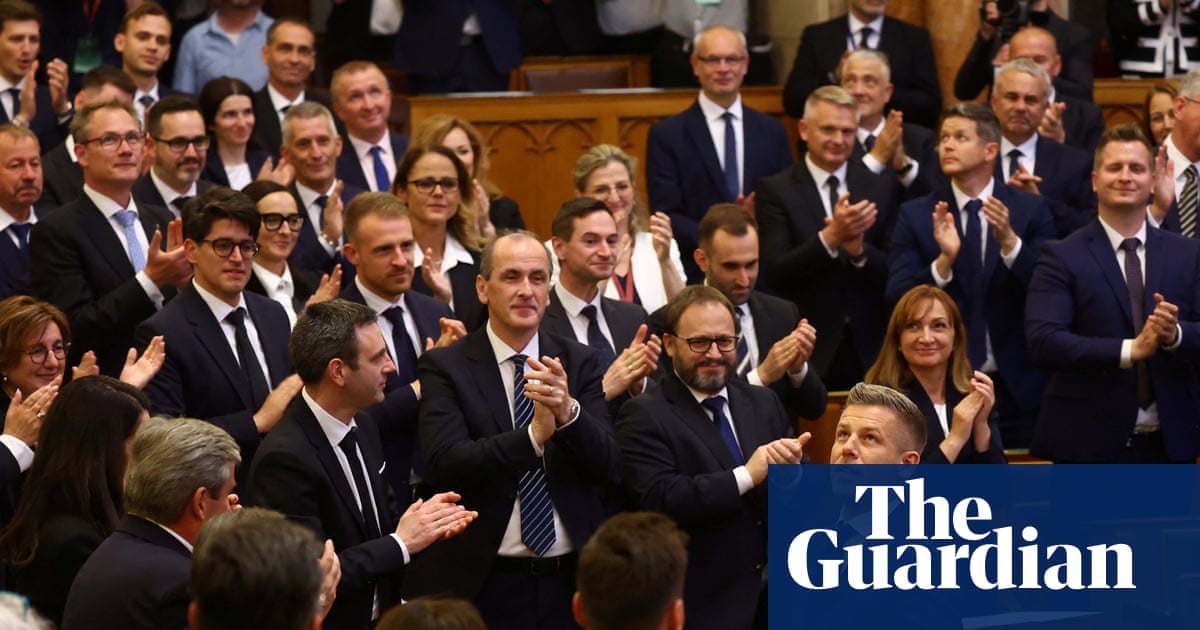
In a moment that reverberated across Central Europe and beyond, Péter Magyar officially took the oath of office as Hungary’s Prime Minister, signaling the definitive end of Viktor Orbán’s formidable 16-year reign. The ceremony, held on a momentous Saturday in Budapest, was not merely a procedural formality but a symbolic invitation from Magyar to the Hungarian people to “step through the gate of regime change” and collectively “write Hungarian history anew.” This transition marks a profound shift in the nation's political landscape, promising a renewed focus on democratic values, European integration, and a departure from the populist nationalism that defined the Orbán years.
A Nation's Hope: The Rise of Péter Magyar
Péter Magyar’s journey to the premiership has been nothing short of meteoric. Once an insider within Orbán’s Fidesz party and married to former Justice Minister Judit Varga, Magyar dramatically broke ranks earlier this year, publicly denouncing the government’s corruption and authoritarian tendencies. His emergence as a credible opposition figure ignited a dormant desire for change among a significant portion of the Hungarian electorate. His rallies, often drawing tens of thousands, became powerful symbols of a burgeoning civic movement, transcending traditional political divides. Magyar’s platform, centered on anti-corruption, strengthening democratic institutions, and re-establishing trust with the European Union, resonated deeply with citizens weary of political isolation and economic stagnation.
His appeal lies in his ability to articulate a vision for Hungary that is both patriotic and pro-European. He has consistently emphasized the importance of Hungary's place within the European family of nations, a stark contrast to Orbán's frequent clashes with Brussels. This commitment to European values, coupled with a promise of transparent governance and accountability, has positioned him as a fresh face capable of uniting disparate segments of society. The jubilation witnessed in Budapest following his swearing-in reflects a collective sigh of relief and a hopeful embrace of a future less defined by internal division and external friction.
The Orbán Era: A Legacy of Populism and Power Consolidation
Viktor Orbán’s 16 years at the helm were characterized by a robust consolidation of power, a strong emphasis on national sovereignty, and a confrontational stance towards the European Union. His Fidesz party, often described as illiberal, systematically reshaped Hungary’s media landscape, judiciary, and electoral system, drawing frequent criticism from international bodies and human rights organizations. Orbán’s policies, including strict immigration controls and nationalistic rhetoric, garnered him significant support domestically, particularly among conservative voters, but also led to Hungary being increasingly isolated within the EU.
Economically, the Orbán government oversaw periods of growth but also faced accusations of cronyism and widespread corruption, which became a significant point of contention for Magyar. Socially, his administration championed traditional family values and often clashed with progressive ideals, further polarizing Hungarian society. While his supporters credit him with restoring national pride and protecting Hungarian interests, critics point to the erosion of democratic checks and balances and the stifling of dissent. The end of his era, therefore, is not just a change in leadership but a potential re-evaluation of the very foundations of Hungarian governance and its relationship with the global community.
A New Path: Challenges and Opportunities for Magyar
Péter Magyar inherits a nation at a crossroads. His immediate challenges are manifold: * Healing divisions: Bridging the deep political and social divides exacerbated by the Orbán era will require nuanced leadership and a commitment to inclusive governance. * Economic reform: Tackling inflation, addressing wealth disparities, and fostering sustainable economic growth will be crucial for public confidence. * Restoring trust with the EU: Rebuilding damaged relationships with Brussels and unlocking frozen EU funds will be a top priority, requiring diplomatic skill and concrete policy changes. * Institutional reform: Reversing the democratic backsliding and strengthening independent institutions like the judiciary and media will be a monumental task.
Despite these hurdles, Magyar also has significant opportunities. His strong public mandate provides a powerful platform for reform. His pro-European stance could unlock new avenues for investment and cooperation, potentially revitalizing Hungary's economy and international standing. His commitment to transparency and anti-corruption measures could attract foreign direct investment and improve the business environment. Furthermore, his ability to mobilize a broad base of support suggests a potential for a more unified and forward-looking political discourse.
International Implications and Regional Impact
Magyar’s ascent is being closely watched across Europe. For the European Union, it represents a potential easing of tensions with a member state that has frequently been a thorn in its side. A more cooperative Hungary could strengthen the EU's collective voice on critical issues, from foreign policy to climate change. It could also set a precedent for other Central and Eastern European nations grappling with similar populist tendencies, demonstrating that a path back to mainstream European values is viable.
Regionally, Hungary's shift could influence the dynamics within the Visegrád Group (V4), potentially leading to a more unified pro-EU front or, conversely, creating new fault lines. The change in Budapest might also impact relations with neighboring countries, particularly those that have had strained relationships with the Orbán government. Analysts suggest that a more predictable and democratically aligned Hungary could contribute to greater stability and cooperation in a region often characterized by complex geopolitical challenges.
The Road Ahead: A Forward-Looking Perspective
Péter Magyar’s premiership marks the beginning of a new, uncertain, but undeniably hopeful era for Hungary. His invitation to the Hungarian people to “write history anew” is a powerful call to action, emphasizing collective responsibility in shaping the nation’s future. The transition from a deeply entrenched populist regime to a more liberal, pro-European government will undoubtedly be fraught with challenges, requiring resilience, strategic vision, and sustained public engagement. However, the palpable sense of optimism and the widespread desire for change suggest that Hungary is ready to embrace this new chapter. The world watches keenly as Budapest embarks on a journey to redefine its identity, reaffirm its democratic principles, and reclaim its place at the heart of Europe, promising a fascinating period of political evolution and potential renewal.
Stay Informed
Get the world's most important stories delivered to your inbox.
No spam, unsubscribe anytime.
Comments
No comments yet. Be the first to share your thoughts!