Hungary's Shifting Sands: Is Peter Magyar a New Path or a Familiar Alignment with Moscow?
The political landscape in Hungary is undergoing a significant transformation following the rise of Peter Magyar, a figure initially seen as a departure from Viktor Orbán's pro-Kremlin stance. However, Magyar's recent pronouncements on energy policy and the conflict in Ukraine suggest a more nuanced alignment with Moscow's interests, particularly concerning Russian energy exports. This shift raises questions about the future of Hungary's foreign policy and its implications for European unity and the Kremlin's strategic objectives.
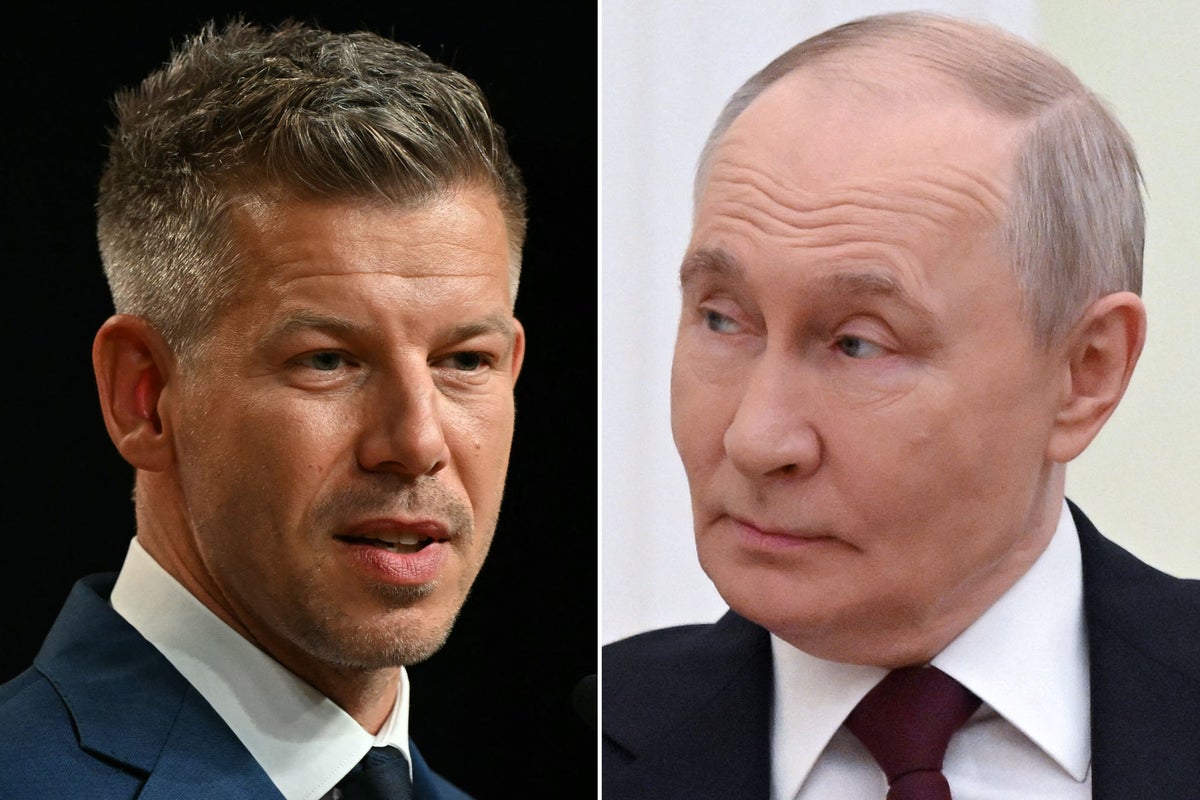
The political currents in Central Europe are rarely straightforward, but the recent ascendance of Peter Magyar in Hungary has introduced a new layer of complexity, challenging preconceived notions about the nation's trajectory. For years, Prime Minister Viktor Orbán’s often-contentious relationship with the European Union was overshadowed by his increasingly overt alignment with Moscow, particularly after the full-scale invasion of Ukraine. Orbán’s critics and allies alike had begun to write off Hungary as a steadfast, if sometimes inconvenient, friend to the Kremlin. Yet, the emergence of Magyar, initially hailed as a potential disruptor and a fresh voice, now presents a more subtle, perhaps even more insidious, alignment with Russian interests than many had anticipated.
The Promise of a New Era: Magyar's Initial Appeal
When Peter Magyar first burst onto the Hungarian political scene, he was widely perceived as a breath of fresh air, a charismatic figure promising to dismantle the entrenched power structures of Orbán's Fidesz party. His initial rhetoric often contrasted sharply with Orbán's, particularly on issues of corruption and democratic backsliding. Many observers, both domestic and international, hoped that Magyar's rise would signal a decisive shift away from the pro-Russian leanings that had come to define Hungarian foreign policy. His early pronouncements suggested a desire for closer ties with Western allies and a more robust commitment to European values. This perception was bolstered by his public criticisms of the Orbán government's handling of various crises, including its often-lukewarm support for Ukraine. The narrative was simple: Orbán was out, and a new, more pro-Western leader was in.
However, as Magyar's political platform has solidified and his public statements have become more detailed, a different picture is beginning to emerge. Far from a complete break with the past, his stance on critical issues like energy and the war in Ukraine appears to echo, rather than refute, some of the very positions that drew international condemnation to Orbán. This nuanced, yet concerning, alignment suggests that the Kremlin might find a new, perhaps more palatable, partner in Budapest, even as the world grapples with the ongoing conflict in Eastern Europe.
Energy: The Unseen Hand of Russian Influence
One of the most critical areas where Magyar's position raises eyebrows is energy policy. Hungary, like many Central European nations, has historically been heavily reliant on Russian energy supplies, particularly natural gas and oil. This dependency has long been a geopolitical lever for Moscow, allowing it to exert significant influence over the region. While Orbán openly championed the continuation of Russian energy imports, often citing economic necessity, Magyar's approach, while framed differently, appears to lead to a similar outcome. His proposals, which emphasize maintaining affordable energy for Hungarian households and industries, often translate into a de facto continuation of Russian energy reliance.
Analysts point out that any policy prioritizing cheap energy in the current European context almost inevitably involves continued engagement with Russian suppliers. The infrastructure for alternative sources, while developing, is not yet robust enough to fully decouple Hungary from Russian gas and oil without significant economic disruption. By framing his energy policy around pragmatism and economic stability, Magyar risks inadvertently, or perhaps intentionally, reinforcing the very ties that have empowered the Kremlin. This subtle endorsement of Russian energy flows, even if presented as a purely economic decision, serves to replenish Moscow's coffers, directly funding its military efforts in Ukraine. The Kremlin's cash windfall from elevated oil and gas prices, exacerbated by global instability, finds a willing, if indirect, conduit in Budapest.
Ukraine: A Pragmatic Stance or a Softened Opposition?
Magyar's evolving stance on the war in Ukraine is another area of concern. While he has not openly endorsed Russia's aggression, his rhetoric often focuses on the need for a swift peace, the economic burden of the war on Hungary, and the potential for escalation. While these are legitimate concerns, the framing of these arguments often aligns with Moscow's narrative, which seeks to undermine Western unity and support for Kyiv. By emphasizing the costs of the conflict and the imperative for immediate negotiations, Magyar's position could be interpreted as a call to reduce military and financial aid to Ukraine, thereby weakening its defensive capabilities.
Furthermore, his comments sometimes hint at a more critical view of Ukraine itself, rather than solely focusing on Russian aggression. This approach, while not as overtly pro-Russian as Orbán's most controversial statements, still contributes to a narrative that complicates Western efforts to present a united front against Moscow. The danger lies in the potential for this seemingly pragmatic approach to be exploited by the Kremlin, which thrives on divisions within the European Union and NATO. A less enthusiastic, or even subtly critical, stance on Ukraine from a prominent Hungarian political figure could be seen as a victory for Russian propaganda, suggesting that European resolve is faltering.
The Broader Geopolitical Context: A World Distracted
It is crucial to view Magyar's rise and his evolving positions within the broader geopolitical context. The world stage is currently dominated by multiple crises, from the ongoing conflict in the Middle East to rising tensions in other global hotspots. This global distraction provides an opportune moment for the Kremlin to consolidate its gains and exert influence where it can. Higher oil prices, fueled by instability, are already providing a significant boost to Russia's economy, allowing it to sustain its war efforts despite Western sanctions. In this environment, any European leader who, however subtly, facilitates Russian economic interests or weakens the united front against Moscow, plays directly into the Kremlin's hands.
The implications for European unity are significant. The EU has striven to present a common front against Russian aggression, implementing sanctions and providing aid to Ukraine. Hungary under Orbán was often a dissenting voice, complicating consensus. If Magyar, despite his reformist image, continues to adopt positions that align with Russian interests, it could further erode the bloc's cohesion and its ability to respond effectively to external threats. This is not merely about a single nation's foreign policy; it is about the collective strength and resolve of the European project.
Conclusion: A Nuanced Threat to Western Solidarity
Peter Magyar's emergence on the Hungarian political scene represents a complex and potentially concerning development. While initially offering hope for a departure from Orbán's distinctly pro-Kremlin stance, his evolving positions on energy and Ukraine suggest a more subtle, yet equally problematic, alignment with Moscow's strategic objectives. This is not the overt embrace of Russia seen under Orbán, but rather a pragmatic, economically driven approach that nonetheless serves to fill the Kremlin's coffers and potentially weaken European resolve against Russian aggression.
The international community, particularly the European Union and NATO, must remain vigilant. The danger is not always in outright opposition, but in the nuanced shifts that can gradually undermine collective security and solidarity. As Hungary navigates its political future, the world will be watching closely to see whether Magyar truly represents a new path for the nation or merely a more sophisticated continuation of a policy that ultimately benefits Moscow. The choices made in Budapest will have repercussions far beyond Hungary's borders, impacting the future of European security and the global balance of power.
Stay Informed
Get the world's most important stories delivered to your inbox.
No spam, unsubscribe anytime.
Comments
No comments yet. Be the first to share your thoughts!