iPhone Fold: Apple's Foldable Future Unveiled for 2026 with 'Ultra' Ambitions
Apple is reportedly set to revolutionize the smartphone market in September 2026 with the launch of its long-awaited foldable device, the iPhone Fold. This 'Ultra' branded phone is expected to feature a book-style design, marking a significant departure from traditional iPhones. Analysts anticipate a premium price point and the reintroduction of Touch ID, signaling Apple's ambitious entry into the burgeoning foldable segment.
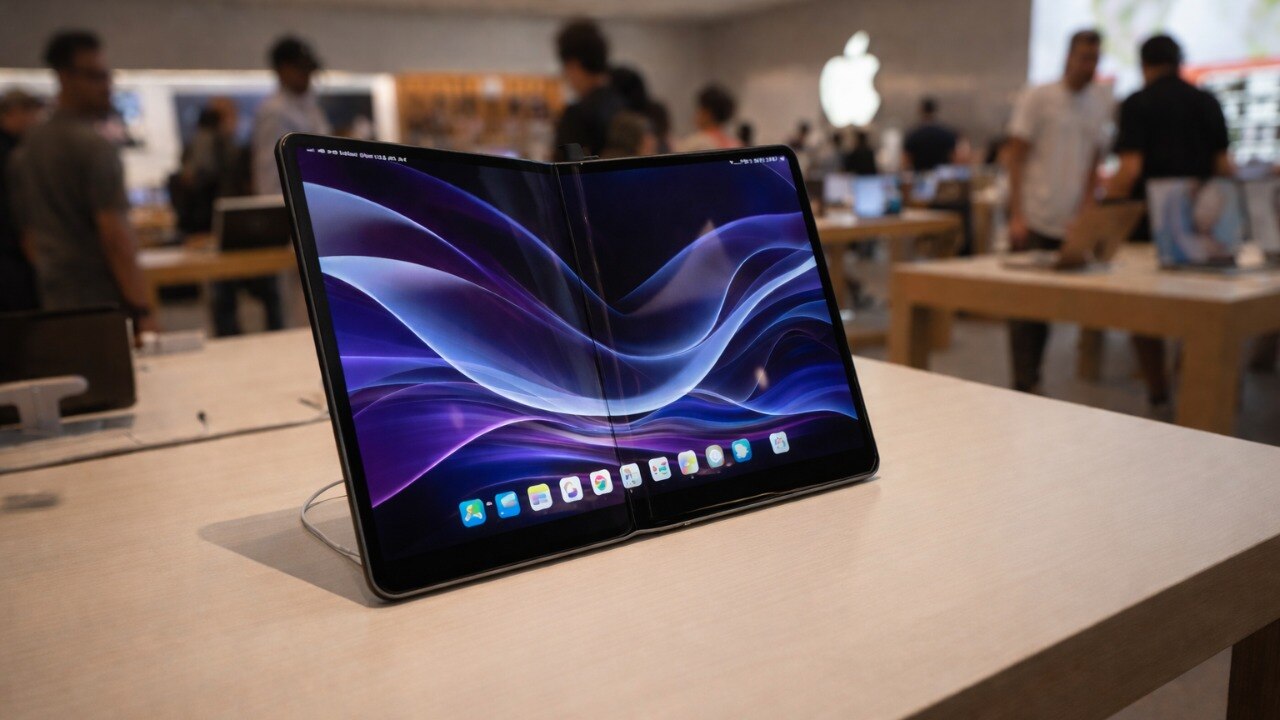
For nearly two decades, Apple has consistently redefined personal technology, from the iPod's musical revolution to the iPhone's ubiquitous dominance. Now, as the tech giant approaches its next major hardware frontier, whispers and leaks suggest an imminent paradigm shift: the iPhone Fold. Slated for a potential September 2026 debut, this device isn't just another iteration; it's poised to be the most significant design overhaul since Steve Jobs first unveiled the original iPhone in 2007, promising to usher in a new era of mobile computing with its 'Ultra' branding and innovative form factor.
The Long-Awaited Foldable Leap
The concept of a foldable iPhone has been a staple of tech speculation for years, fueled by numerous patents filed by Apple detailing various hinge mechanisms and flexible display technologies. While competitors like Samsung, Huawei, and Motorola have already established a presence in the foldable market, Apple has notably held back, adhering to its characteristic strategy of entering a market only when it believes it can deliver a truly polished and superior experience. This patient approach suggests that the iPhone Fold won't merely be a me-too product, but a meticulously engineered device designed to overcome the durability and software integration challenges that have plagued early foldable models.
Sources close to Apple's supply chain indicate that the company is aiming for a book-style foldable design, reminiscent of Samsung's Galaxy Z Fold series. This form factor would allow users to enjoy a compact smartphone experience when closed, and unfold it into a larger, tablet-like display for enhanced productivity, media consumption, and gaming. Such a design would dramatically alter user interaction, offering a versatile canvas for Apple's ecosystem of apps and services. The 'Ultra' moniker further suggests that this will be a top-tier device, likely incorporating Apple's most advanced chipsets, camera technology, and display innovations.
Design Innovations and Speculations
Beyond the fundamental foldable mechanism, several key design and feature speculations are circulating. One of the most intriguing is the potential reintroduction of Touch ID, possibly integrated into the power button or even beneath the flexible display. While Face ID has become a hallmark of modern iPhones, Touch ID offers a convenient and secure alternative, particularly useful in scenarios where Face ID might be less practical, such as when wearing masks or in certain professional environments. Its return would be a nod to user preference and a strategic move to enhance accessibility and security.
Display technology will undoubtedly be at the forefront. Apple is known for its stunning Retina and Super Retina XDR displays, and the iPhone Fold is expected to push these boundaries further. We could see a ProMotion display with adaptive refresh rates up to 120Hz, ensuring buttery-smooth scrolling and responsiveness. The challenge for Apple will be to deliver a crease-free or near-crease-free experience, a common pain point for existing foldables. Advanced hinge technology and ultra-thin glass (UTG) are likely to be key components in achieving this.
Camera systems are another area where Apple traditionally excels. The 'Ultra' branding implies a camera setup that rivals or surpasses current iPhone Pro Max models, potentially featuring enhanced optical zoom, larger sensors for improved low-light performance, and advanced computational photography capabilities. The unique form factor could also enable new photographic modes and perspectives, leveraging the dual-screen setup for unique previews or controls.
Market Impact and Competitive Landscape
Apple's entry into the foldable market is not just another product launch; it's a seismic event that will reshape the entire industry. For years, Android manufacturers have been experimenting and refining their foldable offerings, but Apple's imprimatur often legitimizes and accelerates market adoption. When the iPhone Fold arrives, it will undoubtedly intensify competition, forcing rivals to innovate further and potentially driving down prices across the segment.
According to Counterpoint Research, the global foldable smartphone market is projected to grow significantly, with shipments expected to exceed 100 million units by 2027. Apple's late entry means it will be vying for market share against established players, but its brand loyalty, robust ecosystem, and reputation for quality could quickly propel it to a dominant position. "Apple doesn't need to be first; it needs to be best," says industry analyst Ming-Chi Kuo. "Their approach to foldables will likely focus on user experience, software optimization, and durability, areas where they can truly differentiate."
The premium price point associated with the 'Ultra' branding is a given. Early estimates suggest the iPhone Fold could start well above the current iPhone Pro Max models, potentially entering the $1,800 to $2,500 range. This positions it as a luxury device, targeting early adopters and tech enthusiasts who demand cutting-edge innovation and are willing to pay a premium for Apple's signature blend of hardware and software excellence.
Software Optimization and Ecosystem Integration
A foldable device presents unique software challenges and opportunities. Apple's iOS, known for its intuitive interface, will need significant adaptations to fully leverage the dual-screen experience. Features like enhanced multitasking, split-screen applications, and seamless transitions between folded and unfolded modes will be crucial. The iPad's iPadOS, with its more robust multitasking capabilities, could serve as a blueprint for how iOS might evolve on a foldable form factor.
Furthermore, the iPhone Fold will need to integrate seamlessly with Apple's broader ecosystem, including AirPods, Apple Watch, Mac, and iPad. The continuity features that define the Apple experience – Handoff, Universal Clipboard, AirDrop – will need to function flawlessly across the new form factor, enhancing its appeal to existing Apple users. Developers will also play a critical role, adapting their applications to take full advantage of the larger, flexible display, creating a richer and more immersive user experience.
The Future of Mobile Computing
The potential launch of the iPhone Fold in 2026 represents more than just a new product; it signifies Apple's vision for the future of mobile computing. It's a statement that the traditional slab smartphone, while still dominant, has reached a plateau in terms of innovation. The foldable form factor offers a path forward, combining the portability of a phone with the expansive capabilities of a tablet.
This device could mark the beginning of a new chapter for Apple, one where hardware design is even more fluid and adaptable. It's a bold move that could redefine user expectations for what a smartphone can be, setting new benchmarks for design, functionality, and integration. As the countdown to September 2026 begins, the tech world watches with bated breath, eager to see how Apple will once again attempt to bend the future to its will, literally and figuratively, with the highly anticipated iPhone Fold.
Stay Informed
Get the world's most important stories delivered to your inbox.
No spam, unsubscribe anytime.
Comments
No comments yet. Be the first to share your thoughts!