King Charles III's Diplomatic Dance: How He Charmed the US While Subtly Challenging Trump's Legacy
King Charles III's historic address to the US Congress marked a significant moment in Anglo-American relations, showcasing a nuanced diplomatic approach. While outwardly charming, his speech subtly underscored themes of climate action and democratic values, implicitly contrasting with the previous US administration's policies. This second address by a British monarch to Congress highlighted evolving global dynamics and the enduring, yet adaptable, 'special relationship' between the two nations. It demonstrated the monarch's unique soft power in navigating complex international political landscapes.
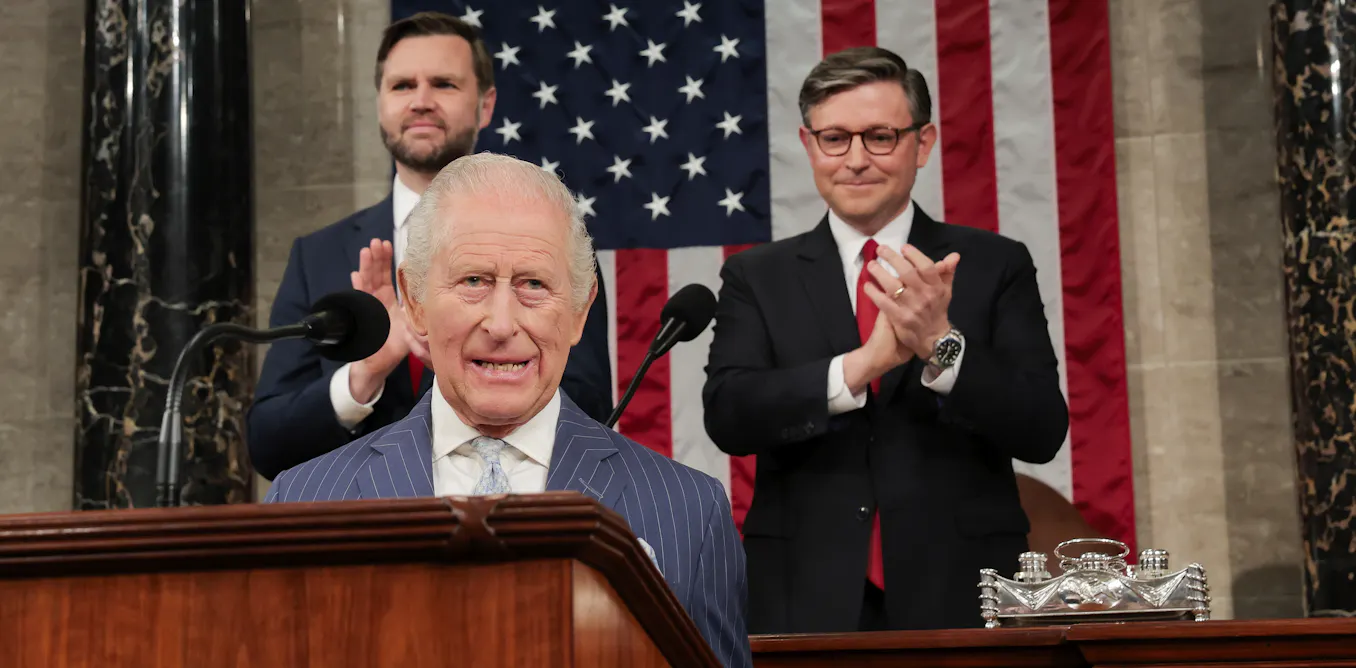
In a world increasingly fractured by geopolitical tensions and ideological divides, the visit of a British monarch to the United States remains an event of profound symbolic weight. King Charles III's address to a joint session of the US Congress, only the second such occasion for a British sovereign, was more than just a ceremonial formality; it was a masterclass in diplomatic nuance and soft power. Delivered against a backdrop of shifting global alliances and domestic political polarization, the King's speech deftly navigated the expectations of a transatlantic audience while subtly, yet unmistakably, pushing the boundaries of traditional monarchical discourse, particularly in the shadow of the Trump era.
The year was 2023, and the world was a vastly different place from 1991, when Queen Elizabeth II last graced the halls of Congress. Her address, delivered in the afterglow of the Cold War, celebrated a shared victory and a stable world order. Charles III, however, faced a more complex reality: a climate crisis demanding urgent action, a resurgent authoritarianism, and a global political landscape still reverberating from the 'America First' doctrine. His speech, therefore, was not merely a reaffirmation of the 'special relationship' but a carefully calibrated message, designed to resonate with American values while gently, yet firmly, advocating for a multilateral, environmentally conscious future.
The Art of Subtlety: A Royal Critique
One of the most striking aspects of King Charles's address was its subtle yet powerful critique of certain political currents, particularly those associated with the previous US administration. While never mentioning names or specific policies, the King's emphasis on climate change as an existential threat and his call for global cooperation stood in stark contrast to the Trump administration's withdrawal from the Paris Agreement and its skepticism towards international institutions. His words on environmental stewardship, deeply rooted in his lifelong advocacy, were not just a personal passion but a strategic diplomatic statement.
He spoke of the "interconnectedness of our planet" and the "urgent need for collective action," phrases that, while universally applicable, took on a particular resonance in a nation still grappling with the legacy of a president who had often downplayed such concerns. This was not an overt political intervention, which would be anathema to the constitutional role of a British monarch. Instead, it was a principled stand, articulated through the lens of shared values and long-term global well-being. The King's ability to deliver such a message, cloaked in royal decorum, allowed it to bypass partisan defenses and appeal to a broader sense of responsibility.
Furthermore, his invocation of democratic values and the importance of alliances served as a quiet counterpoint to isolationist tendencies. By celebrating the strength of the transatlantic bond and the shared commitment to freedom, he reinforced the very foundations that had been questioned in recent years. This strategic use of language allowed him to champion causes he deeply believes in, while maintaining the necessary diplomatic distance from direct political commentary.
A New Era for the Monarchy and Transatlantic Ties
King Charles III's reign began with the weight of expectation and the challenge of modernizing an ancient institution. His visit to the US, and specifically his congressional address, offered a glimpse into how he intends to wield the monarchy's unique influence on the global stage. Unlike his mother, whose reign was characterized by an unwavering commitment to tradition and a more reserved public persona, Charles has always been more outspoken, particularly on environmental issues. His address to Congress demonstrated a willingness to leverage his platform for purpose-driven diplomacy.
The 'special relationship' between the UK and the US, a phrase coined by Winston Churchill, has always been complex, evolving through different political eras. From the post-war alliance to the challenges of Brexit, it has endured periods of both profound alignment and significant divergence. Charles's speech underscored the enduring strategic importance of this bond, not just for historical reasons but for addressing contemporary global challenges. It was a reminder that despite political fluctuations, the underlying cultural, economic, and security ties remain robust.
His reception in Washington D.C. was overwhelmingly positive, a testament to the enduring appeal of the British monarchy and the King's personal charm. This warmth allowed his more pointed messages to be received not as criticism, but as a friendly, yet firm, call to action from a trusted ally. The King's ability to connect with diverse political figures, from seasoned lawmakers to new congressional members, highlighted his skill as a diplomat and a unifier.
Historical Echoes and Future Horizons
The historical significance of a British monarch addressing the US Congress cannot be overstated. It is a rare event, a symbolic bridge between two nations that share a common heritage yet have forged distinct paths. Queen Elizabeth II's 1991 speech, delivered after the Gulf War, celebrated a moment of international consensus and the triumph of liberal democracy. Charles III's speech, three decades later, reflected a more fragmented world, one grappling with the consequences of climate change, economic inequality, and the rise of populism.
His address was a subtle acknowledgment of these shifts, a recognition that the challenges of the 21st century demand a different kind of leadership and a renewed commitment to global solidarity. By focusing on shared values and universal concerns, the King sought to transcend partisan divides and remind both nations of their collective responsibility. This approach is crucial for the monarchy's continued relevance in a rapidly changing world, allowing it to adapt its role from a symbol of tradition to a catalyst for dialogue and cooperation.
Looking ahead, King Charles III's diplomatic style, as evidenced by his US visit, suggests a monarchy that will be more engaged on critical global issues, albeit within the constitutional constraints. His willingness to speak on topics like climate change, even when implicitly challenging prevailing political narratives, positions him as a moral voice on the international stage. This proactive stance could redefine the modern monarch's influence, moving beyond mere ceremonial duties to become a more active, albeit indirect, force for positive global change. The legacy of this speech will likely be measured not just by its immediate reception, but by its long-term impact on the transatlantic dialogue and the collective effort to address humanity's most pressing challenges.
Stay Informed
Get the world's most important stories delivered to your inbox.
No spam, unsubscribe anytime.
Comments
No comments yet. Be the first to share your thoughts!