Nusantara's Genesis: Chinese Billions Pave the Way for Indonesia's Jungle Capital
Indonesia's ambitious plan to relocate its capital to Nusantara in Borneo is rapidly taking shape, fueled significantly by Chinese investment. This multi-billion dollar endeavor, transforming dense jungle into a modern metropolis, highlights complex geopolitical dynamics, environmental concerns, and the promise of a new economic hub. As construction progresses, the project tests Jakarta's balancing act between economic development and ecological preservation.
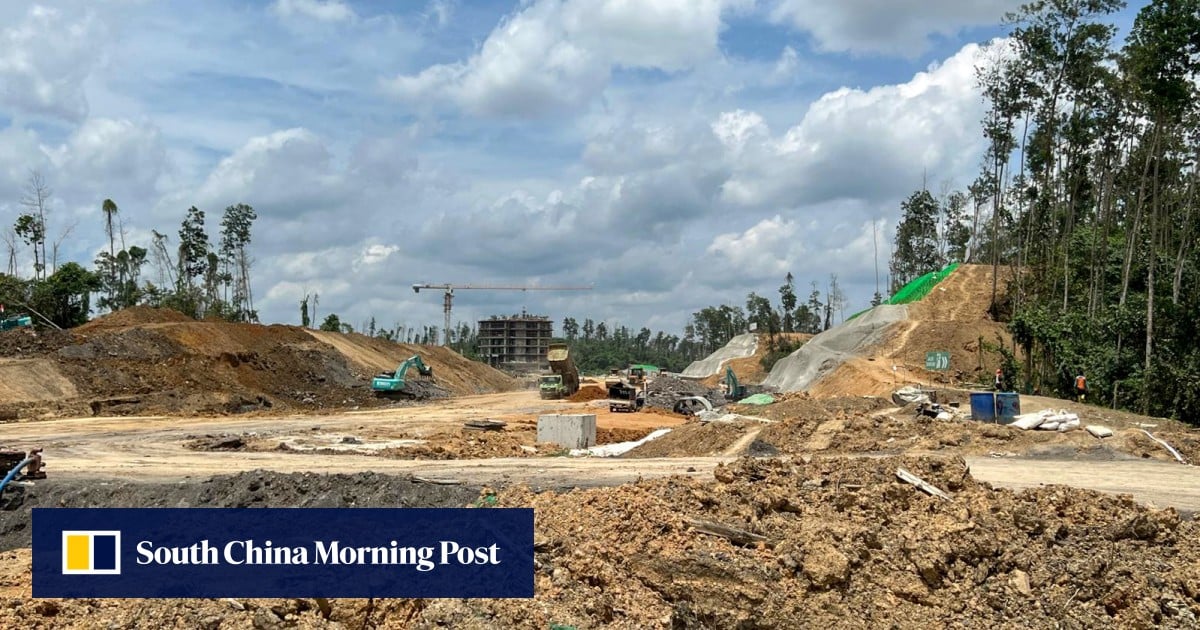
The air in East Kalimantan, Borneo, hangs thick with humidity and the scent of disturbed earth. What was once an impenetrable expanse of lush jungle, home to endangered sun bears and ancient trees, is now a sprawling construction site. This is Nusantara, Indonesia’s audacious new capital, rising from the wilderness. The journey here, an hour's precarious drive from Balikpapan city airport through partially washed-out roads, offers a stark preview of the monumental task at hand. Yet, amidst the mud and the nascent infrastructure, a clear narrative emerges: Chinese investment is the powerful engine driving this transformative project, aiming to cement trade ties and influence in Southeast Asia.
Indonesia's decision to move its capital from Jakarta, a city grappling with chronic congestion, pollution, and the alarming threat of sinking, is not merely an urban planning exercise; it's a strategic geopolitical maneuver. President Joko Widodo's vision for Nusantara is a smart, green, and sustainable city, a symbol of Indonesia's future and its aspiration to become a developed nation by 2045. But such grand ambitions require equally grand financing, and it is here that Beijing's Belt and Road Initiative (BRI) and its associated financial muscle have found fertile ground.
The Allure of Nusantara: A Strategic Gamble
President Widodo first announced the capital relocation in 2019, citing Jakarta's unsustainable growth and the need for a more equitable distribution of development across the archipelago. Nusantara, strategically located on Borneo, offers a perceived refuge from natural disasters like earthquakes and volcanic eruptions that plague Java. It is envisioned as a futuristic metropolis, powered by renewable energy, boasting advanced public transport, and integrated with nature. The initial cost estimate for this colossal undertaking hovers around $32 billion, a sum that Indonesia, despite its robust economy, cannot fully shoulder alone. This financial gap has opened the door wide for foreign direct investment, with China emerging as a dominant player.
Chinese construction firms, backed by state-owned enterprises and development banks, are not merely contractors; they are strategic partners. Their involvement extends beyond simply building roads and buildings; it encompasses the development of critical infrastructure, smart city technologies, and even potentially the financing of large-scale residential and commercial zones. For Beijing, Nusantara represents a significant opportunity to deepen its economic footprint in Southeast Asia, a region vital to its trade routes and geopolitical ambitions. By helping build Indonesia's future capital, China secures long-term influence and strengthens its position as a preferred development partner, contrasting with Western nations that often come with more stringent environmental and governance conditionalities.
Chinese Investment: A Double-Edged Sword
The influx of Chinese capital and expertise is undeniably accelerating Nusantara's development. Reports indicate that several major Chinese construction giants are actively involved in various phases of the project, from initial land clearing to the construction of government buildings and residential complexes. This involvement is often framed by both sides as mutually beneficial: Indonesia gains much-needed capital and rapid infrastructure development, while China gains access to a lucrative market and strengthens its regional ties. However, this partnership is not without its complexities and potential pitfalls.
Critics point to the debt trap diplomacy narrative often associated with BRI projects, where recipient nations risk accumulating unsustainable debt. While Indonesia has been careful to emphasize that Nusantara will primarily be funded by private investment and its state budget, the scale of Chinese involvement raises questions about future leverage. Furthermore, the environmental impact of transforming vast swathes of rainforest into an urban center is a major concern for conservationists. Despite promises of a 'green' capital, the initial stages of construction inevitably involve significant deforestation and habitat disruption, threatening biodiversity in one of the world's most ecologically rich regions.
Another aspect is the labor force. While Indonesian workers are primarily employed, large-scale Chinese projects often bring in their own skilled labor and management, leading to local concerns about job displacement and the transfer of technology. Transparency in bidding processes and contract negotiations also remains a recurring issue in large infrastructure projects involving foreign state-backed entities, prompting calls for greater scrutiny to ensure fair practices and prevent corruption.
Geopolitical Implications and Regional Dynamics
The construction of Nusantara, heavily influenced by Chinese capital, has significant geopolitical ramifications. It underscores Indonesia's pragmatic foreign policy, which seeks to balance relations with major global powers while safeguarding its national interests. By engaging with China on such a critical project, Indonesia is signaling its openness to robust economic partnerships, even as it navigates complex issues like the South China Sea disputes.
For other ASEAN nations, Nusantara's development serves as a case study in managing large-scale foreign investment, particularly from China. The success or challenges faced by Indonesia in balancing economic growth with environmental protection and sovereign control will offer valuable lessons. The project could also reshape regional economic corridors, potentially drawing more investment and trade towards Borneo and away from traditional centers. The long-term impact on Indonesia's strategic autonomy and its ability to maintain a non-aligned stance amidst growing US-China rivalry will be closely watched. The new capital's infrastructure, from ports to digital networks, could become integrated into broader regional connectivity initiatives, further entrenching Chinese influence.
The Path Forward: Balancing Ambition and Sustainability
As Nusantara continues its rapid ascent from the jungle floor, the path ahead is fraught with both immense promise and considerable challenges. The Indonesian government remains steadfast in its commitment to creating a sustainable, smart, and inclusive capital. This vision, however, must contend with the realities of large-scale development, the demands of international investors, and the imperative of environmental stewardship.
The success of Nusantara will ultimately hinge on Indonesia's ability to: (1) diversify its funding sources beyond a single dominant partner, ensuring financial independence; (2) rigorously enforce environmental regulations and implement genuine green technologies to mitigate ecological damage; (3) foster genuine local participation and benefit-sharing, preventing the project from becoming an enclave of foreign interests; and (4) maintain transparency and accountability in all aspects of its development. The world watches as Indonesia attempts to build not just a city, but a new paradigm for national development, navigating the muddy waters of international finance and the clear-cut demands of a sustainable future. The transformation of Borneo's jungle into a gleaming capital, powered by Chinese billions, is a testament to Indonesia's ambition, but also a critical test of its long-term vision and resilience.
Stay Informed
Get the world's most important stories delivered to your inbox.
No spam, unsubscribe anytime.
Comments
No comments yet. Be the first to share your thoughts!