NVIDIA's RTX Remix Unleashes Advanced Particle VFX, Breathing New Life into Classic Games
NVIDIA has officially launched its Advanced Particle VFX Update for the RTX Remix modding tool, a significant leap forward for classic game modernization. Announced at GDC 2026, this update empowers modders to inject cutting-edge particle effects into beloved DirectX 8 and 9 titles, dramatically enhancing visual fidelity. This development not only preserves gaming history but also redefines the potential for community-driven game remasters, setting a new standard for retro gaming experiences.
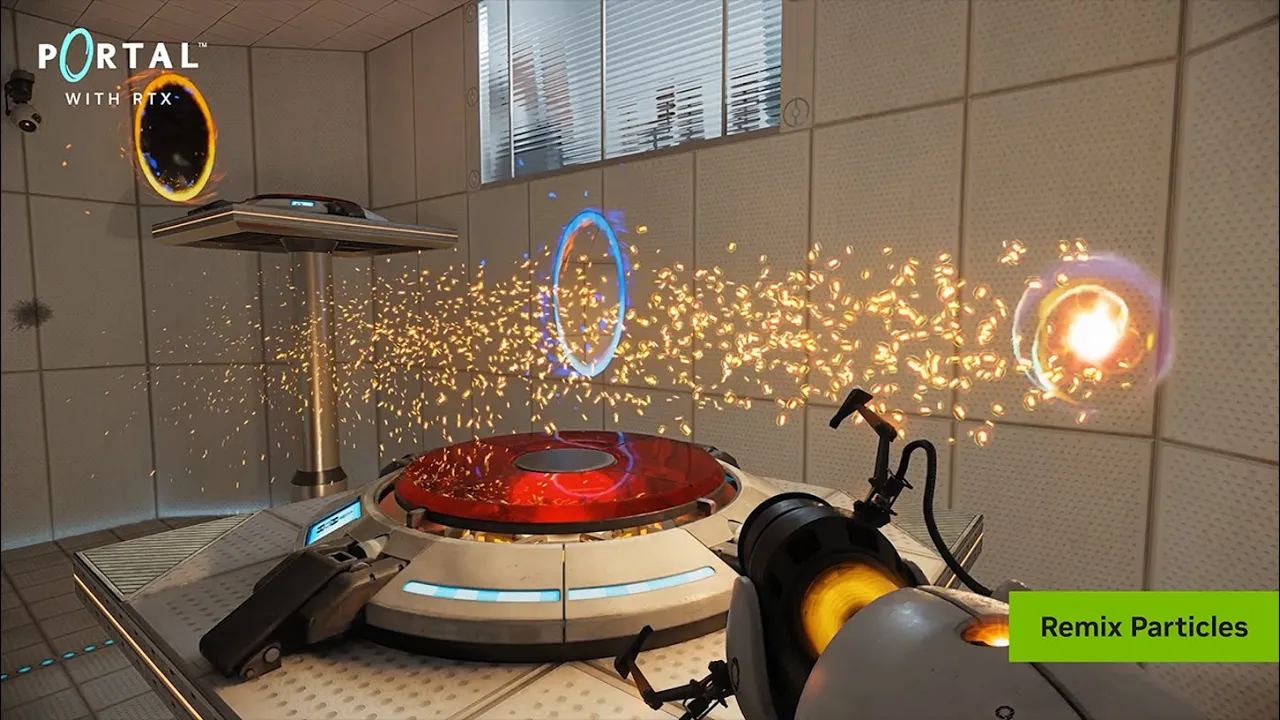
The digital tapestry of gaming history is rich with titles that, despite their age, continue to captivate and inspire. Yet, time, with its relentless march, often leaves behind a trail of outdated graphics and visual limitations. Enter NVIDIA's RTX Remix, a groundbreaking modding platform designed to bridge this chasm between past and present. At the highly anticipated Game Developers Conference (GDC) 2026, NVIDIA unveiled and subsequently shipped a monumental enhancement to this tool: the Advanced Particle VFX Update. This isn't merely an incremental improvement; it's a profound transformation, empowering a new generation of modders and enthusiasts to imbue cherished DirectX 8 and DirectX 9-era games with stunning, modern particle effects, effectively reimagining their visual splendor for contemporary audiences.
The Genesis of RTX Remix: Bridging Eras
NVIDIA's RTX Remix was first introduced as a revolutionary concept: a toolset that leverages the power of RTX technologies – including ray tracing and DLSS – to remaster classic games. Its core philosophy is to bring the prowess of modern game engines backward, allowing titles from the early 2000s to benefit from visual fidelity previously unimaginable. Before this update, modders could already enhance lighting, textures, and geometry, but particle effects – often crucial for depicting fire, smoke, water, and magical spells – remained a significant hurdle. These older particle systems were rudimentary, resource-light, and lacked the dynamic realism expected in today's gaming landscape. The Advanced Particle VFX Update directly addresses this, providing sophisticated new tools that allow for the creation of volumetric, physics-driven, and highly detailed particle effects that can seamlessly integrate into these venerable titles. This means that the explosive fireballs in a classic RPG or the swirling dust in an old-school FPS can now exhibit the same level of visual sophistication as a modern AAA release, all without altering the original game's core code or gameplay mechanics.
Unpacking the Advanced Particle VFX Update
The Advanced Particle VFX Update introduces a suite of powerful features designed to give modders unprecedented control over particle systems. Key among these is the ability to create volumetric particles, which possess depth and interact with light in a physically accurate manner, a stark contrast to the flat, sprite-based particles of yesteryear. Imagine a thick, smoky explosion that realistically occludes light and casts dynamic shadows, or a shimmering magical effect that refracts its surroundings. The update also integrates physics-based particle behaviors, allowing for more naturalistic interactions with the game world, such as smoke dispersing realistically in wind or sparks bouncing off surfaces with appropriate momentum. Furthermore, the tools now support higher particle counts and more complex emission patterns, enabling denser, more intricate visual phenomena. This level of detail was previously the exclusive domain of games built on engines like Unreal Engine 5 or Unity's High Definition Render Pipeline. Now, through RTX Remix, this cutting-edge capability is retroactively applied to games that predate such technologies by decades. This is achieved through a combination of AI-assisted asset conversion and a robust rendering pipeline that translates older graphical calls into modern RTX-compatible equivalents, all while maintaining the integrity of the original game's artistic vision.
Impact on Modding and Game Preservation
The implications of this update for the modding community are nothing short of transformative. Modders, often the unsung heroes of game preservation, can now push the boundaries of visual fidelity further than ever before. This isn't just about making old games look prettier; it's about making them more immersive and accessible to new generations of players who might be deterred by dated graphics. For titles like Max Payne, Morrowind, or Deus Ex, which are celebrated for their narrative and gameplay but show their age visually, the ability to overhaul particle effects alongside existing RTX Remix features can lead to truly definitive remasters. We've already seen community-driven projects like Portal with RTX demonstrate the potential of the platform, and with advanced particle VFX, the scope for visual overhauls expands exponentially. This update also democratizes access to advanced rendering techniques, allowing passionate individuals to achieve results that once required large development teams and significant budgets. It fosters a vibrant ecosystem where creativity flourishes, extending the lifespan and cultural relevance of classic games far beyond their original release dates. Industry analysts predict a surge in high-quality, community-made remasters, potentially rivaling official studio remakes in visual impact.
The Broader Gaming Landscape: DLSS Expansion and Future Prospects
Beyond the revolutionary particle update, NVIDIA also announced the addition of six new titles to its DLSS-supported lineup. This continuous expansion of Deep Learning Super Sampling (DLSS) integration underscores NVIDIA's commitment to performance and visual quality across the gaming spectrum. DLSS, an AI-powered upscaling technology, allows games to render at a lower resolution and then intelligently reconstruct a higher-resolution image, significantly boosting frame rates without compromising visual fidelity. The inclusion of more games, both new and old, in the DLSS ecosystem means a wider array of players can experience smoother gameplay with ray tracing enabled, further solidifying NVIDIA's position at the forefront of gaming technology. This dual strategy – enhancing old games with RTX Remix and optimizing new ones with DLSS – paints a clear picture of NVIDIA's vision for the future of gaming: one where visual excellence and performance are universally accessible. The ongoing development of RTX Remix, particularly with features like the Advanced Particle VFX, signals a future where game preservation is not just about emulation, but about active, dynamic modernization. As technology continues to evolve, we can anticipate even more sophisticated tools that will allow the gaming community to continually refresh and re-experience their favorite digital worlds, ensuring that no classic is ever truly left behind in the annals of history.
Conclusion: A New Dawn for Classic Gaming
NVIDIA's Advanced Particle VFX Update for RTX Remix represents a pivotal moment in the intersection of technology, gaming, and preservation. By providing modders with powerful, intuitive tools to modernize one of the most visually impactful elements of game design, NVIDIA has not only enhanced the potential for community-driven remasters but has also reaffirmed the enduring value of classic games. This update, coupled with the ever-expanding DLSS library, solidifies NVIDIA's role as a key enabler of both cutting-edge and retro gaming experiences. As players dive back into their beloved DirectX 8 and 9 titles, they will find worlds reborn, imbued with a visual dynamism that respects their origins while boldly stepping into the future. The era of truly spectacular, community-driven game revitalization is here, and it promises an exciting future for gamers and preservationists alike.
Stay Informed
Get the world's most important stories delivered to your inbox.
No spam, unsubscribe anytime.
Comments
No comments yet. Be the first to share your thoughts!