RAF Typhoons Scramble: A Tense Night Near NATO Airspace as Russian Drones Approach
A recent incident saw two RAF Typhoons scrambled from a Romanian air base in response to Russian drones operating near NATO airspace. While no hostilities occurred, the event underscores the persistent tensions and risks of escalation along the Ukrainian border. This article delves into the strategic implications, NATO's defensive posture, and the broader context of air policing in a volatile region, highlighting the delicate balance between deterrence and de-escalation.
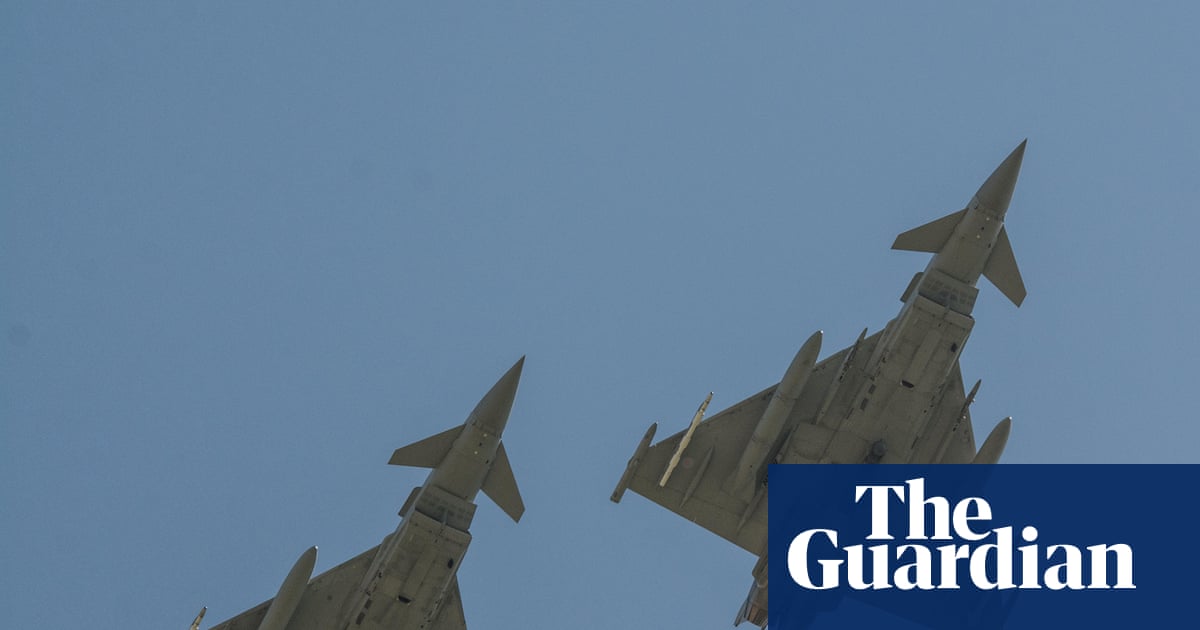
The night sky over Romania, typically a canvas of stars, was pierced by the roar of jet engines as two Royal Air Force (RAF) Typhoons were scrambled from Mihail Kogălniceanu Air Base. Their mission: to intercept Russian drones operating perilously close to NATO airspace. This incident, while not leading to direct engagement, serves as a stark reminder of the ever-present tensions shadowing Europe's eastern flank and the critical role of air policing in preventing inadvertent escalation. The drones, believed to be Iranian-made Shahed-136s, were reportedly targeting Ukrainian infrastructure but their flight path brought them uncomfortably near the alliance's borders, triggering a swift and decisive response from NATO forces.
The deployment of advanced fighter jets in such a scenario is a routine, yet high-stakes, operation designed to assert air sovereignty and provide a clear deterrent. British defence sources confirmed that the Typhoons did not enter Ukrainian airspace, dispelling earlier reports and underscoring the meticulous adherence to international protocols even amidst heightened alert. This careful navigation of boundaries highlights the complex geopolitical chessboard where every move is calculated, and every response calibrated to avoid a direct confrontation between NATO and Russia. The incident, therefore, is not merely a footnote in the ongoing conflict but a significant data point in understanding the dynamics of indirect engagement and the continuous testing of resolve.
The Anatomy of an Interception: NATO's Air Policing Mission
NATO's Air Policing mission is a cornerstone of its collective defence strategy, ensuring the integrity of the alliance's airspace 24 hours a day, 365 days a year. This mission involves fighter jets on standby, ready to take off within minutes to intercept unidentified or potentially hostile aircraft. In the Black Sea region, particularly since Russia's full-scale invasion of Ukraine in February 2022, this mission has gained unprecedented urgency and frequency. The RAF's presence in Romania, under Operation Biloxi, is part of this broader commitment, reinforcing the southern flank of NATO and demonstrating solidarity with frontline allies.
When Russian drones or aircraft approach NATO airspace without proper identification or flight plans, they are typically shadowed or intercepted. The goal is to identify the aircraft, assess its intent, and ensure it does not violate sovereign airspace. In this specific instance, the drones remained within Ukrainian airspace, but their proximity to the NATO border necessitated a rapid response. The Typhoons, equipped with advanced radar and weaponry, provide a formidable deterrent. Their mere presence often suffices to alter the trajectory of encroaching aircraft or drones. This 'scramble' operation is a testament to the readiness and professionalism of NATO air forces, acting as the eyes and ears of the alliance, ready to defend its territorial integrity.
A Region on Edge: The Black Sea's Strategic Importance
The Black Sea is a region of immense strategic importance, serving as a critical maritime gateway and a geopolitical fault line between East and West. Its waters are bordered by NATO members (Turkey, Romania, Bulgaria) and non-members (Ukraine, Russia, Georgia), making it a hotbed of military activity and potential flashpoints. Since the annexation of Crimea in 2014 and the subsequent full-scale invasion, Russia has significantly militarized the region, posing a constant threat to maritime security and regional stability. The recent drone incident is just one manifestation of this heightened military posture.
Ukraine's ports on the Black Sea are vital for its economy, particularly for grain exports, and have been frequent targets of Russian attacks. The use of Shahed-136 'Geran-2' drones, supplied by Iran, has become a hallmark of Russia's air campaign, designed to overwhelm Ukrainian air defences and inflict damage on critical infrastructure. These drones, though slow, are difficult to detect and can be deployed in swarms, presenting a complex challenge for air defence systems. Their operational range and the tactics employed often bring them close to NATO's borders, creating a perpetual state of vigilance for allied forces. The incident highlights the spillover risks of the conflict, where the geographical proximity of belligerent actions to NATO territory necessitates a robust and immediate defensive posture.
Implications for NATO and Regional Security
This incident, and countless others like it, carries significant implications for NATO's long-term strategy and regional security. Firstly, it underscores the need for continuous investment in air defence capabilities and intelligence, surveillance, and reconnaissance (ISR) assets. The ability to detect, track, and respond to threats, whether manned aircraft or unmanned aerial vehicles (UAVs), is paramount. Secondly, it reinforces the importance of interoperability among NATO members. The seamless coordination between British Typhoons and Romanian air traffic control, for example, is crucial for effective collective defence.
Thirdly, these close encounters serve as a constant reminder of the fine line between deterrence and escalation. While NATO's primary objective is to deter aggression and protect its members, there is an inherent risk that an accidental miscalculation or an unintended breach of airspace could lead to a direct confrontation. This necessitates clear communication channels and de-confliction protocols with Russia, even as diplomatic relations remain strained. The incident also highlights the psychological warfare aspect, where Russia's actions can be seen as testing NATO's resolve and probing its defensive weaknesses. For countries like Romania, which share a direct border with Ukraine and the Black Sea, these events are not abstract geopolitical manoeuvres but tangible threats to their security and sovereignty. The continuous presence of NATO forces, including the RAF, provides a vital sense of assurance to these frontline states.
The Future of Air Policing in a Contested Environment
The nature of air threats is evolving rapidly, with the proliferation of advanced drones, hypersonic missiles, and stealth technology. This necessitates a continuous adaptation of air policing strategies and capabilities. For NATO, this means:
* Enhanced Sensor Networks: Investing in advanced radar systems and passive detection technologies to counter low-observable threats like drones. * Integrated Air and Missile Defence: Developing a more comprehensive, layered defence system capable of addressing a wider spectrum of aerial threats. * Rapid Response Mechanisms: Maintaining high readiness levels and streamlining decision-making processes for quick interception. * International Cooperation: Strengthening partnerships with non-NATO allies in the region to share intelligence and coordinate responses.
The incident involving the RAF Typhoons and Russian drones is a microcosm of the larger geopolitical struggle unfolding in Eastern Europe. It demonstrates NATO's unwavering commitment to collective defence and its capacity to respond swiftly to potential threats. Yet, it also serves as a potent reminder of the fragility of peace and the constant vigilance required to maintain stability in a world grappling with renewed great power competition. As long as the conflict in Ukraine persists, such tense encounters near NATO's borders are likely to continue, demanding sustained attention, strategic foresight, and unwavering resolve from the alliance. The skies above Europe remain a critical theatre, where the balance of power is continuously asserted and tested, ensuring that the roar of jet engines continues to echo as a sentinel of peace.
Stay Informed
Get the world's most important stories delivered to your inbox.
No spam, unsubscribe anytime.
Comments
No comments yet. Be the first to share your thoughts!