Ramaphosa's Controversial Endorsement: A Global Diplomatic Ripple
President Cyril Ramaphosa's decision to sign a petition for the release of Marwan Barghouti, a convicted terrorist, has ignited a firestorm of international debate. This unprecedented move by a sitting head of state on South Africa's Freedom Day challenges established diplomatic norms and highlights the deep divisions surrounding the Israeli-Palestinian conflict. The act is seen by some as a bold statement of solidarity, while others condemn it as an endorsement of terrorism, raising questions about its long-term implications for South Africa's foreign policy and global relations.
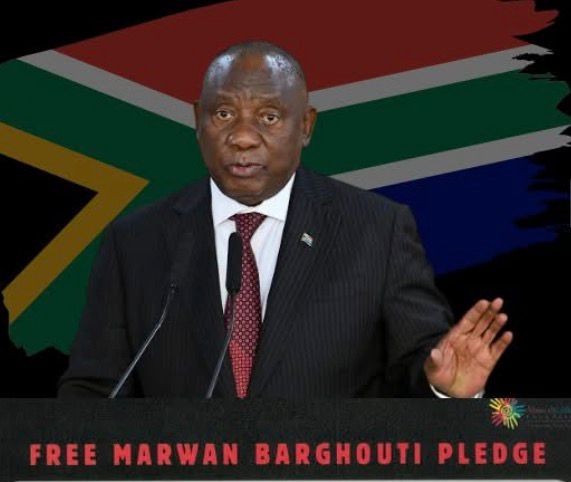
In an act that has sent ripples across the international diplomatic landscape, South African President Cyril Ramaphosa became the first sitting head of state to publicly endorse a petition calling for the release of Marwan Barghouti, a Palestinian leader convicted by Israel on multiple counts of murder and terrorism. The timing of this controversial move, on Freedom Day, April 27th, a date commemorating South Africa's first democratic elections, adds layers of symbolic weight and political complexity to an already volatile issue. Ramaphosa's decision has not only reignited fierce debate over the Israeli-Palestinian conflict but also cast a spotlight on South Africa's evolving foreign policy and its interpretation of international justice.
A Bold Stance on Freedom Day
President Ramaphosa's signature on the petition, which demands the “immediate and unconditional release” of Barghouti, was a calculated and highly symbolic gesture. Freedom Day in South Africa is a powerful reminder of the nation's arduous journey from apartheid to democracy, a struggle often paralleled by proponents of the Palestinian cause. By linking Barghouti's incarceration to the broader narrative of liberation, Ramaphosa's administration appears to be drawing a direct line between South Africa's historical fight against oppression and the Palestinian struggle for self-determination. This alignment is deeply rooted in the African National Congress (ANC)'s long-standing solidarity with the Palestinian people, a stance that dates back to the era of Nelson Mandela, who famously stated, “We know too well that our freedom is incomplete without the freedom of the Palestinians.”
Marwan Barghouti, often dubbed the “Palestinian Mandela,” is a prominent figure within the Fatah movement. He was arrested by Israel in 2002 during the Second Intifada and subsequently convicted in 2004 of five counts of murder, attempted murder, and membership in a terrorist organization, receiving five life sentences. His supporters, however, maintain that his trial was politically motivated and that he is a legitimate leader of the Palestinian resistance, unjustly imprisoned by an occupying power. This dichotomy in perception – terrorist to one side, freedom fighter to the other – lies at the heart of the controversy surrounding Ramaphosa's endorsement.
The Diplomatic Fallout and International Reactions
The immediate aftermath of Ramaphosa's signing has been predictably polarized. Israeli officials and their allies have vehemently condemned the move, viewing it as a direct affront and an endorsement of terrorism. They argue that supporting Barghouti undermines efforts for peace and legitimizes violence against Israeli citizens. Critics point to the specific charges against Barghouti, emphasizing the victims of the attacks for which he was convicted, and question how a head of state can advocate for the release of someone found guilty of such egregious crimes by a legitimate court.
Conversely, Palestinian leadership and human rights organizations have lauded Ramaphosa's actions as a courageous act of solidarity. They see it as a significant boost to their international campaign for Barghouti's release and a powerful statement against what they perceive as Israel's illegal occupation and human rights abuses. The petition itself, which has garnered support from various international figures, aims to elevate Barghouti's profile and pressure Israel through global diplomatic channels. For many, Ramaphosa's signature lends unprecedented weight to this campaign, potentially galvanizing further support from other nations and international bodies.
This incident also highlights the growing divide within the international community regarding the Israeli-Palestinian conflict. While many Western nations tend to align with Israel's security concerns, a significant portion of the Global South, particularly African and Latin American countries, often express stronger support for the Palestinian cause, viewing it through the lens of anti-colonialism and self-determination. Ramaphosa's move solidifies South Africa's position firmly within this latter camp, potentially influencing other nations to follow suit or at least reconsider their own stances.
South Africa's Foreign Policy: A Principled Stand or Pragmatic Play?
South Africa's foreign policy under the ANC has consistently championed human rights, self-determination, and anti-colonialism, often leading to positions that diverge from major Western powers. Its strong support for Palestine is a cornerstone of this policy, rooted in the parallels drawn between apartheid South Africa and the situation in the Palestinian territories. This historical and ideological alignment explains, in part, Ramaphosa's decision.
However, the move is not without its domestic and international critics. Some argue that by focusing so heavily on the Palestinian issue, South Africa risks alienating key international partners and diverting attention from pressing domestic challenges. There are also concerns about the potential economic repercussions, particularly from countries that maintain strong ties with Israel. Furthermore, the decision to openly support a convicted individual, regardless of the political context, could set a precedent that complicates South Africa's ability to condemn other forms of political violence or terrorism globally.
On the other hand, proponents argue that South Africa's moral authority, forged through its own struggle for freedom, obliges it to speak out against perceived injustices wherever they occur. They contend that a principled foreign policy, even if controversial, ultimately enhances a nation's standing and influence on the world stage. Ramaphosa's action can be seen as an assertion of South Africa's independent foreign policy, refusing to be dictated by the geopolitical interests of more powerful nations.
The Road Ahead: Implications and Prospects
The long-term implications of President Ramaphosa's endorsement are multifaceted. Firstly, it significantly raises the stakes for Marwan Barghouti's release. While it's unlikely to lead to immediate freedom, it intensifies international pressure on Israel and could make Barghouti a more prominent figure in any future peace negotiations or prisoner exchanges. His release has long been a key demand of Palestinian factions, and Ramaphosa's support adds considerable diplomatic weight to this call.
Secondly, it will undoubtedly strain South Africa's relationship with Israel, which has already been tense. South Africa recalled its ambassador from Israel in 2018 and has been a vocal critic of Israeli policies at the United Nations and other international forums. This latest development is likely to further exacerbate these diplomatic tensions, potentially leading to retaliatory measures or a further downgrading of relations.
Thirdly, the act could inspire other leaders, particularly from the Global South, to take similar stances, creating a broader coalition of support for the Palestinian cause and potentially shifting the international discourse. This could lead to increased scrutiny of Israel's actions and greater pressure for a resolution to the conflict that aligns with Palestinian aspirations.
Finally, for South Africa itself, this move reaffirms its identity as a nation committed to human rights and anti-colonial solidarity, even if it comes at a diplomatic cost. It signals a continued commitment to a foreign policy that prioritizes moral principles over geopolitical expediency, a stance that resonates deeply with its own historical narrative. As the world watches, Ramaphosa's controversial signature on Freedom Day marks a pivotal moment, underscoring the enduring complexities and profound divisions that define the Israeli-Palestinian conflict and the global response to it. The ripple effect of this decision is only just beginning to unfold, promising further debate and diplomatic maneuvering in the months and years to come.
Stay Informed
Get the world's most important stories delivered to your inbox.
No spam, unsubscribe anytime.
Comments
No comments yet. Be the first to share your thoughts!