Ramaphosa's Phala Phala Scandal: A Battle for South Africa's Presidency and Rule of Law
South African President Cyril Ramaphosa is fighting for his political life after a parliamentary report recommended impeachment proceedings over the 'Phala Phala' scandal. Accused of concealing a large cash theft at his farm, Ramaphosa maintains his innocence and vows to legally challenge the findings. This crisis threatens to destabilize South Africa's fragile political landscape and raises critical questions about transparency and accountability at the highest levels of government.
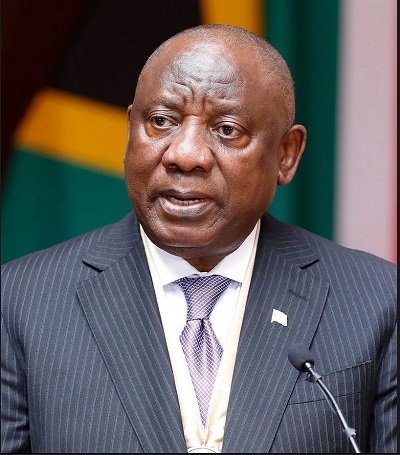
In a dramatic turn of events that has sent shockwaves through South Africa's political establishment, President Cyril Ramaphosa finds himself embroiled in a fierce battle for his political survival. The nation, still grappling with deep-seated issues of corruption and economic inequality, watches with bated breath as its leader faces potential impeachment proceedings stemming from a controversial report concerning a substantial cash theft at his private Phala Phala farm. Ramaphosa, a figure once hailed as a beacon of anti-corruption reform, is now under intense scrutiny, accused of concealing the incident and potentially breaching constitutional duties. His defiant stance, vowing to legally challenge the report's findings, sets the stage for a high-stakes constitutional showdown that could redefine South African politics for years to come.
The Phala Phala Predicament: Unpacking the Allegations
The scandal, colloquially known as 'Phala Phala-gate,' first erupted in June 2022 when Arthur Fraser, the former head of the State Security Agency, laid a criminal complaint against President Ramaphosa. Fraser alleged that Ramaphosa had concealed the theft of millions of US dollars in cash from his Limpopo game farm in February 2020. Crucially, Fraser claimed that the president did not report the crime to the police, instead orchestrating an extra-judicial investigation and recovery operation. The cash, reportedly hidden in furniture, raised immediate questions about its origin, its purpose, and why such a large sum was kept on the property rather than in a financial institution.
The independent panel, appointed by Parliament and chaired by former Chief Justice Sandile Ngcobo, was tasked with determining whether there was prima facie evidence that Ramaphosa may have committed serious violations of the constitution or anti-corruption laws. Their report, released recently, concluded that the president may indeed have a case to answer. Specifically, it highlighted potential breaches of Section 34(1) of the Prevention and Combating of Corrupt Activities Act (PRECCA), which mandates reporting of corrupt transactions, and Section 96(2) of the Constitution, which deals with conflicts of interest and engaging in other paid work. The panel's findings have provided the necessary impetus for Parliament to consider initiating impeachment proceedings, plunging the country into a period of acute political uncertainty.
Ramaphosa's Defense and Legal Strategy
President Ramaphosa has vehemently denied any wrongdoing, asserting that the stolen money was legitimate proceeds from the sale of buffaloes to a Sudanese businessman. He has consistently maintained that he reported the theft to his head of presidential protection, Major-General Wally Rhoode, and that the allegations against him are politically motivated, designed to destabilize his presidency and undermine his anti-corruption agenda. His decision to legally challenge the independent panel's report is a critical move, signaling his intent to fight these accusations tooth and nail through the judicial system.
His legal team is expected to argue that the panel misinterpreted the evidence, exceeded its mandate, and that its findings are based on speculation rather than concrete proof. They will likely contend that the panel did not have the full scope of information or the investigative powers to make definitive conclusions of constitutional breaches. This legal challenge, potentially heading to the Constitutional Court, aims to have the report set aside, thereby removing the basis for parliamentary impeachment proceedings. This strategy reflects a calculated risk: while it could clear his name, it also prolongs the scandal, keeping it in the public eye and potentially further eroding public trust.
Historical Context: A Nation Weary of Corruption
South Africa has a tumultuous history with corruption at the highest echelons of power. The shadow of state capture during the Zuma era, characterized by systemic corruption and the siphoning of public funds, left an indelible scar on the nation's psyche and economy. Ramaphosa himself rose to power on an anti-corruption platform, promising a 'new dawn' of clean governance and accountability. His presidency was seen by many as a crucial opportunity to restore faith in democratic institutions and rebuild the economy.
However, the Phala Phala scandal threatens to unravel much of that progress. For many South Africans, it evokes painful memories of past abuses of power and raises questions about whether any leader is truly above the law. The public's patience for political scandal is thin, and the perception of a cover-up, regardless of the legal outcome, could have lasting implications for the ruling African National Congress (ANC) ahead of the crucial 2024 general elections. The ANC, already struggling with declining electoral support and internal divisions, can ill-afford another major scandal that further alienates its traditional voter base.
Implications for South Africa's Future
The unfolding crisis has profound implications for South Africa's political stability, economic outlook, and commitment to the rule of law. A successful impeachment of a sitting president would be an unprecedented event in post-apartheid South Africa, setting a powerful precedent for accountability but also potentially triggering intense political instability. Conversely, if Ramaphosa successfully fends off the charges, his presidency might emerge weakened, having spent considerable political capital on his defense.
Economically, the uncertainty generated by the scandal could deter much-needed foreign investment and further dampen business confidence in a country already struggling with high unemployment, energy crises, and slow growth. The rand has shown volatility in response to political developments, reflecting investor anxiety. Furthermore, the saga tests the strength and independence of South Africa's democratic institutions, particularly Parliament and the judiciary. Their ability to navigate this complex challenge fairly and transparently will be crucial in upholding the country's constitutional order.
Looking ahead, the resolution of the Phala Phala scandal will be a defining moment for Ramaphosa's legacy and for South Africa's democratic trajectory. Whether he emerges vindicated or falls from grace, the process will undoubtedly reshape the political landscape. The nation's commitment to accountability and its constitutional principles are on full display, and the outcome will send a clear message about the future of governance in this vital African democracy.
Stay Informed
Get the world's most important stories delivered to your inbox.
No spam, unsubscribe anytime.
Comments
No comments yet. Be the first to share your thoughts!