Ramaphosa's Phala Phala Scandal: South African President Fights Impeachment Threat
South African President Cyril Ramaphosa is embroiled in a significant political crisis, challenging a parliamentary report that recommends impeachment proceedings over the alleged theft of undeclared foreign currency from his private Phala Phala farm. The scandal, dubbed 'Farmgate,' has cast a shadow over his anti-corruption agenda and sparked intense debate about accountability at the highest levels of government. As the nation watches, Ramaphosa's legal battle and political maneuvering will determine his future and potentially reshape South African politics.
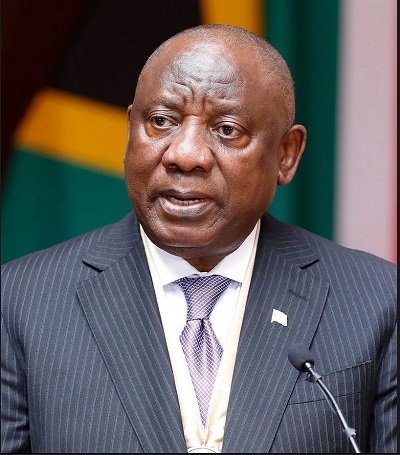
In a dramatic turn that has gripped South Africa, President Cyril Ramaphosa finds himself at the epicenter of a political storm, vowing to legally challenge a damning parliamentary report that could pave the way for his impeachment. The report, compiled by an independent panel, suggests that Ramaphosa may have violated his oath of office and anti-corruption laws in connection with the alleged theft of a substantial sum of undeclared foreign currency from his Phala Phala private game farm in 2020. This unfolding saga, widely dubbed 'Farmgate,' not only threatens to derail his presidency but also casts a long shadow over the nation's fragile political landscape and its ongoing fight against corruption.
The Genesis of 'Farmgate': A Stolen Fortune and Unanswered Questions
The scandal first broke in June 2022 when Arthur Fraser, a former head of the State Security Agency, filed a criminal complaint against Ramaphosa. Fraser alleged that Ramaphosa had concealed the theft of between $4 million and $8 million in cash from his farm, failing to report the crime to the police and instead orchestrating an illegal cover-up. According to Fraser, the money was hidden in furniture and subsequently stolen by burglars. Ramaphosa has acknowledged the theft of a lesser amount, stating it was proceeds from the sale of buffalo, but has vehemently denied any wrongdoing or illicit financial dealings. He maintains that the funds were legitimate business transactions and that he reported the incident to his head of security, who then handled the matter. However, the lack of a formal police report and the alleged involvement of Namibian authorities in tracking down the suspects, seemingly outside official channels, have fueled public suspicion and demands for greater transparency.
The independent panel, appointed by Parliament, was tasked with investigating whether there was prima facie evidence of misconduct by the President. Its findings, released in late 2022, concluded that Ramaphosa may have a case to answer on several fronts, including a serious violation of Section 96(2)(a) of the Constitution (which prohibits public office bearers from undertaking any other paid work), a serious violation of Section 34(1) of the Prevention and Combating of Corrupt Activities Act (PRECCA) by failing to report the theft, and serious misconduct by exposing himself to a conflict of interest. These conclusions have sent shockwaves through the ruling African National Congress (ANC) and the broader political establishment.
Ramaphosa's Stance and Legal Recourse
President Ramaphosa has adopted a defiant posture, asserting his innocence and announcing his intention to challenge the panel's report in the Constitutional Court. His legal team argues that the panel misinterpreted the law and exceeded its mandate, contending that the evidence presented does not support the conclusions of serious misconduct. This legal challenge is a critical maneuver, as a successful appeal could invalidate the report's findings, thereby removing the basis for parliamentary impeachment proceedings. Ramaphosa's supporters within the ANC have rallied behind him, emphasizing the need for due process and cautioning against a hasty political judgment based on an unproven report. They argue that destabilizing the presidency now would be detrimental to South Africa's economic recovery and political stability.
Historically, South Africa has seen its share of presidential controversies. Former President Jacob Zuma faced numerous corruption allegations and ultimately resigned under pressure from his own party, highlighting the ANC's capacity for self-correction, albeit often after prolonged internal battles. Ramaphosa himself rose to power on an anti-corruption ticket, promising a 'new dawn' after the Zuma years. The 'Farmgate' scandal thus represents a profound test of his commitment to accountability and the rule of law, as well as the resilience of South Africa's democratic institutions.
Implications for South African Politics and the ANC
The 'Farmgate' scandal has profound implications, not only for Ramaphosa's political future but also for the stability of the ANC and the nation as a whole. The party, already grappling with deep internal divisions, economic stagnation, and declining electoral support, faces a critical juncture. An impeachment process would be divisive and potentially plunge the country into prolonged political uncertainty, further eroding investor confidence and public trust. The timing is particularly sensitive, with national elections looming in 2024.
Key implications include:
* ANC Unity: The scandal has exacerbated factionalism within the ANC, pitting Ramaphosa's allies against those who seek his removal. A protracted battle could lead to further fragmentation of the party. * Rule of Law: The manner in which this crisis is resolved will be a significant test of South Africa's constitutional democracy and its commitment to holding even the highest office accountable. * Economic Impact: Political instability could deter foreign investment and worsen South Africa's already struggling economy, which faces high unemployment and inequality. * Public Trust: The scandal has further eroded public trust in political leaders, potentially leading to increased voter apathy and disillusionment. * Precedent: The outcome will set a powerful precedent for future allegations of misconduct against high-ranking officials.
The Road Ahead: A Nation Holds Its Breath
As President Ramaphosa prepares his legal challenge, the nation watches with bated breath. The Constitutional Court's decision will be pivotal, determining whether the parliamentary report stands and if impeachment proceedings will indeed commence. Should the report be upheld, Parliament would then need to vote on whether to initiate an impeachment inquiry, a process that requires a two-thirds majority. Even if Ramaphosa survives this immediate threat, the 'Farmgate' scandal has already inflicted significant damage on his reputation and his administration's credibility.
His ability to lead the ANC into the next general election and implement his reform agenda will depend heavily on how he navigates this crisis. The saga underscores the persistent challenges of governance and accountability in post-apartheid South Africa. Regardless of the legal outcome, the 'Farmgate' scandal will undoubtedly be a defining chapter in Ramaphosa's presidency, serving as a stark reminder that even the most powerful are not immune to scrutiny and the demands for transparency in a vibrant democracy.
The coming months will be crucial, as legal arguments unfold and political factions vie for influence. South Africa's democratic institutions are once again being tested, and the world will be watching to see if the nation can uphold its constitutional principles amidst such profound political turbulence.
Stay Informed
Get the world's most important stories delivered to your inbox.
No spam, unsubscribe anytime.
Comments
No comments yet. Be the first to share your thoughts!