Ramaphosa's Tightrope: Balancing Rule of Law and Migration Crackdown in South Africa
South African President Cyril Ramaphosa has issued a stern call for adherence to the rule of law, condemning xenophobia and violence amidst intensified efforts to address illegal migration. His statements underscore a delicate balancing act between national sovereignty, human rights, and the complex socio-economic pressures fueling anti-foreigner sentiment. This article delves into the historical context, current challenges, and potential implications of South Africa's evolving migration policy.
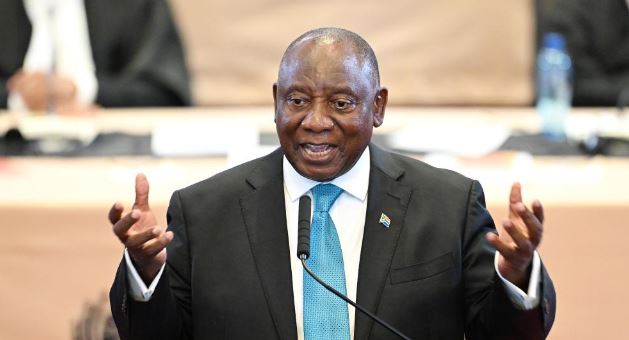
In a nation still grappling with the profound legacies of apartheid and the promise of a 'rainbow nation,' South African President Cyril Ramaphosa faces a formidable challenge: how to enforce immigration laws without stoking the fires of xenophobia. His recent pronouncements, urging both citizens and foreign nationals to respect the rule of law while simultaneously intensifying efforts to address illegal migration, highlight a deeply complex and often volatile situation. Ramaphosa's condemnation of "xenophobia, ethnic mobilization, intolerance or violence" comes at a critical juncture, as the government navigates economic stagnation, high unemployment, and persistent social inequalities that frequently manifest in anti-foreigner sentiment.
The Genesis of a Crisis: Historical Context and Economic Strain
South Africa's unique history plays a significant role in its current migration dynamics. Post-apartheid, the country became a beacon of hope and opportunity, attracting migrants from across the African continent fleeing conflict, political instability, and economic hardship. This influx, while contributing to the nation's diversity and economy in many ways, also coincided with a period of profound internal transformation and economic restructuring. The promise of a better life often clashed with the harsh realities of limited resources, high unemployment, and inadequate public services, particularly in informal settlements and working-class areas.
The economic downturn, exacerbated by global crises and domestic policy challenges, has intensified competition for jobs and resources. Unemployment rates, particularly among youth, remain stubbornly high, creating a fertile ground for scapegoating. Foreign nationals, often working in informal sectors or running small businesses, are frequently blamed for taking jobs away from South African citizens, despite evidence suggesting a more nuanced economic contribution. This narrative, often amplified by political rhetoric, fuels the xenophobic attacks that have periodically rocked the nation, leading to loss of life, displacement, and significant damage to property.
Historically, South Africa has a robust legal framework for migration, but its implementation has often been inconsistent. The Department of Home Affairs has been criticized for inefficiencies, corruption, and a backlog in processing asylum and visa applications, which inadvertently contributes to the number of undocumented individuals. This administrative bottleneck creates a vicious cycle: legitimate migrants struggle to gain legal status, while those who enter irregularly find it difficult to regularize their stay, leaving them vulnerable to exploitation and further marginalization.
Ramaphosa's Stance: A Call for Order Amidst Chaos
President Ramaphosa's recent statements, delivered in his weekly newsletter, represent a clear attempt to assert governmental authority and restore order. By emphasizing the rule of law, he seeks to draw a line between legitimate concerns about national sovereignty and the unacceptable violence of xenophobia. His message is twofold:
* To citizens: "There is no place in South Africa for xenophobia, ethnic mobilization, intolerance or violence." This is a direct appeal for national unity and respect for human rights, reminding South Africans of the constitutional values enshrined post-apartheid. * To foreign nationals: "All persons who are in South Africa, whether citizens or foreign nationals, must respect the laws of the country." This underscores the expectation that migrants, regardless of their status, must adhere to South African legal statutes.
The government's intensified efforts to address illegal migration include increased border patrols, stricter enforcement of immigration laws, and potentially more robust deportation processes. These measures are designed to regain control over national borders and ensure that immigration occurs through legal channels. However, the challenge lies in implementing these policies humanely and effectively, without inadvertently fueling the very xenophobic sentiments they aim to condemn.
The Complexities of Enforcement: Human Rights vs. National Security
Enforcing immigration laws is a delicate balancing act. On one hand, every sovereign nation has the right and responsibility to control its borders and manage who enters and resides within its territory. This is a fundamental aspect of national security and public order. On the other hand, South Africa is a signatory to numerous international human rights conventions and has a constitution that champions human dignity and equality. The crackdown on illegal migration must therefore be conducted in a manner that upholds these commitments.
Critics often point to the potential for human rights abuses during mass deportations or raids, particularly if due process is not strictly followed. There are concerns that vulnerable individuals, such as asylum seekers or refugees, might be caught in the dragnet without proper assessment of their protection needs. Furthermore, the economic contributions of migrants, both documented and undocumented, are often overlooked. Many fill labor gaps, start businesses, and contribute to the economy, albeit sometimes informally. A blanket approach to enforcement risks disrupting these economic activities and potentially harming sectors reliant on migrant labor.
The government's approach also needs to consider the root causes of migration. Many individuals arriving in South Africa are not simply seeking economic opportunities but are fleeing dire circumstances in their home countries. Addressing these regional instabilities and fostering greater economic development across Southern Africa could be a more sustainable long-term solution than purely punitive measures at the border.
Looking Ahead: A Path Towards Sustainable Solutions
The path forward for South Africa requires a multi-faceted approach that goes beyond mere enforcement. Key areas of focus should include:
* Strengthening border management and administrative efficiency: Streamlining visa and asylum processes to reduce backlogs and provide clear pathways for legal migration. * Combating corruption: Addressing graft within immigration departments that facilitates irregular migration and exploitation. * Economic inclusion and job creation: Investing in programs that create opportunities for all residents, reducing the perception of competition for scarce resources. * Public education and anti-xenophobia campaigns: Actively challenging negative stereotypes and promoting social cohesion through sustained public awareness initiatives. * Regional cooperation: Working with neighboring countries to address the drivers of migration and develop shared solutions for regional stability and economic growth.
President Ramaphosa's call for respect for the rule of law is a necessary step in asserting governmental control and condemning violence. However, the true test will be in the implementation of policies that are both effective in managing migration and deeply rooted in human rights and social justice. South Africa's journey towards a truly inclusive and prosperous society depends on its ability to navigate this complex challenge with wisdom, compassion, and unwavering commitment to its founding principles.
Stay Informed
Get the world's most important stories delivered to your inbox.
No spam, unsubscribe anytime.
Comments
No comments yet. Be the first to share your thoughts!