RBI's Sweeping Crackdown: 150 NBFC Registrations Cancelled Amidst Regulatory Overhaul
The Reserve Bank of India (RBI) has cancelled the Certificates of Registration (CoR) for 150 Non-Banking Financial Companies (NBFCs) under Section 45 IA 6 of the RBI Act, signaling a significant regulatory tightening. This move, coupled with 7 voluntary surrenders and one restoration, underscores the central bank's commitment to strengthening financial stability and weeding out non-compliant entities. The action has far-reaching implications for India's diverse financial sector, aiming to enhance transparency and consumer protection.
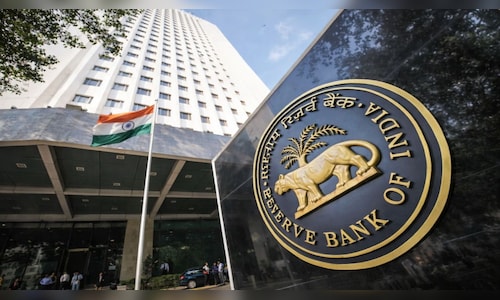
The financial landscape of India is currently undergoing a significant transformation, spearheaded by the Reserve Bank of India's (RBI) stringent regulatory actions. In a move that reverberates across the nation's diverse financial sector, the RBI has cancelled the Certificates of Registration (CoR) of 150 Non-Banking Financial Companies (NBFCs). This decisive action, taken under Section 45 IA 6 of the RBI Act, 1934, signals a clear intent from the central bank to fortify financial stability, enhance transparency, and protect consumer interests. Beyond the cancellations, the RBI also noted seven voluntary surrenders of licences and, notably, one restoration, painting a complex picture of a sector under intense scrutiny and reform.
This isn't merely an administrative tidbit; it's a profound statement about the evolving regulatory environment in one of the world's fastest-growing economies. The NBFC sector, often described as the 'shadow banking' system, plays a crucial role in India's financial intermediation, catering to segments often underserved by traditional banks. Their sheer number and varied operational models necessitate robust oversight, and the RBI's latest actions are a testament to its commitment to maintaining the integrity and health of this vital segment.
The Rationale Behind the Regulatory Purge
The RBI's decision to revoke registrations is rooted in its mandate to ensure a sound and resilient financial system. Section 45 IA 6 of the RBI Act empowers the central bank to cancel the CoR of an NBFC if it ceases to carry on the business of a non-banking financial institution, fails to comply with any condition subject to which the CoR was issued, or if it is detrimental to the public interest. While specific reasons for each of the 150 cancellations are not individually disclosed, common grounds typically include:
* Non-compliance with prudential norms: This can range from inadequate capital adequacy ratios to improper asset classification and provisioning. * Failure to submit statutory returns: NBFCs are required to periodically submit detailed financial and operational data to the RBI. Consistent failure to do so often leads to regulatory action. * Violation of 'Fair Practices Code': This code dictates how NBFCs should interact with customers, including transparency in loan agreements, grievance redressal mechanisms, and ethical recovery practices. * Cessation of business activities: Many smaller NBFCs become defunct or cease operations without formally informing the regulator. * Engagement in unauthorized activities: Operating beyond the scope of their licence or engaging in activities not permitted for NBFCs.
The sheer volume of cancellations suggests a systemic review rather than isolated incidents. This proactive approach aims to weed out dormant, non-compliant, or potentially risky entities that could pose systemic risks or harm consumer trust. The state-wise impact, though not fully detailed in the initial reports, indicates a broad sweep across various regions, reflecting the pervasive nature of the NBFC sector.
The Crucial Role of NBFCs in India's Economy
Non-Banking Financial Companies are indispensable to India's economic fabric. Unlike traditional banks, NBFCs do not hold demand deposits but offer a wide array of financial services, including:
* Lending: Providing loans for vehicles, housing, infrastructure, and personal consumption. * Investment: Engaging in hire purchase, leasing, and investment in shares, debentures, and government securities. * Microfinance: Extending credit to low-income groups and small businesses, fostering financial inclusion. * Infrastructure financing: Playing a critical role in funding large-scale infrastructure projects.
Their agility and ability to tailor products to specific market niches make them vital for financial inclusion, particularly for segments that might find it challenging to access credit from commercial banks. The sector has witnessed exponential growth over the past two decades, attracting significant domestic and foreign investment. However, this rapid expansion has also brought challenges, including instances of regulatory arbitrage, governance issues, and liquidity concerns, as dramatically highlighted by the IL&FS crisis in 2018.
Historical Context and Evolving Regulations
The RBI's oversight of NBFCs has evolved significantly over time. Post-liberalization in the 1990s, the sector saw a boom, leading to a period of light-touch regulation. However, several financial crises and instances of mismanagement prompted the RBI to progressively tighten its grip. Key milestones include:
* RBI Act Amendments (1997): Introduced the requirement for NBFCs to obtain a CoR and empowered the RBI with greater supervisory powers. * Prudential Norms (early 2000s): Gradually aligned NBFC regulations with those of banks, particularly concerning asset classification, income recognition, and capital adequacy. * Post-2008 Global Financial Crisis: Further strengthening of regulatory frameworks, focusing on corporate governance and risk management. * IL&FS Crisis (2018): This watershed moment exposed significant vulnerabilities in the NBFC sector, particularly regarding asset-liability mismatches and interconnectedness. It led to a comprehensive review of the regulatory architecture. * Scale-Based Regulation (SBR) Framework (2021): The RBI introduced a progressive regulatory framework for NBFCs, categorizing them into four layers based on their size, activity, and perceived risk. This framework aims to apply a proportionate regulatory approach, with stricter norms for larger, systemically important NBFCs. The current cancellations can be seen as a direct outcome of this enhanced supervisory vigilance under the SBR framework.
Implications for the Financial Sector and Consumers
The immediate impact of these cancellations will be felt by the affected NBFCs, which will no longer be able to conduct financial business. For the broader market, the implications are multi-faceted:
* Enhanced market confidence: The cleanup operation instills greater trust in the NBFC sector, assuring investors and depositors that only compliant and well-governed entities operate. * Consolidation and strengthening: Smaller, non-viable entities are being removed, potentially leading to consolidation and a stronger, more resilient sector dominated by well-capitalized and professionally managed NBFCs. * Increased compliance burden: Remaining NBFCs will face heightened pressure to adhere strictly to regulatory norms, investing more in governance, risk management, and technology. * Impact on credit flow: While 150 cancellations seem significant, many might be defunct entities. However, if active lenders are involved, there could be a temporary disruption in credit flow to specific segments, which larger, compliant NBFCs or banks will likely absorb. * Consumer protection: The primary beneficiaries are consumers and small businesses. A regulated and transparent NBFC sector reduces the risk of predatory lending, fraud, and financial instability.
The restoration of one licence is also noteworthy. It suggests that the RBI's process is not arbitrary but allows for entities to rectify deficiencies and demonstrate compliance, highlighting a balanced approach of enforcement and opportunity for correction.
The Path Forward: A Resilient and Responsible Financial System
The RBI's actions are a clear signal that the era of lax oversight in certain segments of the NBFC sector is over. This is not merely about punitive measures but about fostering a financial ecosystem that is robust, transparent, and capable of supporting India's ambitious economic growth trajectory. The focus will remain on:
* Proactive supervision: Leveraging technology and data analytics for early detection of risks. * Strengthening governance: Emphasizing sound corporate governance practices, risk management frameworks, and internal controls. * Financial inclusion with caution: Ensuring that the drive for financial inclusion does not compromise prudential standards. * Adaptation to new challenges: Addressing emerging risks from digital lending, fintech innovations, and climate change.
The cancellation of 150 NBFC registrations by the RBI is a landmark event, underscoring the central bank's unwavering commitment to maintaining financial stability and integrity. It marks a significant step towards refining India's financial architecture, ensuring that only responsible and compliant players contribute to the nation's economic progress. As the dust settles, the expectation is for a leaner, stronger, and more trustworthy NBFC sector, better equipped to serve the diverse financial needs of India's burgeoning economy while safeguarding the interests of its citizens.
Stay Informed
Get the world's most important stories delivered to your inbox.
No spam, unsubscribe anytime.
Comments
No comments yet. Be the first to share your thoughts!