Royal Enfield Roars Past Audi, Ferrari: A Global Automotive Powerhouse Emerges
In a stunning upset, Indian motorcycle giant Royal Enfield has been crowned the world's third strongest automotive brand, outranking luxury stalwarts Audi and Ferrari. This remarkable achievement, highlighted in the Brand Finance Automotive Industry 2026 report, underscores the brand's surging global appeal and strategic focus on retro-classic motorcycles. With a brand strength score of 88.9 and an AAA rating, Royal Enfield's brand value has soared by 30% to $1.2 billion, signaling a significant shift in the global automotive landscape.
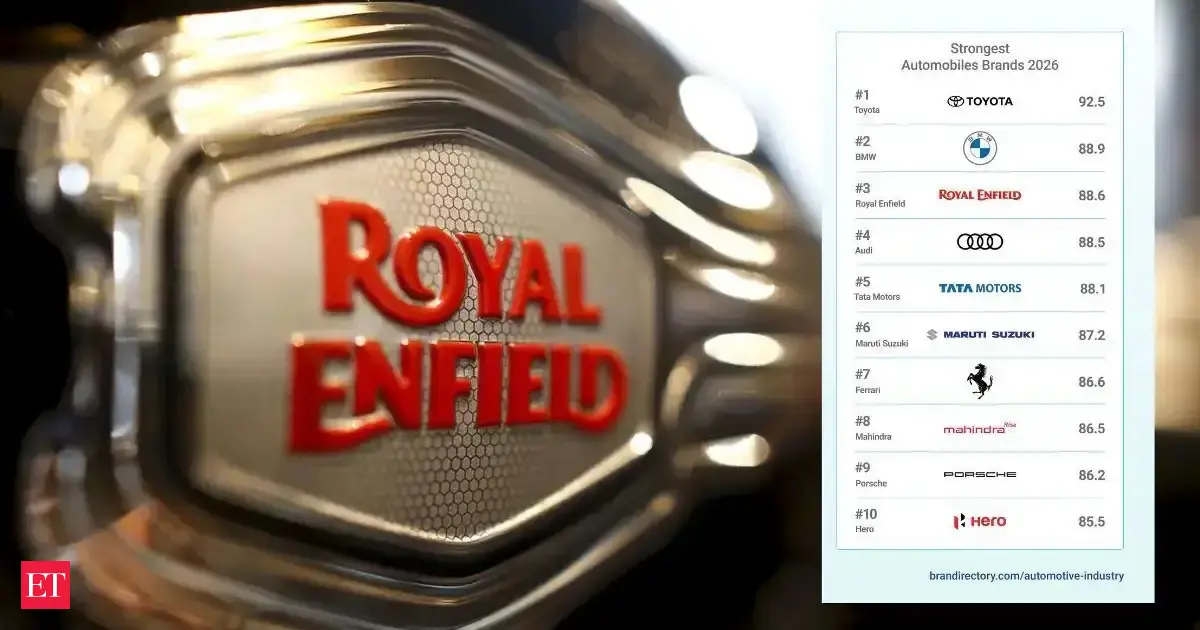
In a remarkable turn of events that has sent ripples across the global automotive industry, Royal Enfield, the iconic Indian motorcycle manufacturer, has achieved an astonishing feat: it has been ranked as the world's third strongest automotive brand. This groundbreaking revelation comes from the highly anticipated Brand Finance Automotive Industry 2026 report, which places the venerable 'Bullet Raja' ahead of established luxury titans like Audi and Ferrari. This isn't just a win for an Indian brand; it's a testament to a carefully orchestrated global expansion, a deep understanding of market niches, and an unwavering commitment to a distinctive brand identity that resonates with a growing legion of enthusiasts worldwide.
The report assigns Royal Enfield an impressive brand strength score of 88.9 and a coveted AAA rating, signaling exceptional brand equity and market performance. Furthermore, the company's brand value has experienced a meteoric rise, surging by a substantial 30% to reach $1.2 billion. This significant growth is not merely a statistical anomaly but a reflection of strategic brilliance and a deep connection with its customer base, proving that heritage, authenticity, and a well-executed global vision can indeed challenge and even surpass the most entrenched players in the automotive world.
The Resurgence of a Legend: A Historical Perspective
Royal Enfield's journey is one steeped in history, resilience, and reinvention. Founded in 1901 in Redditch, England, the brand boasts a legacy that predates many of its contemporary competitors. While its British origins are undeniable, the brand's true renaissance began in India, where it has been manufactured since 1955. For decades, Royal Enfield motorcycles, particularly the legendary 'Bullet,' were synonymous with rugged reliability, military service, and the spirit of adventure across the subcontinent. They were not just vehicles; they were cultural icons, passed down through generations, embodying a sense of timelessness and robust engineering.
However, the global automotive landscape evolved rapidly, and by the late 20th century, Royal Enfield faced the challenge of modernization while retaining its core identity. Under the stewardship of Eicher Motors, the brand embarked on a strategic transformation. Instead of chasing fleeting trends, Royal Enfield doubled down on its heritage, focusing on retro-classic styling combined with modern engineering and reliability. This strategy proved to be a masterstroke. In an era dominated by sleek, high-tech designs, Royal Enfield offered an antidote: motorcycles that evoked nostalgia, simplicity, and the pure joy of riding. This unique proposition allowed it to carve out a distinct niche, attracting riders who sought character, craftsmanship, and a connection to motorcycling's golden age.
Strategic Pillars of Global Dominance
Royal Enfield's ascent to the third strongest automotive brand is no accident; it's the result of several meticulously executed strategic pillars:
* Unwavering Brand Identity: Unlike many brands that constantly pivot, Royal Enfield has remained steadfast in its commitment to its core identity: classic, accessible, and adventure-ready motorcycles. This consistency has fostered deep trust and loyalty among its customer base. * Global Expansion with Local Sensitivity: While expanding aggressively into international markets, Royal Enfield has demonstrated an acute understanding of local preferences and regulations. It has established a robust dealership network and experience centers, making its bikes accessible and its brand experience tangible across continents. * Product Innovation within a Classic Framework: The brand has successfully introduced new models like the Interceptor 650, Continental GT 650, Meteor 350, and Himalayan, which blend its signature retro aesthetics with contemporary performance, safety features, and emission standards. This ability to innovate without diluting its heritage has been crucial. * Community Building: Royal Enfield has excelled at fostering a strong sense of community among its riders. Through organized rides, events, and a vibrant online presence, it has transformed customers into brand ambassadors, creating a powerful, self-sustaining ecosystem of enthusiasts. * Affordability and Accessibility: Compared to premium European and Japanese brands, Royal Enfield offers a compelling value proposition. Its motorcycles provide a premium riding experience at a more accessible price point, opening up the world of motorcycling to a broader demographic, particularly in emerging markets.
Implications for the Automotive Industry and Beyond
Royal Enfield's remarkable achievement carries significant implications, challenging conventional wisdom in the automotive sector. Firstly, it underscores the growing power of niche markets and authentic brand storytelling. In an increasingly commoditized world, consumers are gravitating towards brands that offer a distinct narrative and a genuine connection. Royal Enfield's success proves that heritage, when leveraged correctly, can be a powerful differentiator.
Secondly, it highlights the shifting dynamics of global economic power. The rise of an Indian brand to such a prominent global position signals the increasing influence of Asian economies and their ability to produce world-class products and brands that resonate internationally. This is a clear indicator that the automotive industry's center of gravity is diversifying beyond its traditional Western strongholds.
Furthermore, this achievement serves as a powerful case study in brand resilience and strategic adaptation. Royal Enfield could have faded into obscurity like many legacy brands. Instead, it embraced its history, understood its unique selling proposition, and executed a global strategy that allowed it to thrive. It demonstrates that brand strength isn't solely about market share or revenue, but about the depth of connection a brand has with its audience, its perceived trustworthiness, and its future potential.
The Road Ahead: Sustaining Momentum
As Royal Enfield basks in the glow of this unprecedented recognition, the challenge now lies in sustaining this momentum and further solidifying its position. The company's focus on global expansion, particularly in markets like North America, Europe, and Southeast Asia, will be critical. Continued investment in research and development to enhance performance, introduce new models, and adapt to evolving emission standards will also be paramount. The brand's foray into electric motorcycles, while maintaining its classic appeal, could be the next frontier.
The 'Bullet Raja' has not just surpassed automotive giants; it has redefined what it means to be a strong automotive brand in the 21st century. Its journey from a colonial-era British motorcycle to a global powerhouse, leaving luxury car brands in its wake, is a compelling narrative of vision, perseverance, and the enduring appeal of authenticity. Royal Enfield's roar is now louder than ever, echoing across continents and setting a new benchmark for brand strength in the fiercely competitive automotive world. The road ahead promises to be as exciting and adventurous as the motorcycles themselves.
Stay Informed
Get the world's most important stories delivered to your inbox.
No spam, unsubscribe anytime.
Comments
No comments yet. Be the first to share your thoughts!