Solid-State Battery Breakthrough: Unraveling the Short Circuit Mystery for a Safer Electric Future
A groundbreaking study has finally proven the long-debated mechanism behind short circuits in solid-state batteries, a critical hurdle for their widespread adoption. This discovery, focusing on lithium filaments, paves the way for designing more stable and safer next-generation energy storage. Understanding this phenomenon is key to unlocking the full potential of electric vehicles and portable electronics.
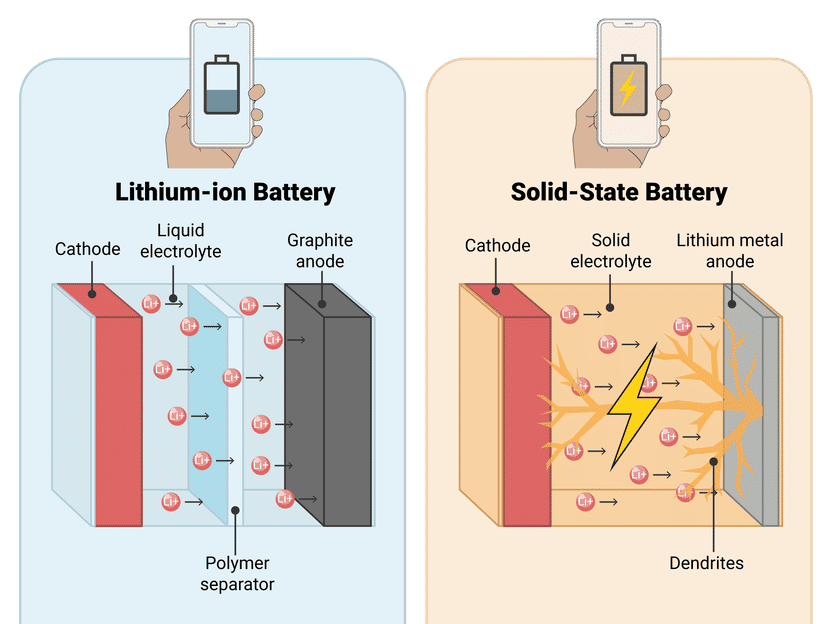
The promise of solid-state batteries has long captivated the imagination of engineers and consumers alike. Imagine smartphones that last for days, electric vehicles with unprecedented range and charging speeds, and a significantly reduced risk of thermal runaway. For years, these aspirations have been tempered by a persistent and elusive challenge: the mechanism of short circuits. Now, a pivotal study has finally unraveled this mystery, offering a clear path forward for the next generation of energy storage.
Unlike the ubiquitous lithium-ion batteries that power most of our modern devices, which rely on a liquid electrolyte, solid-state batteries (SSBs) employ a solid electrolyte. This fundamental difference offers several theoretical advantages: higher energy density, faster charging, and crucially, enhanced safety due to the elimination of flammable liquid components. However, the formation of lithium filaments – dendrites – within the solid electrolyte has been a major impediment, leading to internal short circuits and premature battery failure. This recent research provides the definitive evidence, using advanced imaging techniques, to show precisely how these filaments grow and compromise the battery's integrity.
The Elusive Mechanism: A Decade-Long Puzzle Solved
For over a decade, scientists have theorized about the exact process by which lithium dendrites penetrate solid electrolytes. Early hypotheses suggested that lithium ions would migrate through existing grain boundaries or defects in the solid material, forming conductive pathways that eventually bridged the anode and cathode. However, direct experimental proof, particularly at the nanoscale and in real-time, remained elusive. The complexity of the solid-solid interface and the dynamic nature of lithium deposition made observation incredibly challenging. Researchers often relied on post-mortem analysis, which could only infer the process rather than directly observe it.
This new study, spearheaded by researchers at the Max-Planck-Institut für Nachhaltige Materialien GmbH, utilized operando electron microscopy and X-ray tomography to peer inside working solid-state batteries. This allowed them to observe the formation and growth of lithium filaments as it happened, under realistic operating conditions. What they found was a nuanced process: rather than simply filling pre-existing voids, the lithium ions actively deform and fracture the solid electrolyte material. The pressure exerted by the growing lithium metal, combined with the inherent brittleness of many solid electrolytes, creates new pathways for further lithium deposition, leading to a runaway process. This understanding is critical because it shifts the focus from merely preventing initial nucleation to designing electrolytes that can withstand the mechanical stress of lithium plating.
Implications for Battery Design and Safety
The confirmed mechanism has profound implications for the future design of solid-state batteries. Knowing that mechanical stress and fracture play a significant role means that future solid electrolytes must possess not only high ionic conductivity but also superior mechanical resilience and ductility. This moves beyond the purely chemical considerations that have dominated research for years. Engineers can now focus on:
* Developing new solid electrolyte materials: Exploring polymers, ceramics, and composite materials with improved toughness and resistance to fracture under pressure. * Optimizing interface engineering: Creating stable and intimate contact between the lithium metal anode and the solid electrolyte, minimizing voids where stress concentrations can initiate fractures. * Advanced manufacturing techniques: Employing methods that produce defect-free solid electrolyte layers and precise control over electrode-electrolyte interfaces. * Smart battery management systems: Designing algorithms that can detect early signs of filament formation or stress, potentially adjusting charging protocols to mitigate risks.
This breakthrough is not just about extending battery life; it's fundamentally about safety. Liquid electrolytes in traditional lithium-ion batteries are flammable, posing risks of fire and explosion, especially in cases of damage or overheating. Solid-state batteries, by eliminating this flammable component, inherently offer a safer alternative. However, internal short circuits, even in SSBs, can still lead to localized heating and battery failure, albeit without the same catastrophic fire risk. Understanding and preventing these shorts is paramount to realizing the full safety potential of this technology.
The Road Ahead: From Lab to Commercialization
The journey from a scientific discovery in a laboratory to widespread commercial application is often long and arduous. While this study provides a crucial piece of the puzzle, several challenges remain before solid-state batteries become a common sight in our devices and vehicles. These include:
* Scalability of manufacturing: Producing solid electrolytes and assembling batteries at a cost-effective, industrial scale. * Cost reduction: The materials and processes currently involved in SSB production are often more expensive than those for liquid-ion batteries. * Long-term cycling stability: Ensuring that batteries can withstand thousands of charge-discharge cycles without significant degradation. * Operating temperature range: Optimizing performance across a broad spectrum of environmental conditions.
Major automotive manufacturers like Toyota, Volkswagen, and Hyundai, along with tech giants such as Samsung and Apple, are heavily investing in solid-state battery research and development. Toyota, for instance, has announced plans to introduce SSBs in hybrid vehicles by the mid-2020s, aiming for significantly improved range and faster charging. Analysts predict that the global solid-state battery market could reach tens of billions of dollars by the early 2030s, driven primarily by the electric vehicle sector. This recent scientific validation of the short-circuit mechanism provides a much-needed boost of confidence and a clearer roadmap for these ambitious commercialization efforts.
A Glimpse into an Electrified Future
The implications of this breakthrough extend far beyond just better batteries. It represents a significant step towards a more sustainable and electrified future. With safer, more energy-dense, and longer-lasting batteries, we can expect:
* Enhanced electric vehicle performance: Longer ranges, quicker charging times, and reduced weight, making EVs more appealing to a broader consumer base. * Revolutionized portable electronics: Devices that require less frequent charging, enabling greater mobility and uninterrupted usage. * Grid-scale energy storage: More efficient and safer solutions for storing renewable energy, balancing the grid, and reducing reliance on fossil fuels. * New applications: Powering drones for longer flights, advanced robotics, and even potentially medical implants where safety and longevity are paramount.
This scientific achievement underscores the power of fundamental research in overcoming technological barriers. By meticulously observing and understanding the microscopic world of battery chemistry, scientists have provided the critical insights needed to unlock the macroscopic potential of solid-state technology. The path to a fully electrified world is complex, but with each such discovery, we move closer to a future powered by clean, efficient, and reliable energy storage. The short circuit mystery, once a formidable barrier, has now been demystified, paving the way for a truly electrifying era.
Stay Informed
Get the world's most important stories delivered to your inbox.
No spam, unsubscribe anytime.
Comments
No comments yet. Be the first to share your thoughts!