Spirit Airlines' Collapse: A Warning Shot for the Ailing Aviation Sector Amid Soaring Fuel Costs
The sudden collapse of US low-cost carrier Spirit Airlines has sent shockwaves through the aviation industry, leaving thousands stranded and workers jobless. Citing unprecedented jet fuel price hikes, the airline's 'orderly wind-down' highlights the precarious financial tightrope many budget airlines walk. This event could signal a broader crisis for carriers unable to absorb escalating operational costs, forcing a reevaluation of the industry's resilience and future strategies.
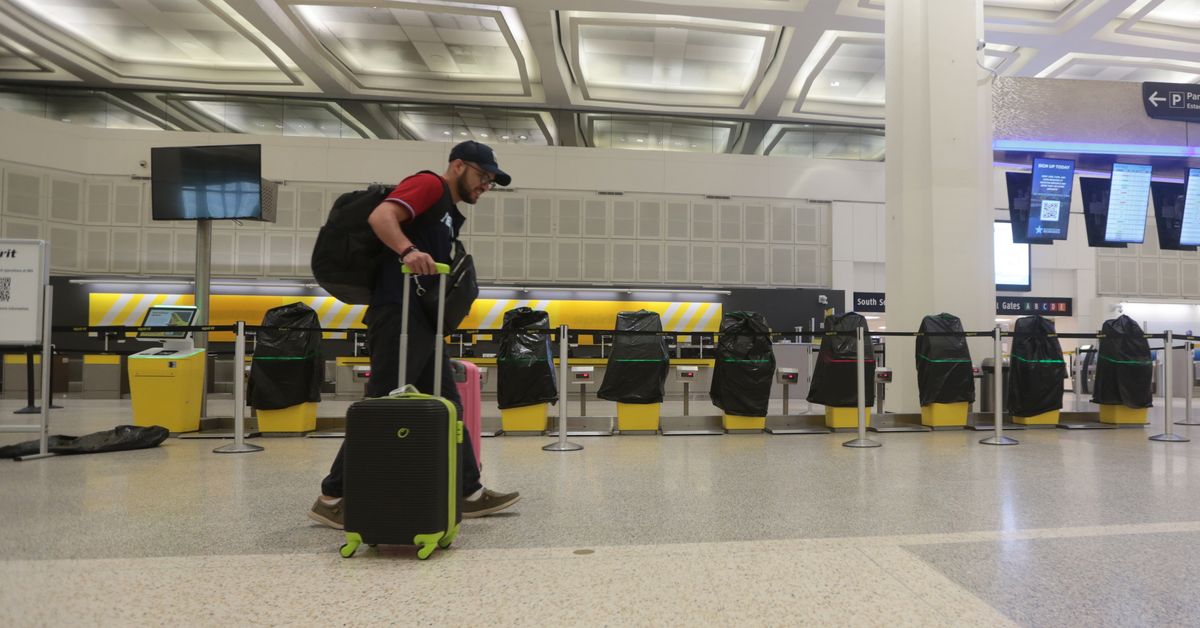
The skies above America, once bustling with the distinctive yellow and black livery of Spirit Airlines, have grown a little emptier. In a dramatic turn of events that underscores the fragility of the modern aviation industry, the popular US low-cost carrier has ceased operations, effective immediately. The announcement, which left scores of passengers stranded at airports nationwide and thousands of employees facing unemployment, cited an 'unprecedented surge in jet fuel prices' as the primary catalyst for its demise. This abrupt shutdown is not merely a corporate failure; it's a stark warning reverberating through an industry still grappling with post-pandemic recovery and now confronting a new era of economic volatility.
For years, Spirit Airlines carved out a significant niche in the highly competitive US market by offering ultra-low fares, often at the expense of traditional amenities. Its 'Bare Fare' model, which unbundled services like baggage and seat selection, appealed to budget-conscious travelers, allowing it to expand rapidly. However, this business model, while successful in attracting a broad customer base, also made the airline particularly vulnerable to external shocks. With razor-thin profit margins, the ability to absorb sudden, significant increases in operational costs, such as fuel, was severely limited. The current geopolitical landscape, marked by conflicts and supply chain disruptions, has driven crude oil prices to historic highs, directly impacting jet fuel costs – often an airline's largest variable expense.
The Anatomy of a Collapse: Fuel, Fares, and Fragility
The narrative of Spirit's downfall is a complex interplay of market forces and strategic vulnerabilities. Jet fuel prices, which had already been on an upward trajectory, experienced an exponential surge in recent months, pushing many carriers to the brink. For a low-cost airline like Spirit, which relies on high volume and efficient operations to turn a profit, these escalating costs proved insurmountable. While larger, full-service carriers might have the financial reserves or hedging strategies to weather such storms, Spirit's lean operational structure offered little buffer.
Industry analysts have long warned about the inherent risks in the ultra-low-cost carrier (ULCC) model. While offering undeniable benefits to consumers, the model's reliance on maximizing ancillary revenue and minimizing base fares means that any significant increase in fixed or variable costs can quickly erode profitability. "Spirit's collapse is a textbook example of how external economic pressures can expose the vulnerabilities of a highly optimized, low-margin business," explains Dr. Evelyn Reed, an aviation economist at the University of Chicago. "Their success was built on efficiency, but that efficiency also meant less resilience when faced with a shock of this magnitude."
The airline's decision to wind down operations 'orderly' suggests a recognition of its inability to continue without incurring massive, unsustainable losses. This process typically involves grounding aircraft, canceling all future flights, and initiating bankruptcy proceedings to manage assets and liabilities. The immediate impact, however, is on the thousands of passengers whose travel plans have been thrown into disarray and the roughly 10,000 employees – pilots, flight attendants, ground staff, and administrative personnel – who now face an uncertain future. The ripple effect extends to airports, suppliers, and local economies dependent on the airline's operations.
Broader Implications for the Aviation Sector
Spirit Airlines' demise sends a chilling message across the entire aviation sector. It highlights the delicate balance between competitive pricing, operational costs, and financial stability. Other budget airlines, both in the US and globally, are undoubtedly re-evaluating their own strategies and financial health in light of this event. The question now is whether this is an isolated incident or the harbinger of a broader consolidation or even contraction within the industry.
Consolidation: The vacuum left by Spirit could be filled by rival carriers, potentially leading to increased market concentration. Larger airlines might acquire Spirit's assets, including airport slots and aircraft, further strengthening their dominance. This could, ironically, lead to less competition in the long run, potentially pushing airfares higher for consumers who previously benefited from Spirit's aggressive pricing.
Fare Hikes: With a significant low-cost player out of the picture, remaining airlines may face less pressure to keep fares aggressively low. While competition remains fierce, the removal of a major ULCC could provide an opportunity for other carriers to adjust their pricing strategies upwards, especially on routes previously served by Spirit.
Government Intervention: The scale of disruption and job losses could prompt calls for government intervention, either in the form of financial aid for struggling carriers or regulatory measures to stabilize fuel markets. However, the political will for such interventions, especially for a company that has ceased operations, remains to be seen.
Shift in Business Models: Airlines may be forced to reconsider their reliance on purely low-cost models. There might be a pivot towards more diversified revenue streams, stronger hedging strategies against fuel price volatility, or even a re-emphasis on premium services to boost margins. The era of ultra-cheap air travel might be facing its most significant challenge yet.
The Passenger and Employee Plight
The immediate human cost of Spirit's collapse is immense. Passengers who booked flights with Spirit are now scrambling to find alternative arrangements, often at significantly higher prices. Many will struggle to recover their money, facing lengthy processes with credit card companies or through any eventual bankruptcy proceedings. The lack of a robust industry-wide compensation mechanism for airline failures leaves consumers exposed.
For the thousands of employees, the situation is even more dire. A sudden job loss, particularly in a specialized industry like aviation, can have devastating personal and financial consequences. While some may be absorbed by other airlines, the sheer volume of layoffs means many will face prolonged unemployment. Unions are likely to play a critical role in advocating for severance packages and assisting members with job placement.
Looking Ahead: A Turbulent Future?
Spirit Airlines' downfall serves as a potent reminder that even in a seemingly robust industry, economic shocks can have profound and rapid consequences. The aviation sector, inherently sensitive to fuel prices, geopolitical stability, and consumer confidence, faces a challenging road ahead. While the immediate focus is on managing the fallout, the long-term implications could reshape the competitive landscape, influence pricing strategies, and potentially redefine the very nature of air travel.
As the dust settles, industry leaders, policymakers, and consumers alike will be watching closely to see if Spirit's demise is an isolated incident or a canary in the coal mine, signaling a more turbulent future for an industry still finding its footing in a rapidly changing world. The era of ultra-low-cost air travel, once a symbol of accessibility, may now be entering a period of profound re-evaluation, forcing a reckoning with the true cost of keeping the world connected.
Stay Informed
Get the world's most important stories delivered to your inbox.
No spam, unsubscribe anytime.
Comments
No comments yet. Be the first to share your thoughts!