Targeting the Untreatable: Dr. David Nathanson's Quest to Conquer Glioblastoma
Glioblastoma, an aggressive and devastating brain cancer, has long defied effective treatment. At UCLA, Dr. David Nathanson is leading a groundbreaking effort to change this narrative. His research focuses on developing highly targeted therapies that exploit the unique biological vulnerabilities of individual tumors, offering a new beacon of hope for patients facing this dire diagnosis. This deep dive explores his innovative approach and its potential to revolutionize glioblastoma care.
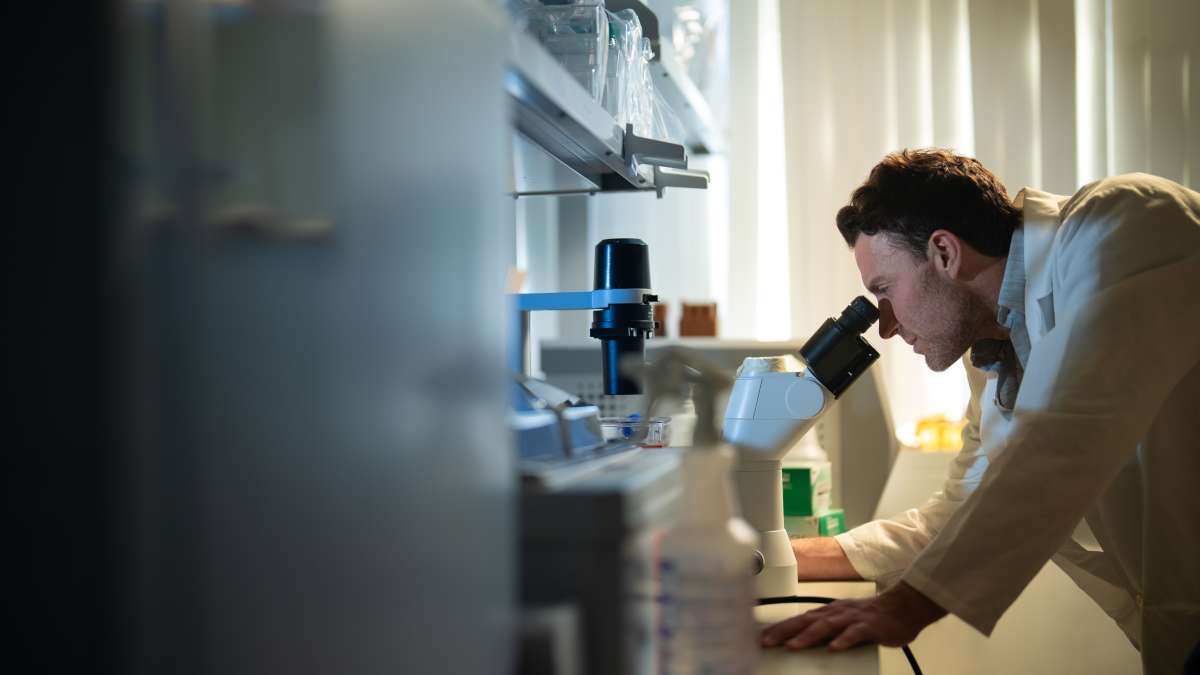
For two decades, Dr. David Nathanson, a brilliant mind at UCLA, has dedicated his life to a singular, formidable adversary: glioblastoma. This aggressive brain cancer, notorious for its rapid progression and devastating prognosis, has long been considered one of oncology's most intractable foes. Yet, in the face of such a challenge, Dr. Nathanson's lab operates with an unwavering mission statement prominently displayed on its website: to understand and cure glioblastoma. This isn't just a lofty aspiration; it's a daily commitment that drives his team's innovative research, pushing the boundaries of what's possible in cancer treatment.
The Unrelenting Foe: Understanding Glioblastoma's Brutality
Glioblastoma multiforme (GBM) is the most common and aggressive primary brain tumor in adults. Its statistics are grim: the median survival rate is a mere 15 to 18 months, and only about 6.8% of patients survive five years or more. These figures underscore the urgent need for new therapeutic strategies. What makes glioblastoma so uniquely challenging? Several factors contribute to its formidable nature. Firstly, its location within the brain makes surgical removal incredibly difficult, as surgeons must navigate vital neurological functions. Even with aggressive surgery, microscopic tumor cells often remain, leading to recurrence.
Secondly, the blood-brain barrier, a protective mechanism designed to shield the brain from harmful substances, inadvertently blocks most chemotherapy drugs from reaching the tumor effectively. This biological fortress, while essential for brain health, becomes a significant hurdle in treatment. Thirdly, glioblastoma is characterized by its extreme heterogeneity. Not all glioblastomas are alike; even within a single tumor, different cells can exhibit varying genetic mutations and behaviors, making a 'one-size-fits-all' treatment approach largely ineffective. This cellular diversity allows some tumor cells to resist therapy, leading to relapse. Patients often endure a grueling regimen of surgery, radiation, and chemotherapy, only to face the inevitable return of the disease. The emotional and physical toll on patients and their families is immense, highlighting the critical importance of Dr. Nathanson's pioneering work.
Precision Strikes: Tailoring Therapy to Tumor Biology
Dr. Nathanson's approach is a radical departure from traditional, broad-spectrum cancer treatments. Instead of carpet-bombing the tumor with generalized chemotherapy, his team focuses on precision medicine, meticulously identifying the specific genetic and molecular vulnerabilities unique to each patient's glioblastoma. "We're not just treating glioblastoma; we're treating your glioblastoma," he often emphasizes. This philosophy is rooted in the understanding that every tumor has a distinct 'fingerprint' – a unique combination of mutations, protein expressions, and cellular pathways that drive its growth and survival. By deciphering this fingerprint, researchers can design therapies that specifically target these weaknesses, minimizing harm to healthy cells and maximizing efficacy against the cancer.
One of the key areas of Dr. Nathanson's research involves receptor tyrosine kinases (RTKs). These are a class of cell surface receptors that play a crucial role in cell growth, division, and survival. In many cancers, including glioblastoma, RTKs become overactive or mutated, sending constant 'grow' signals to the tumor cells. Dr. Nathanson's lab has been instrumental in identifying specific RTKs that are highly active in glioblastoma and developing drugs that can selectively inhibit them. For instance, his work on epidermal growth factor receptor (EGFR) and platelet-derived growth factor receptor (PDGFR) has shown promising results in preclinical models. These inhibitors act like molecular keys, fitting into specific locks on the cancer cells and shutting down their growth pathways. This targeted approach represents a paradigm shift, moving away from generalized toxicity towards highly specific intervention.
Overcoming Resistance: The Challenge of Tumor Evolution
Even with targeted therapies, glioblastoma presents another formidable challenge: drug resistance. Cancer cells are masters of adaptation, often finding ways to bypass targeted drugs, leading to treatment failure. Dr. Nathanson's team is acutely aware of this evolutionary pressure and is actively working to anticipate and counteract it. Their strategy involves a multi-pronged attack, often combining different targeted therapies or integrating them with existing treatments like radiation. The goal is to hit the tumor from multiple angles, making it harder for cancer cells to develop resistance.
Furthermore, Dr. Nathanson's lab is exploring novel ways to deliver drugs past the blood-brain barrier. One promising avenue involves nanotechnology, encapsulating drugs in tiny particles that can more effectively cross this protective barrier and deliver their therapeutic payload directly to the tumor site. This innovative delivery system could significantly enhance the potency of existing and new drugs, making them more effective against deep-seated brain tumors. His research also delves into the tumor microenvironment, understanding how the surrounding cells and blood vessels contribute to tumor growth and resistance, and developing strategies to disrupt these supportive networks. This holistic view of the tumor ecosystem is crucial for developing durable responses.
A Glimmer of Hope: Clinical Trials and Future Directions
The rigorous preclinical work conducted in Dr. Nathanson's lab is now paving the way for clinical trials, bringing these innovative therapies closer to patients. These trials are critical steps in validating the safety and efficacy of new drugs in humans. While the journey from lab bench to bedside is long and arduous, the early results are providing a much-needed glimmer of hope. Patients who previously had no options are now enrolling in trials, benefiting from therapies designed specifically for their tumor's unique biology. This personalized approach is not just about extending life; it's about improving the quality of life for patients, minimizing side effects, and offering a renewed sense of possibility.
Looking ahead, Dr. Nathanson envisions a future where glioblastoma treatment is not a single, static protocol but a dynamic, adaptive strategy. This involves continuous monitoring of the tumor's genetic evolution, adjusting therapies as the cancer changes, much like a chess match against a constantly evolving opponent. The integration of artificial intelligence and machine learning could play a pivotal role in this future, helping to analyze vast amounts of genomic data and predict tumor behavior, guiding clinicians in real-time treatment decisions. Furthermore, collaboration across institutions and disciplines will be key. Dr. Nathanson actively fosters partnerships with neurosurgeons, radiation oncologists, pathologists, and other researchers, creating a synergistic environment where diverse expertise converges on a common goal.
Dr. David Nathanson's relentless pursuit of a cure for glioblastoma is more than just scientific endeavor; it's a testament to human resilience and ingenuity in the face of immense adversity. His work at UCLA embodies the spirit of innovation, offering a tangible path forward for patients and families who have long lived under the shadow of this devastating disease. While the road ahead remains challenging, the tailored attack he is designing against glioblastoma represents a profound shift in cancer therapy, promising a future where this once untreatable cancer might finally meet its match. The hope he instills is not just for a longer life, but for a life lived with dignity and possibility, free from the relentless grip of glioblastoma.
Stay Informed
Get the world's most important stories delivered to your inbox.
No spam, unsubscribe anytime.
Comments
No comments yet. Be the first to share your thoughts!