The Man Who Came Back: Ugandan Funeral Turns to Chaos as 'Deceased' Appears Alive
A small Ugandan community was plunged into disbelief and chaos when a man, presumed dead and whose funeral was underway, dramatically appeared alive. This extraordinary event sparked panic, confusion, and a wave of questions about identity, mistaken reports, and the profound impact on a grieving family. The incident highlights the fragility of information in remote areas and the deep-seated cultural beliefs surrounding death and resurrection.
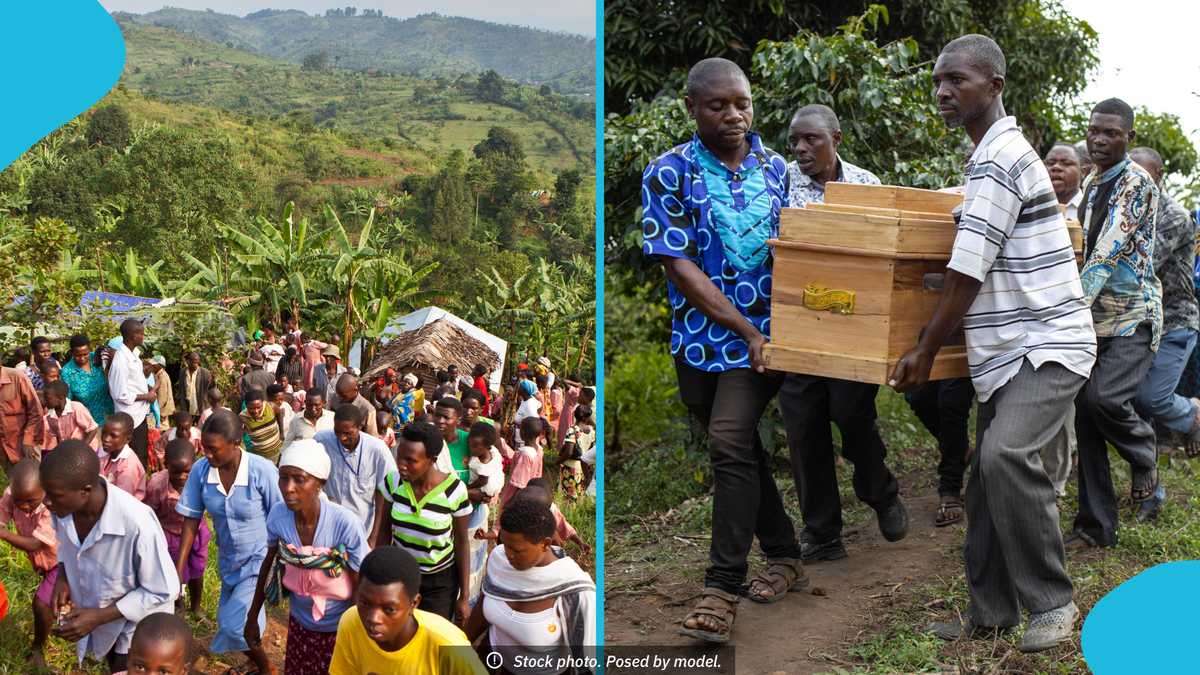
The air hung heavy with the mournful hymns and the scent of earth, a somber prelude to the final farewell for a man believed to be deceased. Villagers, family, and friends had gathered in a remote Ugandan community, their hearts heavy with grief, ready to lay to rest their loved one. Then, a gasp rippled through the crowd, followed by shouts, screams, and a collective surge of disbelief. Standing at the edge of the gathering, very much alive and seemingly bewildered, was the man whose funeral they were attending. This wasn't a ghost story; it was a bewildering reality that plunged the entire community into an unprecedented state of chaos and confusion.
The initial reaction was a potent cocktail of fear and astonishment. Some fainted, others fled, convinced they were witnessing a spectral return or a divine miracle. The scene quickly devolved into pandemonium, as the line between the living and the dead blurred in the most dramatic fashion imaginable. This extraordinary event, which unfolded in a small, close-knit Ugandan village, has since captured global attention, forcing us to confront not just the bizarre circumstances of the man's reappearance, but also the deeper implications of mistaken identity, the power of community rumor, and the profound psychological impact on those left to grieve—and then to reconcile with a life unexpectedly restored.
The Unfolding Drama: From Grief to Glimmer of Life
The story began days earlier when reports circulated that a local man, let's call him 'John Doe' for privacy, had been found deceased under tragic circumstances. Details were scarce, but the community, relying on word-of-mouth and perhaps a misidentified body, began the solemn preparations for his burial. Funerals in many African cultures are not merely rites of passage; they are elaborate social events, deeply spiritual and communal, involving extensive family gatherings, traditional ceremonies, and significant financial and emotional investment. For John Doe's family, the grief was palpable, the preparations exhaustive. They had mourned, wept, and accepted their loss, preparing for the finality of the grave.
The moment John Doe walked into his own funeral was described by witnesses as a scene from a movie, yet far more visceral and terrifying. One elder, who preferred to remain anonymous due to the shock, recounted, “We were singing, praying, and then someone pointed. There he was. It was him. We thought it was a ghost. People ran, women screamed. It was pure madness.” The man himself, reportedly confused by the commotion, eventually made his way closer, his presence undeniable. It took considerable effort from a few brave individuals to calm the crowd and verify his identity. The man confirmed he was indeed John Doe, alive and well, having been away on a trip or perhaps simply out of touch, unaware of the tragic misunderstanding unfolding in his name.
The Anatomy of a Mistake: How Could This Happen?
Such an extraordinary error begs the question: how could a person be declared dead and funeral arrangements proceed without proper identification? In many rural and remote areas, particularly in developing nations, official identification processes can be lax or non-existent. Record-keeping might be informal, and reliance on community recognition is high. A body found might be badly decomposed, disfigured, or simply bear a passing resemblance to someone known to be missing. In the absence of advanced forensic techniques or even basic fingerprinting, visual identification by distraught family members, often under immense emotional pressure, can lead to catastrophic errors.
Furthermore, the speed with which news travels in close-knit communities, often through informal channels, can outpace official verification. A rumor, once started, can quickly solidify into 'fact.' In this case, it's plausible that a body was found, perhaps of a similar build or wearing similar clothing, and a distraught relative, or even a well-meaning but mistaken neighbor, identified it as John Doe. Without a formal, independent verification process, the wheels of mourning and burial were set in motion. This incident serves as a stark reminder of the critical importance of robust identification protocols, especially in cases of presumed death, to prevent such traumatic and bizarre occurrences.
Cultural and Psychological Repercussions
The reappearance of the 'deceased' has profound cultural and psychological implications. In many African traditions, the boundary between the living and the dead is permeable, and ancestors play an active role in the lives of the living. The concept of a 'living ghost' or a person returning from the dead can evoke deep-seated spiritual beliefs, ranging from divine intervention to witchcraft. For the community, this event will undoubtedly become a foundational legend, discussed for generations, shaping their understanding of life, death, and the supernatural.
For the family, the emotional rollercoaster is unimaginable. The relief of seeing their loved one alive is likely intertwined with the trauma of having grieved him, the confusion of the mistaken identity, and perhaps even a sense of betrayal or anger at the circumstances. Psychologically, processing such an event can be incredibly complex. The family has experienced a profound loss, gone through the rituals of mourning, and then had that loss dramatically reversed. This can lead to a form of emotional whiplash, requiring significant time and support to reconcile. The man himself, John Doe, returns to a world that had literally buried him, facing the task of reintegrating into a community that saw him as dead, and perhaps even as a supernatural entity.
Lessons from the Unbelievable: A Call for Verification
This extraordinary incident, while seemingly unique, is not entirely without precedent. There have been sporadic reports globally of individuals mistakenly declared dead, only to reappear. These cases underscore a critical need for universal standards in identifying deceased persons. In countries with advanced forensic capabilities, DNA testing, dental records, and fingerprint analysis are routine. However, in regions where such resources are scarce, the reliance on visual identification and community consensus remains high, leaving room for tragic errors.
Beyond the immediate shock, this event offers valuable lessons for public administration, healthcare systems, and community leaders. It highlights the importance of: 1. Robust Identification Protocols: Implementing standardized procedures for identifying bodies, even in remote areas, possibly through mobile forensic units or training local authorities. 2. Communication Channels: Establishing clear and reliable communication pathways to verify reports of death before public announcements or funeral arrangements are made. 3. Community Education: Educating communities on the importance of official verification and discouraging the spread of unconfirmed rumors. 4. Psychological Support: Recognizing the immense psychological toll such events take on families and communities, and providing access to mental health resources.
The story of the man who walked into his own funeral is more than just a bizarre news item; it is a poignant narrative about human fallibility, the power of belief, and the urgent need for accuracy in the most sensitive of human experiences. As the dust settles in that small Ugandan village, the questions linger, but so too does the opportunity to learn and prevent such a bewildering tragedy from ever repeating itself. The man’s return from the 'dead' serves as a stark, unforgettable reminder that sometimes, life truly is stranger than fiction, and the truth, however unbelievable, must always be sought and verified.
Stay Informed
Get the world's most important stories delivered to your inbox.
No spam, unsubscribe anytime.
Comments
No comments yet. Be the first to share your thoughts!