The Roar That Almost Was: Unearthing Honda's Forgotten V8 NSX Successor
Before the current hybrid marvel, Honda's NSX successor almost took a radically different path, one defined by a thunderous V8 engine. This deep dive explores the legendary, yet ultimately shelved, Project NSX-R and its bespoke V8, designed to challenge the world's elite supercars. Discover the engineering brilliance and the strategic shifts that led to this engine's mythical status, often compared to the iconic Lexus LFA's soundtrack.
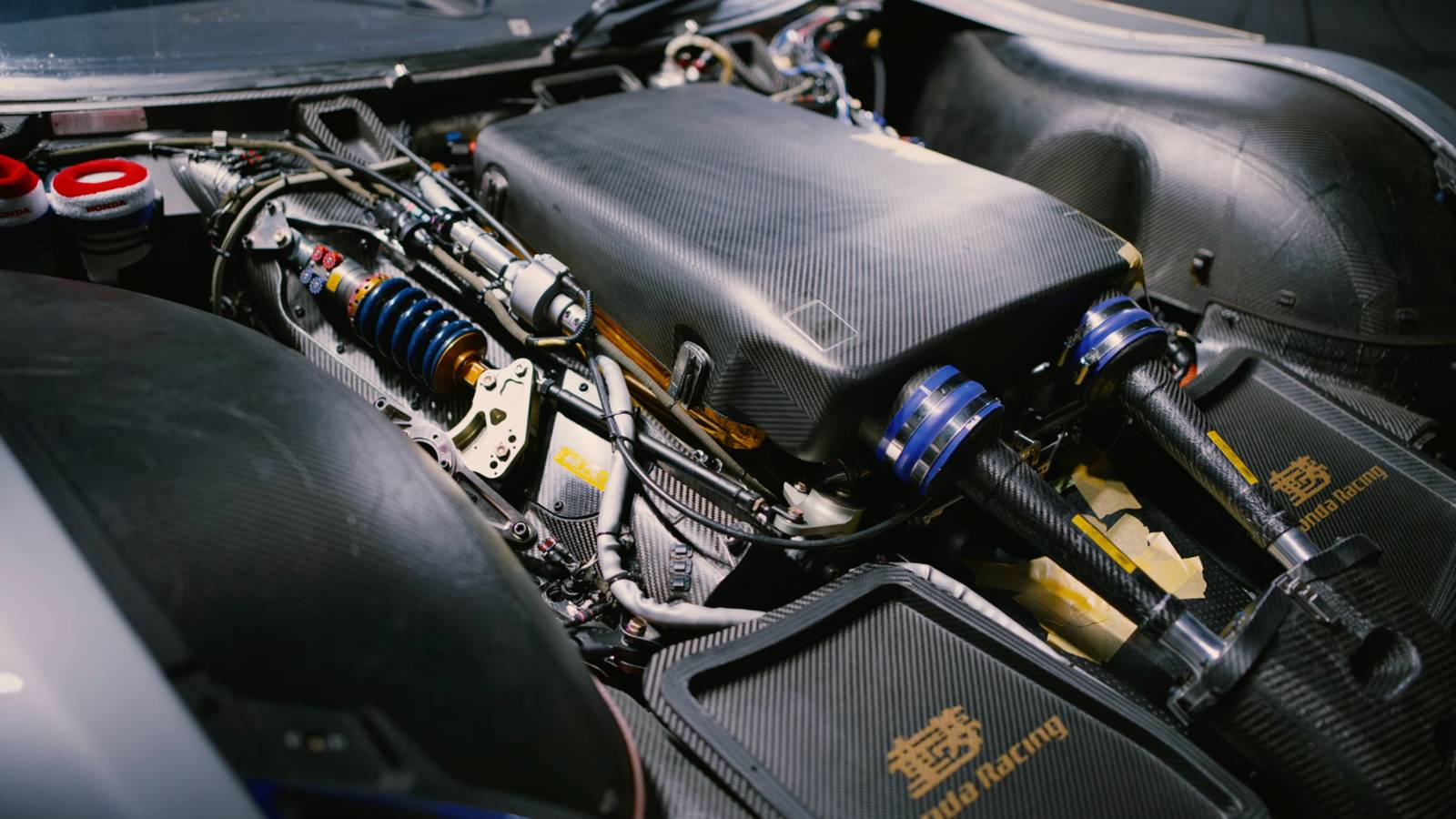
In the annals of automotive history, some legends are born on the track, others in the showroom. Then there are those that exist in the tantalizing space of 'what if,' whispered among enthusiasts and engineers alike. One such tale revolves around a forgotten Honda V8, an engine so potent and aurally captivating that it was destined to power the next-generation NSX, a successor that, in its initial conception, promised a symphony of raw power unlike anything Honda had produced before or since. This was Project NSX-R, a truly ambitious undertaking that aimed to redefine the supercar landscape, not with hybrid wizardry, but with a visceral, high-revving V8 that, according to those who heard it, made the revered Lexus LFA's exhaust note sound almost tame.
The Genesis of a Supercar Dream
The original Honda NSX, launched in 1990, was a paradigm shift. It proved that a supercar could be reliable, user-friendly, and exquisitely engineered, challenging established European marques with its groundbreaking all-aluminum monocoque and a high-revving V6. By the early 2000s, however, the automotive world had moved on. Supercars were getting faster, more powerful, and increasingly dominated by V8s, V10s, and V12s. Honda, ever the innovator, recognized the need for a bold new direction for its flagship performance model. The internal project, often referred to as the 'NSX successor' or 'Project NSX-R,' began to take shape, with a clear mandate: surpass the original's legacy and compete directly with the likes of Ferrari and Porsche on their own terms. This meant more power, more prestige, and, crucially, a more evocative engine.
Initial concepts explored various powertrain configurations, but the engineering team, driven by a desire for ultimate performance and an unparalleled driving experience, gravitated towards a naturally aspirated V8. This was a significant departure for Honda's performance division, known for its inline-fours and V6s. The goal was not just to build a V8, but to build a Honda V8 – one that embodied the company's philosophy of precision engineering, high-revving character, and exceptional reliability. The engine developed for this project was reportedly a 4.5-liter unit, designed from the ground up to deliver immense power output and, perhaps more importantly, an intoxicating soundtrack. Whispers from within Honda suggested power figures well north of 500 horsepower, a formidable number for the era, especially for a naturally aspirated engine.
The Engineering Marvel: A V8 Unlike Any Other
The Honda V8 for the NSX successor was not merely a larger engine; it was a testament to Honda's relentless pursuit of engineering perfection. Details are scarce, as the project was ultimately shelved, but insider accounts paint a picture of a bespoke unit designed for extreme performance. It was rumored to feature a flat-plane crankshaft, a configuration typically found in racing engines and high-performance European sports cars. A flat-plane crank allows for a more compact engine design and a distinct, high-pitched, aggressive exhaust note, often described as a 'scream.' This contrasts sharply with the 'burble' of a traditional cross-plane V8.
Furthermore, Honda's expertise in VTEC (Variable Valve Timing and Lift Electronic Control) technology would undoubtedly have been integrated, allowing the engine to deliver a broad power band and a dramatic surge of power at higher RPMs. Imagine a VTEC engagement combined with the raw, mechanical intensity of a flat-plane V8 – the auditory experience would have been nothing short of electrifying. Engineers reportedly focused heavily on reducing internal friction, optimizing airflow, and ensuring the engine could reliably sustain extremely high revs, potentially pushing towards 9,000 RPM or even beyond, a characteristic trait of Honda's performance engines. The objective was clear: create an engine that was not just powerful, but also an emotional centerpiece, a mechanical heart that truly communicated with the driver.
The Sound: A Symphony of Aggression
This is where the legend truly takes hold. Those few individuals who had the privilege of hearing this V8 in its development stages describe its sound as utterly unique and profoundly aggressive. It wasn't just loud; it was a cacophony of mechanical precision and unbridled fury, a sound that felt 'contained,' as if the engine was barely holding back its immense energy. Comparisons to the Lexus LFA's legendary 4.8-liter V10 are frequent, and often, the Honda V8 is described as even angrier. The LFA's V10, famously co-developed with Yamaha, is celebrated for its F1-esque wail, a high-frequency shriek that is among the most iconic engine notes ever produced. For the Honda V8 to be considered its peer, or even superior in terms of raw aggression, speaks volumes about its character.
This auditory signature wasn't accidental. Honda engineers likely tuned the exhaust system meticulously, much like a musical instrument, to achieve a specific resonance and tone. The combination of a flat-plane crank, high compression, and potentially a short-stroke design would have contributed to its rapid-fire, high-frequency sound profile. It was designed to be an experience, not just a means of propulsion, a direct challenge to the emotional appeal of European supercars.
The Unforeseen Halt: Why the Dream Died
Despite the promising development and the sheer engineering brilliance invested, the V8-powered NSX successor never saw the light of day. Several factors conspired against its release:
* Global Financial Crisis (2008): The economic downturn hit the automotive industry hard, leading many manufacturers to scale back ambitious, high-cost projects. A bespoke V8 supercar was a significant financial commitment. * Environmental Regulations and Shifting Priorities: Increasingly stringent emissions standards and a growing global focus on fuel efficiency and environmental responsibility began to influence automotive development. A large, naturally aspirated V8, no matter how efficient for its class, was becoming a harder sell. * Honda's Strategic Shift: Around this time, Honda began to pivot towards more environmentally conscious technologies, including hybrids and fuel cells. The direction for its flagship performance car likely shifted to align with this new corporate vision, paving the way for the eventual hybrid NSX. * Formula 1 Withdrawal: Honda's withdrawal from Formula 1 at the end of the 2008 season also played a role. F1 was a crucial proving ground and marketing platform for Honda's high-performance engine technology. Without that direct link, the rationale for developing such a specialized V8 may have diminished.
The decision to scrap the project was undoubtedly a difficult one for the engineers who poured their hearts into it. The prototypes, the engine test mules, and the dreams of a roaring Honda V8 supercar were relegated to the archives, becoming a fascinating footnote in the company's rich history.
Legacy and What Could Have Been
The story of Honda's forgotten V8 NSX successor serves as a powerful reminder of the complex interplay between engineering ambition, market forces, and corporate strategy. While the current NSX, with its sophisticated hybrid powertrain and all-wheel drive, is a technological marvel in its own right, delivering blistering performance with modern efficiency, it represents a different philosophy. The V8 NSX-R would have been a more visceral, perhaps more 'traditional' supercar, one that appealed directly to the primal desire for raw engine sound and mechanical connection.
Its legend persists because it embodies a particular era of automotive passion – one where the engine's voice was paramount. For enthusiasts, the idea of a Honda V8 that could out-scream a Lexus LFA is pure automotive poetry. It highlights Honda's incredible engineering depth and its willingness to push boundaries, even if those boundaries ultimately remained within the confines of a test facility. While we may never hear its full, unbridled roar on public roads, the tale of Honda's angriest V8 ensures its place in the pantheon of automotive legends, a testament to the supercar that almost was, and the unforgettable sound that could have been its signature.
Stay Informed
Get the world's most important stories delivered to your inbox.
No spam, unsubscribe anytime.
Comments
No comments yet. Be the first to share your thoughts!