The Synchronized Brain: How Dance Unlocks a Deeper Neurological Connection
Groundbreaking research from the University of Colorado Boulder reveals that dancers' brains synchronize during close physical coordination, like in Argentine Tango. This phenomenon, termed 'interbrain coupling,' suggests a profound neurological connection beyond mere movement. The study sheds new light on the social and cognitive benefits of shared physical activities, hinting at deeper implications for human interaction and well-being.
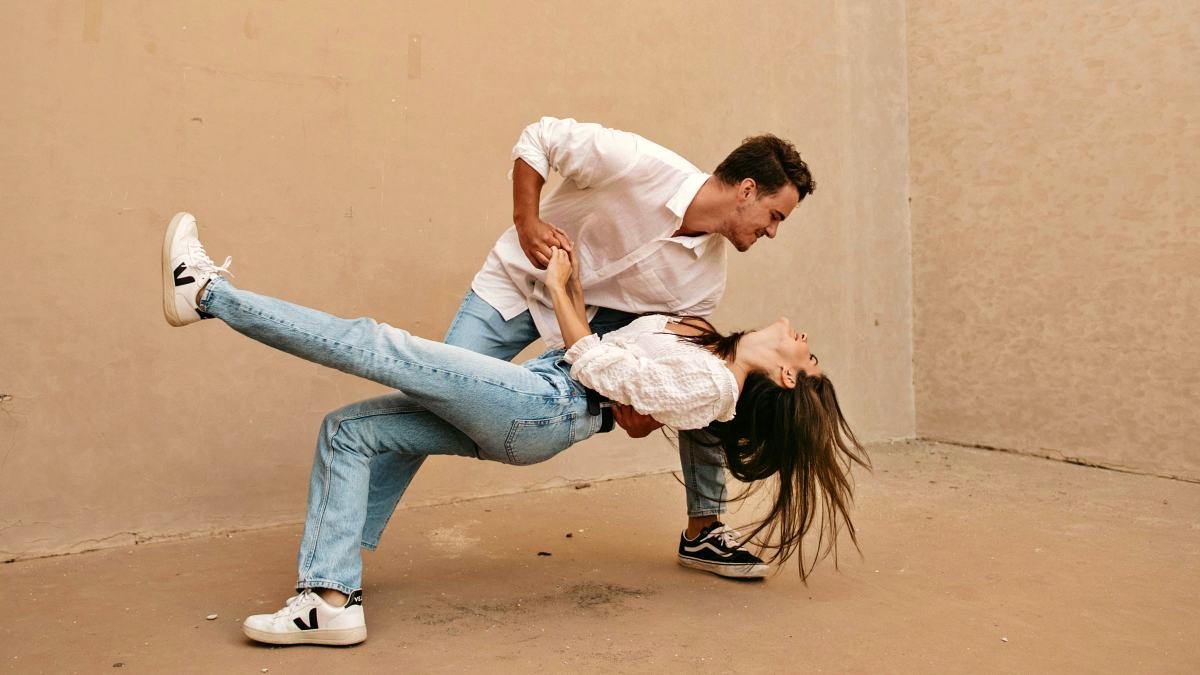
In a world increasingly dominated by digital connections, a groundbreaking discovery reminds us of the profound power of physical interaction. Something truly remarkable happens when two people dance closely together – not just in their graceful movements, but deep within their minds. Scientists have now found that when dancers are truly in sync, their brains begin to synchronize as well, forging a neurological bond that transcends mere choreography.
This fascinating revelation comes from a pioneering study conducted by researchers at the University of Colorado Boulder. Their work, focusing on the intricate partnership of Argentine Tango, provides compelling evidence of what they term 'interbrain coupling': a phenomenon where the brain activity patterns of two individuals align during shared, coordinated physical tasks. This isn't just about moving in unison; it's about a deeper, almost telepathic understanding unfolding at a neural level.
The Tango of Neurons: Unveiling Interbrain Coupling
The study, led by Dr. Natalie Ullrich and her team, utilized advanced neuroimaging techniques to monitor the brain activity of tango dancers. Participants, ranging from novices to experienced dancers, were fitted with mobile electroencephalography (EEG) devices that allowed researchers to record their brainwaves in real-time as they performed various tango figures. The choice of Argentine Tango was deliberate: its improvisational nature, intimate embrace, and constant non-verbal communication make it an ideal model for studying complex interpersonal coordination.
What the researchers observed was striking. As dancers moved together, particularly during moments requiring precise timing and shared decision-making, their brainwave patterns – specifically in the alpha and theta bands, associated with attention, focus, and emotional processing – began to mirror each other. The stronger the perceived connection and coordination between partners, the more pronounced this interbrain coupling became. This wasn't a one-way street; the synchronization was reciprocal, suggesting a dynamic, co-created mental state.
“Our findings suggest that close physical coordination, especially in a context like tango where communication is largely non-verbal and intuitive, isn’t just about moving bodies in space,” explains Dr. Ullrich. “It reflects a deeper neurological connection, a shared mental state that allows partners to anticipate and respond to each other with remarkable fluidity. It’s almost as if their individual brains merge into a temporary, collective consciousness focused on the dance.”
Beyond the Ballroom: Historical Context and Broader Implications
The concept of collective consciousness or shared experience is not new to human history. Indigenous cultures worldwide have long understood the power of communal dance and ritual to foster social cohesion and spiritual connection. From tribal dances around a fire to synchronized religious ceremonies, humans have instinctively used rhythmic movement to bind communities. This research provides a scientific lens through which to understand these ancient practices, suggesting that these rituals may have been unknowingly tapping into fundamental neural mechanisms of social bonding.
Historically, dance has served myriad purposes: courtship, celebration, storytelling, and even healing. The social neuroscience field has been increasingly exploring how shared experiences shape our brains and social bonds. Previous studies have shown brain synchronization in activities like playing music together or even during active listening in a conversation. However, the physical intimacy and complex coordination of partnered dance offer a unique model to explore these phenomena in a highly dynamic and engaging context.
This study adds a crucial layer to our understanding of human social interaction. It posits that the physical act of moving in sync with another person can literally rewire our brains to be more attuned to them. This has profound implications for understanding empathy, cooperation, and the formation of social bonds, suggesting that physical synchrony might be a fundamental building block of human connection.
The Science of Connection: Mechanisms and Future Directions
How exactly does this interbrain coupling occur? While the exact neural pathways are still being investigated, researchers hypothesize that mirror neuron systems, which activate both when we perform an action and when we observe someone else performing the same action, play a significant role. When two people are dancing, they are not only executing movements but also constantly predicting and interpreting their partner's intentions and movements. This continuous feedback loop, facilitated by sensory input (touch, vision, proprioception), likely drives the observed brain synchronization.
Moreover, the emotional component of dance, particularly in a passionate form like tango, cannot be overlooked. Shared emotional experiences are known to enhance social bonding and could further amplify neural synchrony. The release of oxytocin, often called the “love hormone” or “bonding hormone,” during close physical contact and shared positive experiences, might also contribute to this heightened sense of connection and neurological alignment.
For the average person, these findings underscore the immense value of engaging in shared physical activities. Whether it’s dancing, team sports, or even a synchronized walk, these activities offer more than just physical exercise; they are powerful tools for fostering social connection, reducing feelings of isolation, and potentially enhancing cognitive empathy. In an era where loneliness is a growing public health concern, rediscovering the power of embodied synchrony could be more vital than ever.
A Future of Synchronized Minds
The University of Colorado Boulder's research opens up exciting new avenues for future studies. Researchers plan to explore how interbrain coupling might vary across different dance styles, cultural contexts, and populations. They are also interested in the long-term effects of regular partnered dance on social cognition, emotional regulation, and even therapeutic applications for conditions involving social deficits, such as autism spectrum disorder.
Imagine a future where dance therapy is not just about movement, but about intentionally fostering neural synchronization to improve communication and empathy. Or where team-building exercises in corporate settings incorporate synchronized physical activities to enhance collaboration. The possibilities are vast and intriguing. This study serves as a powerful reminder that our brains are not isolated entities but are profoundly shaped and connected by our interactions with others, especially when those interactions involve the beautiful, intricate dance of human connection. As we continue to unravel the mysteries of the human brain, it becomes increasingly clear that some of the most profound insights lie in the simplest, most human of activities: two people, moving as one.
Stay Informed
Get the world's most important stories delivered to your inbox.
No spam, unsubscribe anytime.
Comments
No comments yet. Be the first to share your thoughts!