The Upscaling Supremacy: Why Nvidia's DLSS Continues to Outshine AMD's FSR
In the fiercely competitive world of PC gaming, real-time upscaling technologies like Nvidia's DLSS and AMD's FSR have become indispensable for achieving higher frame rates and visual fidelity. While both aim to deliver a smoother gaming experience, a deep dive reveals that DLSS consistently holds a significant edge. This article explores the technological underpinnings, historical context, and future implications of this ongoing rivalry, examining why DLSS's AI-driven approach often results in superior image quality.
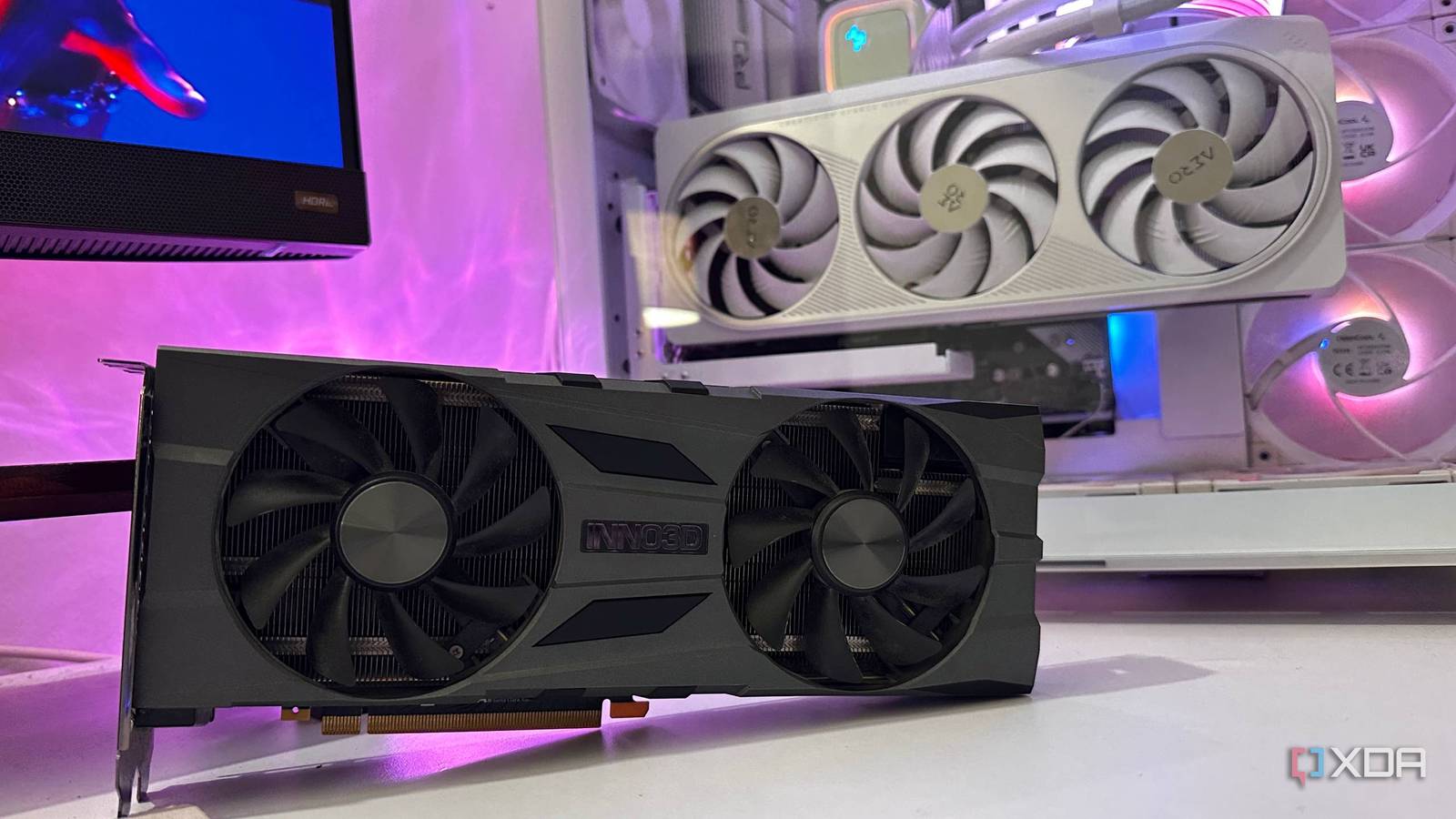
The relentless pursuit of higher frame rates and stunning visual fidelity has long been the holy grail for PC gamers. In this quest, a revolutionary technology emerged: real-time upscaling. When GPU manufacturers first introduced these innovations, promising to boost performance without a significant hit to image quality, it felt like a compromise. Early iterations, particularly of Nvidia's Deep Learning Super Sampling (DLSS), were often derided as producing a 'Vaseline' effect – a noticeable blurriness that traded clarity for frames. Yet, fast forward to today, and these technologies, especially DLSS, have matured into sophisticated tools that are not just desirable but often essential for modern gaming, particularly at higher resolutions and with demanding graphics settings like ray tracing. The question that persists, however, is whether all upscaling technologies are created equal. For many, the answer is a resounding no: Nvidia's DLSS still reigns supreme over AMD's FidelityFX Super Resolution (FSR), and this dominance shows little sign of waning.
The Genesis of Upscaling: A Necessary Compromise Evolves
The concept of rendering a game at a lower resolution and then intelligently reconstructing it to a higher target resolution is not new, but its real-time application in gaming GPUs is a relatively recent marvel. The initial goal was pragmatic: to allow gamers with less powerful hardware to experience demanding titles at playable frame rates, or to enable high-end users to push resolutions like 4K or enable ray tracing without sacrificing smoothness. Nvidia's DLSS, first introduced with its RTX series GPUs in 2018, was a pioneer in leveraging dedicated Tensor Cores and machine learning for this task. It trained an AI model on vast datasets of high-resolution, anti-aliased game images, teaching it how to intelligently reconstruct frames. This AI-driven approach was its distinguishing feature from day one.
AMD, in response, developed FidelityFX Super Resolution (FSR), launching its first iteration in 2021. FSR took a different, more hardware-agnostic approach. Instead of relying on specialized AI hardware, FSR uses a spatial upscaling algorithm that works post-processing on the rendered frame. This meant FSR could run on a much wider range of GPUs, including older Nvidia cards, integrated graphics, and even competitor hardware, instantly giving it a broader reach. However, this universality came with a trade-off in image quality, especially in early versions. While both technologies aimed to solve the same problem, their methodologies diverged significantly, setting the stage for a technological showdown.
The Core Difference: AI vs. Algorithms
At the heart of the DLSS-FSR debate lies their fundamental architectural difference. DLSS's reliance on AI and temporal data is its secret sauce. By using information from previous frames (temporal data) and feeding it into a deep learning neural network, DLSS can predict and reconstruct details with remarkable accuracy. This allows it to generate new pixels that often look indistinguishable from natively rendered ones, and sometimes even better due to its advanced anti-aliasing capabilities. The neural network is continuously refined by Nvidia, meaning DLSS is always learning and improving.
FSR, on the other hand, is a spatial upscaler. It takes a single, lower-resolution frame and applies a sharpening filter and an edge reconstruction algorithm to upscale it. While FSR 2.0 and FSR 3.0 have introduced temporal elements to improve quality, they still lack the deep learning intelligence and dedicated hardware acceleration of DLSS. This often manifests in: * Less stable image reconstruction: FSR can sometimes introduce shimmering or aliasing artifacts, particularly on fine details or in motion. * Ghosting: Moving objects can leave faint trails, especially in FSR's earlier versions. * Overall softer image: Despite sharpening, the reconstructed image can appear less crisp than DLSS, lacking the fine detail that AI can infer.
Industry benchmarks and countless side-by-side comparisons by tech journalists and gamers consistently highlight DLSS's superior image quality, particularly in its 'Quality' and 'Balanced' modes. While FSR offers impressive performance gains and wider compatibility, it often struggles to match DLSS's fidelity, especially in demanding scenarios with lots of fine geometry or particle effects.
The Ecosystem Advantage: Integration and Adoption
Nvidia's proactive approach to integrating DLSS into game engines and working closely with developers has also played a crucial role in its dominance. From the outset, DLSS required per-game integration, which was initially a hurdle. However, Nvidia invested heavily in developer tools and support, leading to a vast and growing library of DLSS-supported titles. This early lead meant that many high-profile, graphically intensive games launched with DLSS support, establishing it as the premium upscaling solution.
AMD's FSR, being open-source and easier to implement due to its spatial nature, quickly gained traction in terms of raw game count. Its hardware agnosticism was a significant selling point, allowing millions of gamers with older cards or non-AMD GPUs to benefit. However, the quality gap between FSR and DLSS, particularly in the critical early days, meant that while FSR was widely available, DLSS was often the preferred choice for those with compatible hardware seeking the best visual experience. The introduction of DLSS 3.0 with Frame Generation further widened the gap, offering unprecedented frame rate boosts by generating entirely new frames using AI, a feature FSR 3.0 has attempted to emulate with its own frame generation technology, but often with less consistent results in terms of latency and artifacts.
The Future of Upscaling: A Persistent Divide?
The trajectory of these technologies suggests that the gap between DLSS and FSR might persist, if not widen. Nvidia's continuous investment in AI research and development, coupled with its control over dedicated Tensor Cores, provides a fundamental advantage. As AI models become more sophisticated and GPUs gain even more processing power, DLSS's ability to reconstruct and even enhance game visuals is likely to grow. Future iterations could leverage even more advanced temporal data, scene understanding, and perhaps even predictive rendering to achieve near-perfect image reconstruction.
AMD, while making commendable strides with FSR 2.0 and 3.0, is still playing catch-up in terms of image quality. Its strength lies in its openness and broad compatibility, which are undeniable advantages for the wider gaming ecosystem. For gamers on a budget or those with older hardware, FSR remains an excellent option for boosting performance. However, for those seeking the absolute best visual fidelity alongside high frame rates, especially with ray tracing enabled, DLSS continues to be the benchmark.
Ultimately, the choice between DLSS and FSR often comes down to the user's hardware and priorities. If you own an Nvidia RTX card, DLSS is almost always the superior choice for image quality. If you have an AMD GPU or an older Nvidia card, FSR provides a valuable performance uplift where DLSS isn't an option. The competition between these two giants has undeniably pushed the boundaries of real-time rendering, making high-fidelity gaming more accessible than ever. Yet, as long as Nvidia maintains its architectural advantage with dedicated AI hardware and a deep learning approach, DLSS is poised to maintain its edge as the gold standard in intelligent upscaling, ensuring that the 'Vaseline' days are firmly in the past, replaced by a future of crisp, high-performance visuals.
Stay Informed
Get the world's most important stories delivered to your inbox.
No spam, unsubscribe anytime.
Comments
No comments yet. Be the first to share your thoughts!