Tim Cook's Enduring Legacy: Apple's Leadership Transition and the AI Frontier
Tim Cook, Apple's long-serving CEO, has announced his intention to step down later this year, assuring employees of his health and commitment to a long tenure as Executive Chairman. This pivotal transition marks a new era for the tech giant, with a focus on AI innovation spearheaded by new leadership. The move signals a strategic shift, ensuring continuity while embracing future technological advancements and maintaining Apple's market dominance.
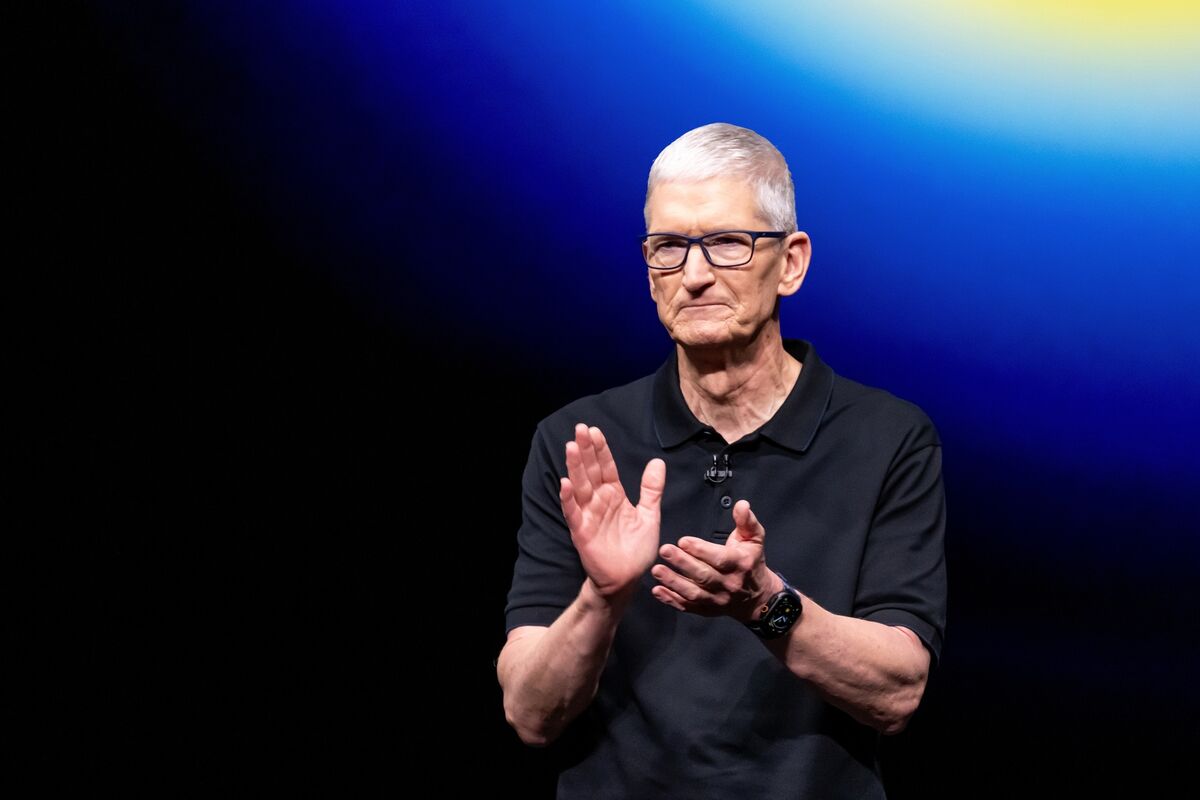
The announcement reverberated through the tech world like a well-timed software update: Tim Cook, the man who steered Apple through its most explosive growth phase post-Steve Jobs, is preparing to step down as CEO later this year. Far from signaling an exit, Cook, 63, reassured employees on Tuesday that he is in “excellent health” and intends to remain deeply involved with the company for a “long time” as its Executive Chairman. This strategic transition is not merely a changing of the guard but a meticulously planned evolution, designed to ensure Apple’s continued innovation and market leadership, particularly as the company braces for a new era defined by artificial intelligence.
Cook's tenure as CEO, which began in 2011, has been nothing short of transformative. Under his leadership, Apple's market capitalization soared from around $350 billion to over $3 trillion, making it the world's most valuable company. He diversified Apple's revenue streams beyond hardware, aggressively expanding its services division to include Apple Music, Apple TV+, and the App Store, which now generate tens of billions in annual revenue. His focus on supply chain optimization, environmental sustainability, and user privacy has also become hallmarks of his leadership. The transition to an Executive Chairman role suggests a desire to maintain his invaluable experience and strategic oversight, while empowering a new generation of leaders to drive day-to-day operations and future-facing initiatives.
The Succession Plan: A New Era Dawns
While the specific timing and the successor's name remain under wraps, the groundwork for this transition has likely been laid for years. Apple, known for its meticulous planning and secrecy, would not embark on such a significant change without a robust succession strategy. The role of Executive Chairman is not merely ceremonial; it implies continued influence over strategic direction, investor relations, and perhaps even product philosophy, much like Steve Jobs's role before his passing. This ensures that Cook's institutional knowledge and deep understanding of Apple's culture and vision are not lost. The move also allows the incoming CEO to stamp their authority on the company's operational aspects, fostering fresh perspectives while benefiting from Cook's guidance.
This leadership shift comes at a critical juncture for Apple. The smartphone market, while still robust, is maturing. The next wave of growth is widely expected to come from emerging technologies, with artificial intelligence at the forefront. Cook's decision to transition now could be seen as a strategic move to allow a new leader, potentially with a more direct background in AI and advanced computing, to take the helm and aggressively pursue these new frontiers. The company has been relatively quiet on its generative AI strategy compared to rivals like Google and Microsoft, but recent reports suggest a significant push is underway.
AI: The Next Frontier for Apple
Indeed, the source material explicitly mentions Apple's senior vice president of hardware engineering, John Ternus, promising “AI products.” This is a crucial detail, signaling Apple's intent to integrate sophisticated AI capabilities across its ecosystem. For years, Apple has leveraged AI and machine learning for features like Siri, Face ID, and computational photography. However, the current generative AI boom, exemplified by large language models and advanced image generation, presents a new paradigm. Apple's approach is likely to be distinct, focusing on privacy-preserving on-device AI, seamless integration with its hardware and software, and a user experience that feels intuitive and indispensable.
The implications for consumers are profound. Imagine iPhones, iPads, and Macs with truly intelligent personal assistants that anticipate needs, generate content, and perform complex tasks with unprecedented efficiency. Think of health features that offer personalized insights based on AI analysis of biometric data, or augmented reality experiences that blend the digital and physical worlds seamlessly. Apple's entry into the generative AI space, particularly with its vast ecosystem and loyal customer base, could redefine the industry standards for how AI is delivered and consumed. The challenge will be to innovate rapidly while maintaining its core values of privacy, simplicity, and design excellence.
Market Reaction and Investor Confidence
Historically, leadership changes at major corporations can cause market jitters. However, Cook's announcement, framed around his health and continued involvement, is likely to be viewed positively by investors. His long tenure and proven track record provide a strong foundation for a smooth transition. The market often values stability and clear succession planning, both of which appear to be in play here. Furthermore, the explicit mention of future “AI products” could inject renewed enthusiasm among investors, who are keenly watching how tech giants position themselves in the AI race. Apple's ability to execute on its AI promises will be a key determinant of its stock performance and market perception in the coming years.
Experts will be scrutinizing the details of the transition, particularly the profile of the new CEO. Will it be an internal candidate, ensuring continuity of culture and strategy, or an external hire bringing a fresh perspective? The choice will speak volumes about Apple's strategic priorities for the next decade. Regardless, the foundation laid by Cook—a robust services business, a powerful brand, and a loyal customer base—provides a formidable platform for the next leader to build upon. The challenge will be to innovate at a pace that keeps Apple ahead of its increasingly agile competitors, especially in the rapidly evolving AI landscape.
The Road Ahead: Maintaining Apple's Edge
As Tim Cook prepares to shift roles, Apple stands at the precipice of another transformative era. His continued presence as Executive Chairman offers a unique blend of continuity and forward-looking vision. The focus on AI, as hinted by Ternus, underscores the company's commitment to staying at the cutting edge of technology. The next CEO will inherit a company in a strong position but also one facing intense competition and the imperative to continually reinvent itself. The success of this transition will not only depend on the capabilities of the new leadership but also on Apple's ability to seamlessly integrate advanced AI into its products and services, delivering experiences that continue to captivate and empower its global user base. The world will be watching to see how Apple navigates this exciting new chapter, building on Cook’s monumental legacy while forging its own path into the future of technology.
Stay Informed
Get the world's most important stories delivered to your inbox.
No spam, unsubscribe anytime.
Comments
No comments yet. Be the first to share your thoughts!