Trump Intensifies Pressure on Havana: New Sanctions Target Cuban Government and Affiliates
President Donald Trump has signed an executive order significantly expanding US sanctions against the Cuban government, aiming to increase pressure on Havana. This move, confirmed by White House officials, targets entities and individuals supporting the Cuban regime, particularly in light of its continued backing of Venezuela's Nicolás Maduro. The broadened measures signal a tougher stance, impacting Cuba's economy and its international relations, while raising questions about the future of US-Cuba policy.
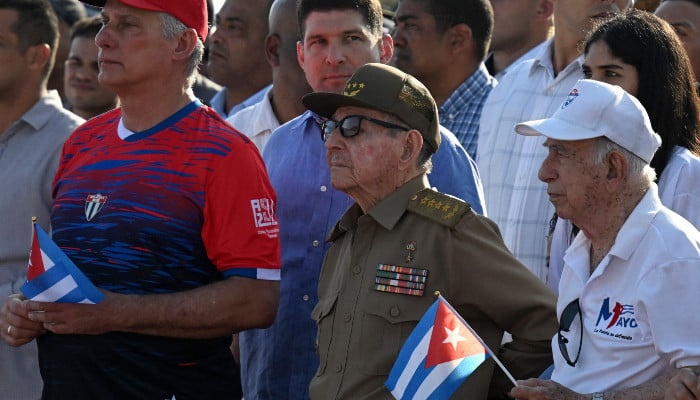
In a significant escalation of Washington's long-standing policy towards Havana, US President Donald Trump has signed an executive order broadening sanctions against the Cuban government and its affiliates. This decisive action, confirmed by White House officials, underscores the administration's commitment to increasing pressure on the communist island, particularly in the context of its unwavering support for Venezuela's embattled leader, Nicolás Maduro. The move marks a new chapter in the complex and often contentious relationship between the two nations, signaling a return to more confrontational tactics after a brief period of rapprochement under the Obama administration.
The executive order targets specific entities and individuals deemed to be propping up the Cuban regime, aiming to limit their access to the international financial system and restrict their ability to conduct business. While the full scope and immediate impact of these expanded sanctions are yet to be thoroughly assessed, they are expected to further strain Cuba's already fragile economy, which relies heavily on tourism, remittances, and international trade. This development comes as the Trump administration has consistently criticized Cuba's human rights record and its role in regional destabilization, particularly its military and intelligence support for Maduro in Venezuela.
A History of Sanctions and Shifting Policies
The US embargo against Cuba, one of the longest-standing and most comprehensive in modern history, dates back to the early 1960s following the Cuban Revolution and the nationalization of American-owned properties. Initially imposed by President John F. Kennedy, the embargo has been codified into law, notably through the Cuban Democracy Act of 1992 (Helms-Burton Act), which tightened restrictions and aimed to promote democratic transition in Cuba. Over the decades, various administrations have adjusted the intensity of these measures, sometimes easing them for humanitarian reasons or in pursuit of diplomatic openings, and at other times tightening them in response to perceived provocations or internal political considerations.
Perhaps the most significant shift occurred under President Barack Obama, who initiated a historic thaw in relations in 2014. This period saw the re-establishment of diplomatic ties, the reopening of embassies, and the relaxation of travel and trade restrictions. The Obama administration argued that engagement, rather than isolation, was the most effective way to foster change in Cuba and improve the lives of its citizens. This policy was met with mixed reactions, lauded by some as a pragmatic approach and criticized by others as legitimizing an authoritarian regime.
However, the Trump administration swiftly reversed many of these overtures. From the outset, President Trump adopted a more hawkish stance, arguing that the Obama-era policies had failed to yield significant democratic reforms and had primarily benefited the Cuban government rather than its people. The new executive order is a continuation of this policy, building upon previous measures that have restricted travel, limited remittances, and targeted specific Cuban enterprises, particularly those linked to the military and intelligence services.
The Venezuelan Connection: A Catalyst for Escalation
The current escalation of sanctions is inextricably linked to the ongoing political and economic crisis in Venezuela. The Trump administration has consistently identified Cuba's support for Nicolás Maduro as a critical factor enabling his continued hold on power, despite widespread international condemnation and a severe humanitarian crisis. Washington views Cuba's military and intelligence presence in Venezuela as a direct threat to regional stability and a significant impediment to a democratic transition in Caracas.
White House officials have repeatedly asserted that Cuba provides crucial security apparatus and advisory services to the Maduro regime, helping it suppress dissent and maintain control. By targeting Cuba, the Trump administration aims to cut off a vital lifeline for Maduro, hoping that increased economic pressure on Havana will force it to reconsider its alliance with Caracas. This strategy reflects a broader regional approach by the US to isolate and pressure what it considers to be authoritarian regimes in Latin America, with Venezuela and Cuba at the forefront.
This interconnectedness means that developments in one country inevitably influence policy towards the other. The administration's rhetoric often frames the two nations as part of an "axis of oppression" in the Western Hemisphere, justifying robust interventionist policies. The effectiveness of this strategy, however, remains a subject of intense debate among foreign policy experts, with some arguing that it only entrenches regimes and harms ordinary citizens, while others maintain that it is necessary to confront authoritarianism.
Economic and Humanitarian Implications
The expanded sanctions are expected to have significant economic repercussions for Cuba. The island nation's economy is already struggling, exacerbated by the global pandemic's impact on tourism, reduced aid from Venezuela, and previous US restrictions. Further limitations on financial transactions, trade, and investment will likely deepen these challenges. Industries such as tourism, which had seen a brief resurgence during the Obama era, are particularly vulnerable, as are small private businesses that rely on remittances and international connections.
Key potential impacts include: * Reduced Foreign Investment: The heightened risk associated with doing business in Cuba will deter foreign companies. * Decreased Remittances: Restrictions on financial institutions could make it harder for Cuban-Americans to send money to relatives. * Tourism Decline: Further travel restrictions and the general chilling effect of sanctions will likely reduce visitor numbers. * Shortages and Inflation: A struggling economy often leads to scarcity of goods and rising prices for basic necessities, impacting the daily lives of ordinary Cubans.
Humanitarian organizations and critics of the sanctions argue that these measures disproportionately harm the Cuban people rather than the government. They contend that economic hardship could lead to increased migration, social unrest, and a further deterioration of living standards, without necessarily achieving the desired political changes. Proponents, however, argue that the sanctions are a necessary tool to pressure the government into respecting human rights and embracing democratic reforms, and that the regime itself is responsible for the economic woes.
The Road Ahead: Diplomacy or Further Isolation?
The long-term implications of this expanded sanctions regime are multifaceted. For Cuba, it signals a period of continued economic hardship and increased international isolation, forcing the government to seek alternative alliances and economic partners. For the United States, it solidifies a hardline approach that prioritizes regime change through pressure over engagement. The question remains whether these measures will ultimately achieve their stated goals of promoting democracy and human rights in Cuba, or if they will merely entrench the current political system and further antagonize regional relations.
Looking forward, the future of US-Cuba relations hinges significantly on both internal developments within Cuba and shifts in US foreign policy. A change in US administration could potentially lead to a re-evaluation of these policies, as seen in the past. However, given the bipartisan support for some aspects of the embargo and the strong anti-Castro sentiment among certain political blocs, any significant shift would be a complex undertaking. The international community will be watching closely to see how Cuba responds to this renewed pressure and what impact it has on the broader geopolitical landscape of Latin America. The path ahead appears fraught with challenges, with little immediate prospect for a return to the diplomatic openings of years past.
Stay Informed
Get the world's most important stories delivered to your inbox.
No spam, unsubscribe anytime.
Comments
No comments yet. Be the first to share your thoughts!