Trump's Gas Price Stance Amidst Global Conflicts: A Risky Bet for the US Economy?
Former President Trump's surprising indifference to rising gas prices, framed as a consequence of his foreign policy, raises significant economic and geopolitical questions. This stance, coupled with a US judge blocking sanctions against a UN official investigating Israeli war crimes, paints a complex picture of American foreign policy and its domestic repercussions. We delve into the historical context of presidential energy policies and the potential impacts of such declarations on the global stage.
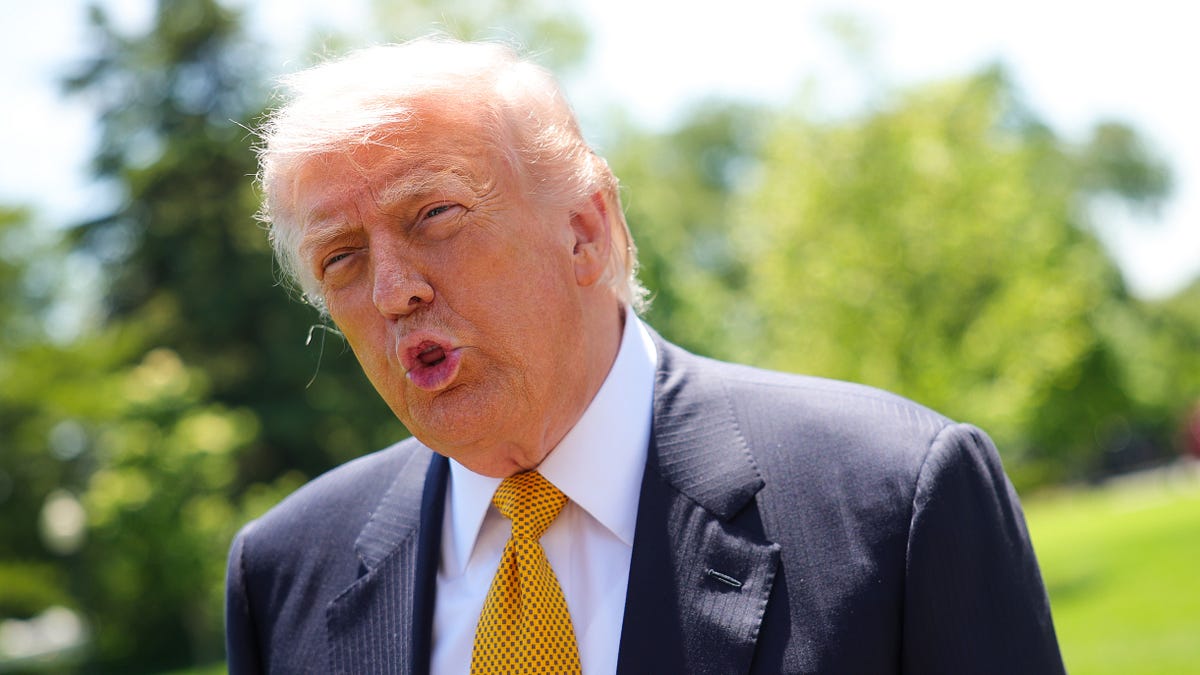
In an era defined by fluctuating global stability and economic uncertainty, a former U.S. President's casual dismissal of rising gas prices as a justifiable cost of his foreign policy initiatives sends ripples through international markets and domestic households alike. Donald Trump's repeated assertions that he is "fine" with higher fuel costs, particularly when linked to his strategic maneuvers on the world stage, mark a significant departure from traditional presidential rhetoric, which typically prioritizes energy affordability for American consumers. This stance not only challenges conventional economic wisdom but also forces a re-evaluation of the political calculus behind energy policy in an increasingly interconnected world.
The Unconventional Stance on Energy Costs
Historically, American presidents have viewed stable and affordable energy prices as a cornerstone of national prosperity and a key indicator of economic health. From Nixon's energy crisis response to Obama's push for domestic oil production, the focus has consistently been on mitigating price shocks and ensuring consumer relief. Trump's approach, however, suggests a willingness to use energy prices as a leverage point, or at least to accept their escalation, in pursuit of broader geopolitical objectives. This could be interpreted as a calculated risk, betting that the perceived gains from his foreign policy – such as pressuring adversaries or bolstering alliances – outweigh the immediate economic burden on the populace. The implications of such a strategy are vast, potentially impacting everything from inflation rates and consumer spending to the competitiveness of American industries.
His declaration comes at a time when global energy markets are already volatile, influenced by ongoing conflicts, supply chain disruptions, and the complex transition towards renewable energy sources. Any perceived willingness by a major global actor to tolerate or even encourage higher prices can exacerbate market anxieties, leading to further speculation and instability. For the average American family, higher gas prices translate directly into increased commuting costs, elevated prices for goods due to higher transportation expenses, and a general tightening of household budgets. This economic strain can, in turn, fuel public discontent and become a potent political issue, regardless of the stated foreign policy objectives.
Geopolitical Chessboard: Sanctions, Investigations, and International Law
Adding another layer of complexity to the international landscape is the recent decision by a U.S. judge to block sanctions against Francesca Albanese, the UN Special Rapporteur on the occupied Palestinian territories. Albanese has been a vocal critic of Israel's actions, particularly in the context of the ongoing conflict in Gaza, and has been investigating alleged war crimes. The attempt to sanction her, reportedly initiated by the Trump administration, underscores a broader tension between national interests, international law, and human rights advocacy. The judge's ruling is a significant moment, reaffirming the independence of international bodies and the principle of diplomatic immunity, while also highlighting the deep divisions within the international community regarding the Israeli-Palestinian conflict.
This judicial intervention has far-reaching implications. It signals a potential check on the executive branch's ability to unilaterally target international officials for their work, especially when that work involves sensitive investigations into human rights. For the UN and other international organizations, it could be seen as a victory for their mandate and a reinforcement of the importance of impartial inquiry. Conversely, for those who sought the sanctions, it represents a setback in efforts to delegitimize or hinder investigations they deem biased or politically motivated. The incident further complicates the U.S.'s role as a global arbiter and its relationship with international institutions, particularly as the world grapples with escalating humanitarian crises and calls for accountability.
Historical Parallels and Future Trajectories
Examining historical precedents offers valuable insights. The 1970s oil crises, for instance, demonstrated how intertwined energy policy is with geopolitical events and domestic stability. Presidents from Jimmy Carter to George W. Bush have faced the challenge of balancing energy security with foreign policy objectives, often finding that public tolerance for economic hardship due to international affairs has its limits. The current situation, with a former president openly embracing higher prices, suggests a novel and potentially risky political strategy. It assumes that a segment of the electorate will prioritize perceived strength on the global stage over immediate economic comfort.
Moreover, the source material also touches upon a historical note: Edward Jenner's pioneering work on vaccination in 1796, leading to the eradication of smallpox by 1970. This serves as a stark reminder of the power of scientific consensus and global cooperation in overcoming existential threats. The mention of Robert F. Kennedy Jr. in this context, known for his skepticism towards established public health institutions, implicitly highlights the contemporary challenges posed by misinformation and the erosion of trust in scientific authority. While seemingly disparate, these elements – energy policy, international justice, and public health – are all threads in the larger tapestry of global governance and societal well-being.
Economic Repercussions and Political Fallout
The economic ramifications of a sustained period of high gas prices, especially if explicitly endorsed by a political leader, could be profound. Businesses, particularly those reliant on transportation, would face increased operational costs, potentially leading to price increases for consumers, reduced profits, or even job losses. The automotive industry, already navigating the transition to electric vehicles, could see shifts in consumer demand. Furthermore, higher energy costs disproportionately affect lower-income households, widening economic disparities and potentially exacerbating social tensions. From a political standpoint, while a strong foreign policy narrative might appeal to a certain base, the tangible economic pain of high gas prices has historically been a potent weapon for opposition parties.
Looking ahead, the interplay between energy policy, international relations, and domestic economics will remain a critical area of focus. Should a future administration adopt a similar stance on energy prices, it would necessitate a fundamental shift in how the public perceives the trade-offs between global influence and domestic prosperity. The blocking of sanctions against a UN official also signals a continued struggle over the boundaries of national sovereignty versus international accountability. As global challenges become more complex and interconnected, the decisions made regarding energy, justice, and diplomacy will shape the geopolitical landscape for years to come, demanding careful consideration and a nuanced understanding of their multifaceted impacts.
Stay Informed
Get the world's most important stories delivered to your inbox.
No spam, unsubscribe anytime.
Comments
No comments yet. Be the first to share your thoughts!