UAE Denies Secret Netanyahu Visit Amidst Iran Tensions, Reaffirming Public Diplomacy
The United Arab Emirates has firmly denied reports of a secret visit by Israeli Prime Minister Benjamin Netanyahu, emphasizing that its diplomatic relations with Israel are transparent and public. This denial comes after Netanyahu's office alluded to a meeting with the UAE president during a period of heightened tensions with Iran. The incident highlights the delicate balance of Middle Eastern diplomacy and the complexities of regional alliances, especially concerning the ongoing shadow war with Iran.
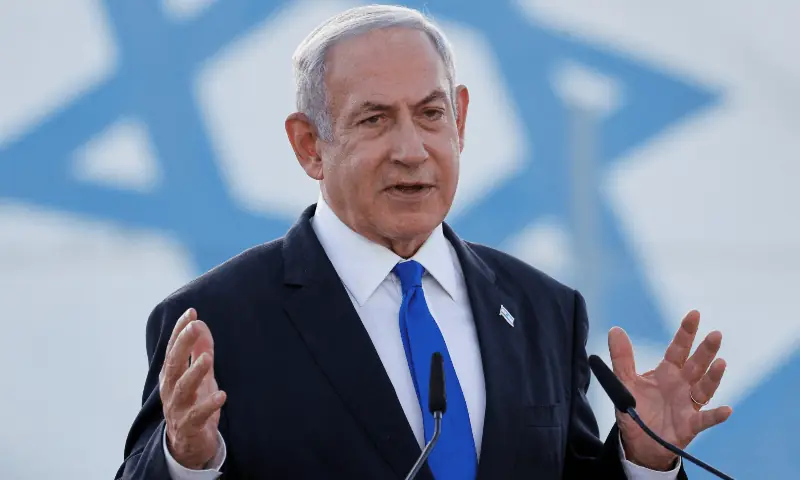
In a region often shrouded in diplomatic intrigue and covert operations, the United Arab Emirates (UAE) has taken a firm stance, publicly denying reports of a secret visit by Israeli Prime Minister Benjamin Netanyahu. The denial, issued on Thursday, directly contradicts suggestions from Netanyahu's office that he had met with the UAE president amidst an escalating shadow war with Iran. This diplomatic dust-up underscores the intricate and often opaque nature of Middle Eastern geopolitics, where public declarations and private dealings frequently diverge, yet the UAE insists on a policy of transparent engagement.
The official statement from the UAE was unequivocal: “The UAE reaffirms that its relations with Israel are public and… are not based on non-transparent or unofficial arrangements.” This assertion aims to reinforce the notion that its normalization efforts with Israel, formalized by the Abraham Accords, are conducted openly and without hidden agendas. The timing of the alleged visit, during a period of significant regional instability and heightened tensions between Israel and Iran, adds layers of complexity to the narrative, raising questions about the motivations behind both the alleged meeting and its subsequent denial.
The Abraham Accords: A New Era of Diplomacy
The Abraham Accords, signed in August 2020, marked a historic turning point in Middle Eastern diplomacy. Facilitated by the United States, these agreements normalized relations between Israel and several Arab nations, including the UAE, Bahrain, Sudan, and Morocco. Prior to this, only Egypt and Jordan had formal peace treaties with Israel. The accords were lauded by proponents as a pathway to peace and economic prosperity, fostering cooperation in areas ranging from technology and trade to tourism and security. For the UAE, the decision to normalize relations was driven by a strategic calculus that prioritized economic diversification, regional stability, and a united front against perceived threats, particularly from Iran.
Since the signing, public and official engagements between the UAE and Israel have proliferated. Direct flights have been established, trade volumes have surged, and cultural exchanges have begun to flourish. This public embrace of normalization is precisely what the UAE's recent statement seeks to emphasize: that any high-level interactions, especially involving heads of state, would be conducted in the open. The denial of a secret meeting, therefore, serves to protect the integrity of this public-facing diplomatic strategy and to avoid any perception of clandestine dealings that could undermine trust or provoke regional adversaries.
Geopolitical Chessboard: Iran, Israel, and the Gulf States
The backdrop to this diplomatic spat is the enduring and increasingly volatile rivalry between Israel and Iran, and the complex position of Gulf states like the UAE within this dynamic. Iran's nuclear program, its support for regional proxy groups, and its ballistic missile capabilities are viewed by both Israel and many Gulf Arab states as significant threats. This shared concern has often been cited as a primary motivator behind the Abraham Accords, creating an informal, yet potent, anti-Iran axis.
Israel has long pursued a strategy of preemptive action and deterrence against Iran, often engaging in covert operations and cyberattacks. The recent period has seen an uptick in reported incidents, including alleged Israeli strikes on Iranian targets in Syria and suspected Iranian-backed attacks on shipping in the Gulf. In this high-stakes environment, direct communication between Israeli and Emirati leadership, even if unofficial, could be seen as a logical step to coordinate strategy or de-escalate tensions. However, the political sensitivities surrounding such interactions remain immense. For the UAE, maintaining a delicate balance is crucial: fostering strong ties with Israel while avoiding being seen as overtly aligned against Iran, which could destabilize its own security and economic interests.
The Implications of Denial: Public Image vs. Strategic Imperatives
The UAE's swift and firm denial raises several important questions. Was there indeed a secret meeting, and if so, why was it denied? Or was Netanyahu's office's statement a strategic leak, perhaps intended to send a message to Iran or to bolster his domestic political standing, only to be rebuffed by the UAE? The answer likely lies in the complex interplay of domestic politics, regional power dynamics, and international perception.
For the UAE, upholding the image of transparent diplomacy is paramount. As a burgeoning global hub for finance, trade, and tourism, its stability and reputation for predictability are crucial. Secret meetings with a controversial figure like Netanyahu, especially during a period of heightened conflict, could be perceived as undermining this image, potentially alienating other Arab states or even segments of its own population. Furthermore, it could invite unwanted scrutiny or retaliation from Iran, complicating its efforts to de-escalate regional tensions.
Conversely, for Netanyahu, the suggestion of a direct, high-level meeting with a prominent Arab leader, particularly one from an Abraham Accords signatory, could serve multiple purposes. Domestically, it could reinforce his image as a shrewd statesman capable of forging new alliances and protecting Israel's interests. Regionally, it might signal to Iran that Israel has strong backing from key Arab partners. However, the public denial by the UAE indicates a clear divergence in diplomatic strategy and messaging, highlighting the challenges of coordinating sensitive information in a volatile environment.
The Future of Arab-Israeli Relations: Navigating Public and Private Spheres
This incident underscores the ongoing evolution of Arab-Israeli relations. While the Abraham Accords have undeniably opened new avenues for cooperation, the path forward remains fraught with challenges. The Palestinian issue continues to be a significant point of contention, and many Arab populations remain wary of full normalization without a resolution to the Israeli-Palestinian conflict. This makes public displays of solidarity with Israel politically risky for some Arab leaders.
Going forward, the incident suggests that while strategic imperatives may drive private discussions and collaborations, the public narrative will continue to be carefully managed. The UAE's insistence on transparency in its relations with Israel is a clear message that while cooperation is welcome, it must align with its broader foreign policy objectives and public image. The delicate dance between overt diplomacy and covert strategy will likely continue to define interactions in the Middle East, with leaders weighing the benefits of public acknowledgment against the potential for political backlash or regional instability. The ultimate goal for many in the region remains a balance of security, prosperity, and a carefully cultivated international standing, all of which are influenced by how such sensitive diplomatic encounters are perceived and presented to the world.
Stay Informed
Get the world's most important stories delivered to your inbox.
No spam, unsubscribe anytime.
Comments
No comments yet. Be the first to share your thoughts!