UAE Denies Secret Netanyahu Visit Amidst Regional Tensions and Public Diplomacy
The United Arab Emirates has firmly denied reports of a secret visit by Israeli Prime Minister Benjamin Netanyahu, contradicting earlier claims from Netanyahu's office. This denial comes at a sensitive time, highlighting the complexities of public versus private diplomacy in the Middle East, especially concerning the Abraham Accords and regional stability. The incident underscores the delicate balance nations maintain amidst evolving alliances and persistent geopolitical challenges.
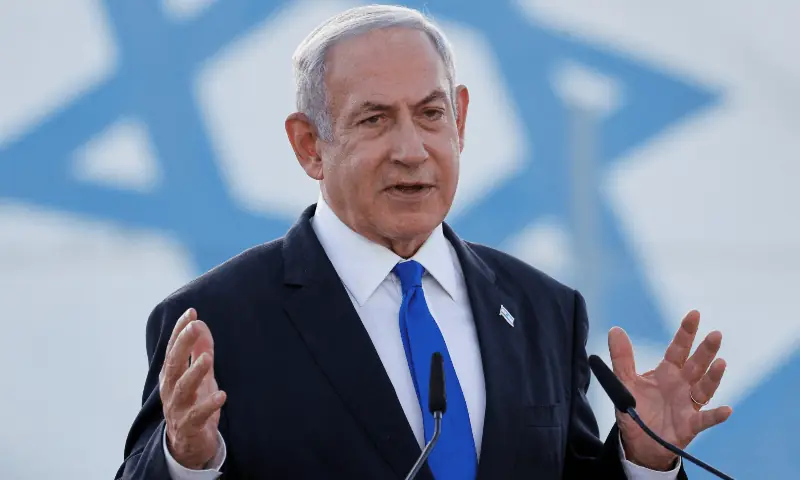
In a region often defined by its intricate web of alliances and rivalries, a recent diplomatic kerfuffle has cast a spotlight on the delicate balance between public declarations and private maneuverings. The United Arab Emirates (UAE) on Thursday issued a categorical denial of reports suggesting a secret visit by Israeli Prime Minister Benjamin Netanyahu. This repudiation directly contradicted earlier assertions from Netanyahu’s office, which had indicated a meeting with the UAE president during a period of heightened tensions with Iran. The incident not only raises questions about the veracity of information but also underscores the complex, often opaque, nature of Middle Eastern diplomacy, particularly in the wake of the groundbreaking Abraham Accords.
The UAE’s Ministry of Foreign Affairs and International Cooperation released a statement emphasizing that its relations with Israel are “public and… are not based on non-transparent or unofficial arrangements.” This strong language aims to reinforce the notion of transparent engagement, a cornerstone of the Abraham Accords, which normalized relations between Israel and several Arab nations. The denial serves multiple purposes: it protects the UAE's image as a stable and predictable regional player, avoids perceptions of clandestine dealings that could upset other Arab allies, and potentially signals a desire to manage the narrative surrounding its burgeoning ties with Israel more carefully.
The Abraham Accords: A New Era of Diplomacy
The Abraham Accords, signed in August 2020, marked a monumental shift in Middle Eastern geopolitics. Facilitated by the United States, these agreements saw the UAE, Bahrain, Sudan, and Morocco establish full diplomatic relations with Israel. Prior to this, only Egypt (1979) and Jordan (1994) had recognized the Jewish state. The accords were lauded by proponents as a pathway to regional peace and economic prosperity, fostering cooperation in areas like technology, trade, and tourism. For the UAE, a nation rapidly diversifying its economy and seeking to position itself as a global hub, the normalization offered significant strategic advantages, including access to Israeli innovation and a stronger alliance against common threats, particularly Iran.
However, the accords were not without controversy. Critics, particularly Palestinians, viewed them as a betrayal of the long-standing Arab consensus that recognition of Israel should only come after a resolution to the Israeli-Palestinian conflict. The agreements also raised concerns among some traditional Arab allies, who feared a fragmentation of regional solidarity. Despite these concerns, the UAE has consistently championed the accords as a pragmatic step towards a more stable and prosperous future, often highlighting the tangible benefits reaped from enhanced cooperation. The current denial of a secret meeting, therefore, might be an attempt to maintain the perceived legitimacy and transparency of these public relations, ensuring they are not seen as undermining broader regional interests or traditional diplomatic protocols.
Contradictory Narratives and Geopolitical Implications
The conflicting accounts surrounding the alleged visit highlight a recurring theme in international relations: the battle for narrative control. On one hand, the Israeli Prime Minister’s office, by reportedly leaking or confirming such a meeting, might have sought to project an image of active, high-level diplomatic engagement, especially during a period of perceived threats from Iran. Such a move could bolster Netanyahu’s domestic standing, showcasing his ability to navigate complex regional dynamics and secure strategic alliances. It could also serve as a message to adversaries, demonstrating the depth of Israel's regional partnerships.
On the other hand, the UAE’s swift and unequivocal denial underscores the sensitivities involved. For the UAE, maintaining a delicate balance between its new relationship with Israel and its broader standing within the Arab and Islamic world is paramount. A secret meeting, if true and then exposed, could be perceived as undermining the very principles of transparency and public engagement that the Abraham Accords were meant to embody. It could also fuel accusations of prioritizing bilateral interests over collective Arab concerns, potentially alienating other nations that have been slower or more reluctant to normalize ties with Israel. The denial, therefore, becomes a strategic act to manage perceptions and uphold diplomatic credibility on the international stage.
The Shadow of Iran and Regional Security
The mention of the alleged meeting occurring “during the war with Iran” adds another layer of complexity to this diplomatic spat. While Israel and Iran have long been engaged in a shadow war, with cyberattacks, covert operations, and proxy conflicts, the direct reference to a “war” suggests a heightened state of alert or a specific period of intense confrontation. Both Israel and the UAE view Iran’s nuclear program, ballistic missile development, and regional proxy activities as significant threats to their security and stability. This shared concern was a key driver behind the Abraham Accords, creating a de facto alliance against Tehran’s expansionist ambitions.
Any high-level meeting between Israeli and Emirati leaders, especially concerning Iran, would naturally be of immense strategic importance. However, the public acknowledgment or denial of such a meeting carries significant weight. For the UAE, being seen as overtly coordinating military or intelligence strategies with Israel against Iran could provoke a strong reaction from Tehran, potentially leading to retaliatory measures or increased regional instability. The UAE has historically sought to balance its alliances, engaging in dialogue with Iran while also aligning with Western powers and regional partners. A public perception of secret, aggressive anti-Iran coordination could disrupt this delicate balance and expose the nation to unnecessary risks. The denial, in this context, is a calculated move to de-escalate potential tensions and maintain a degree of strategic ambiguity.
The Future of Middle East Diplomacy
The incident serves as a potent reminder that despite the transformative nature of the Abraham Accords, Middle Eastern diplomacy remains a field fraught with complexities and sensitivities. The path to full normalization and regional integration is not linear, and nations must constantly navigate competing interests, historical grievances, and evolving geopolitical landscapes. The UAE’s firm denial, while contradicting Israeli reports, ultimately reinforces its commitment to a public, transparent foreign policy that seeks to foster stability and economic growth.
Moving forward, the focus will remain on how these new alliances mature and adapt to regional challenges. Will the Abraham Accords lead to a broader regional peace, or will they continue to be viewed with suspicion by some? The incident underscores the need for clear communication and a shared understanding of diplomatic protocols, even among newfound allies. As the region continues to grapple with issues ranging from climate change to economic diversification and persistent security threats, the ability of nations to engage both publicly and privately, while maintaining trust and credibility, will be paramount. The recent denial is a testament to the intricate dance of power and perception that defines contemporary Middle Eastern relations, where every statement and every silence carries profound implications for the future of the region. The commitment to transparency and public diplomacy will be crucial in building lasting bridges and ensuring that the promise of the Abraham Accords is fully realized, rather than undermined by whispers of secret dealings.
Stay Informed
Get the world's most important stories delivered to your inbox.
No spam, unsubscribe anytime.
Comments
No comments yet. Be the first to share your thoughts!