Unveiling the Nanoscale Revolution: PI's P-733 Piezo Stage Redefines Precision Imaging
Physik Instrumente (PI) introduces its P-733 XY piezo scanning stage, a groundbreaking solution for demanding imaging applications. This innovation promises ultrafast, nanometer-precise motion, crucial for enhancing resolution and stabilizing images in fields from microscopy to advanced manufacturing. Discover how this technology is pushing the boundaries of what's possible in scientific research and industrial inspection. Its impact on future technological advancements is profound.
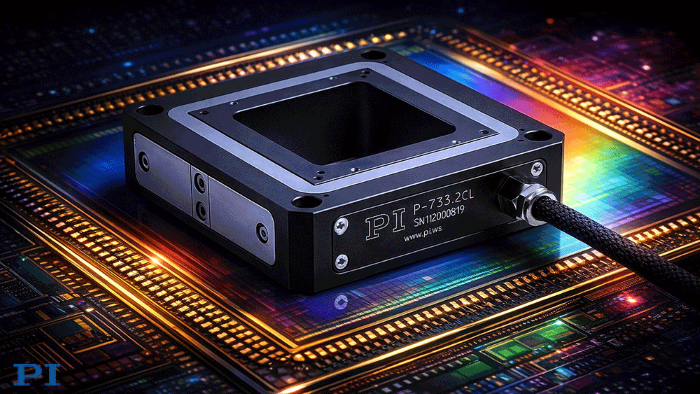
In an era where scientific discovery and technological advancement increasingly hinge on the ability to observe and manipulate matter at its most fundamental scales, the demand for unparalleled precision has never been greater. From the intricate dance of molecules in biological systems to the flawless fabrication of microelectronics, the clarity and stability of images are paramount. Enter Physik Instrumente (PI), a global titan in photonics, piezo, and nanopositioning technologies, with a solution poised to redefine the landscape of high-performance imaging: the P-733 XY piezo scanning stage. This sophisticated device is not merely an incremental improvement; it represents a significant leap forward, offering ultrafast, nanometer-precise motion that addresses some of the most persistent challenges in modern microscopy and industrial inspection.
The Quest for Ultimate Precision: Why Nanometers Matter
The human eye, remarkable as it is, struggles to discern details smaller than about 0.1 millimeters. Yet, the universe of science and engineering operates at scales vastly smaller – microns, nanometers, even angstroms. To unlock the secrets of materials, develop new drugs, or perfect semiconductor manufacturing, researchers and engineers require tools that can not only visualize but also precisely manipulate objects at these atomic and molecular dimensions. This is where nanopositioning comes into play. The ability to move a sample or an optical element with nanometer accuracy is critical for a multitude of applications, including: high-resolution microscopy, where individual cells or even proteins need to be observed; semiconductor metrology, ensuring the flawless etching of circuits; and data storage, where the density of information relies on incredibly fine positioning. Without such precision, images become blurry, measurements inaccurate, and manufacturing processes unreliable.
Traditional mechanical stages, while robust, often fall short of the speed and precision required for cutting-edge applications. Their inherent limitations in terms of friction, backlash, and response time make them unsuitable for tasks demanding dynamic, high-speed adjustments at the nanoscale. The P-733, built upon PI's decades of expertise in piezoelectric technology, bypasses these limitations by leveraging the unique properties of piezo ceramics, which expand and contract proportionally to an applied electric field, offering frictionless, hysteresis-free motion with sub-nanometer resolution.
Engineering Marvel: Inside the P-733 XY Piezo Stage
The P-733 XY piezo scanning stage is a testament to advanced engineering, designed from the ground up to meet the most stringent performance requirements. At its heart are piezoelectric actuators, meticulously integrated into a sophisticated flexure-guided system. Unlike conventional bearings, flexure guides are frictionless and maintenance-free, ensuring smooth, parallel motion without mechanical play. This design choice is crucial for achieving the stage's exceptional linearity and repeatability.
Key features and specifications that set the P-733 apart include: * Travel Range: Typically in the range of hundreds of micrometers, providing ample movement for scanning and positioning tasks. * Resolution: Sub-nanometer, allowing for the detection and manipulation of incredibly fine details. * Response Time: Ultrafast, often in the millisecond range, enabling rapid scanning and dynamic image stabilization. * Closed-Loop Control: Integrated capacitive sensors provide direct, non-contact position feedback with picometer resolution. This closed-loop system ensures highly accurate and stable positioning, compensating for external disturbances and thermal drift. * Compact Design: Despite its high performance, the P-733 maintains a compact footprint, making it suitable for integration into existing optical setups and instruments. * High Stiffness: Essential for dynamic applications, high stiffness minimizes resonance and ensures stable performance even under high accelerations.
The integration of advanced control electronics further enhances the stage's capabilities, allowing for complex motion profiles, synchronization with external triggers, and real-time data acquisition. This synergy between mechanical design, piezoelectric actuation, and intelligent control is what elevates the P-733 to a class of its own.
Transformative Applications: Beyond Static Imaging
The capabilities of the P-733 XY piezo scanning stage unlock new possibilities across a spectrum of demanding applications:
* Image Stabilization: In high-magnification microscopy, even the slightest vibration can blur an image, rendering critical details invisible. The P-733 can actively compensate for these vibrations, maintaining a rock-steady field of view. This is invaluable for long-term observations, live-cell imaging, and high-throughput screening, where image quality is paramount for accurate analysis.
* Pixel-Shift Imaging: This technique dramatically increases the effective resolution of digital cameras and sensors. By shifting the sensor by sub-pixel amounts and capturing multiple images, the P-733 allows for the reconstruction of a single, higher-resolution image. This is particularly beneficial in astronomy, medical imaging, and industrial inspection, where sensor limitations can be overcome to reveal finer details.
* Resolution Enhancement (Super-Resolution Microscopy): Beyond pixel-shifting, the P-733 is a vital component in advanced super-resolution techniques like STED (Stimulated Emission Depletion) microscopy and PALM/STORM (Photoactivated Localization Microscopy/Stochastic Optical Reconstruction Microscopy). These methods push past the diffraction limit of light, revealing structures previously thought unobservable. The precise and rapid scanning capabilities of the P-733 are essential for building up these intricate super-resolution images.
* Automated Optical Inspection (AOI): In semiconductor manufacturing, the inspection of wafers for defects requires incredibly fast and accurate scanning. The P-733's speed and precision enable faster throughput and more reliable defect detection, directly impacting production yields and quality control.
* Laser Material Processing: For applications like micromachining or laser-based additive manufacturing, precise beam positioning is crucial. The P-733 can rapidly and accurately steer a laser beam, enabling intricate patterns and high-quality processing at the micro- and nanoscale.
The Future of Nanopositioning: A Glimpse Ahead
The introduction of the P-733 XY piezo scanning stage by PI is more than just a product launch; it's a harbinger of future advancements. As industries continue to miniaturize and demand for ultra-high precision grows, technologies like the P-733 will become indispensable. We can anticipate further integration of such stages with artificial intelligence and machine learning algorithms for autonomous control, predictive maintenance, and even more sophisticated image processing. The trend towards smart nanopositioning systems that can adapt to changing conditions and optimize performance in real-time is already underway.
Furthermore, the principles behind the P-733 – high-speed, high-precision motion without mechanical wear – are likely to influence other fields. From advanced robotics requiring delicate manipulation to next-generation data storage devices, the lessons learned from developing such stages will undoubtedly find new applications. PI's commitment to pushing the boundaries of what's possible at the nanoscale ensures that researchers and innovators will have the tools they need to unlock the next generation of scientific breakthroughs and technological marvels. The P-733 is not just a tool; it's an enabler, paving the way for discoveries yet unimagined, solidifying its place at the forefront of the precision engineering revolution.
Stay Informed
Get the world's most important stories delivered to your inbox.
No spam, unsubscribe anytime.
Comments
No comments yet. Be the first to share your thoughts!