Australia's Diplomatic Triumph: Stealing the Show at the White House State Dinner
While the US-UK 'special relationship' often takes center stage, a recent White House state dinner saw Australia unexpectedly shine, captivating President Biden and attendees alike. King Charles III's speech, laden with praise for Australia and a thoughtful gift, highlighted a burgeoning strategic partnership. This event signals a deeper alignment between Washington and Canberra, moving beyond traditional alliances to address contemporary global challenges.
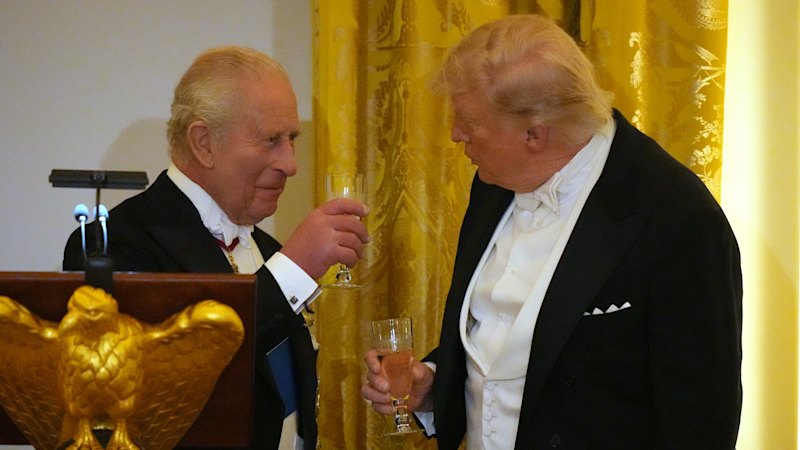
The grand halls of the White House recently played host to a state dinner, an event traditionally reserved for America's closest allies, often spotlighting the 'special relationship' with the United Kingdom. Yet, on this particular evening, the spotlight unexpectedly pivoted, not across the Atlantic, but to the Pacific, as Australia emerged as the undeniable star of the show. King Charles III's address, delivered with customary grace and strategic foresight, resonated deeply with President Joe Biden, a leader known to appreciate both eloquent words and symbolic gestures. This diplomatic coup for Canberra underscores a quietly strengthening bond, one that is becoming increasingly vital in the complex geopolitical landscape of the 21st century.
A Royal Nod to a Pacific Powerhouse
The evening’s narrative was initially expected to revolve around the enduring ties between the United States and the United Kingdom. However, King Charles III, in a masterstroke of diplomatic finesse, dedicated a significant portion of his speech to lauding Australia's contributions and its growing strategic importance. His words were not mere pleasantries; they were a recognition of Australia's pivotal role in regional stability and global security. The choice of Australia as a focal point, especially during a state dinner, sent a clear signal: Canberra is not just a Commonwealth nation, but a key player on the international stage, whose partnership is highly valued by both London and Washington.
President Biden, a veteran of international diplomacy, is acutely aware of the power of symbolism and genuine appreciation. The King's speech, which reportedly 'hit all the right notes,' was complemented by a thoughtfully chosen gift – an item that likely resonated with Biden's personal interests or political priorities. Such gestures, though seemingly small, are the bedrock of personal diplomacy, fostering goodwill and strengthening interstate relations at the highest levels. This exchange highlighted a mutual respect that transcends formal protocols, hinting at a genuine warmth in the relationship between the leaders and, by extension, their nations.
The Evolution of Alliances: Beyond Tradition
The focus on Australia at such a high-profile event is not merely an anecdotal curiosity; it reflects a broader, more profound shift in global alliances. While the US-UK relationship remains foundational, the geopolitical center of gravity is increasingly shifting towards the Indo-Pacific. Australia, with its strategic location, robust economy, and shared democratic values, is an indispensable partner in this evolving paradigm. The AUKUS security pact, involving Australia, the United Kingdom, and the United States, is a prime example of this strategic recalibration, aiming to enhance stability and deter aggression in a region fraught with challenges.
This dinner served as a public affirmation of Australia's elevated status within the Western alliance system. It signals a move away from a purely Euro-centric view of global power dynamics towards a more distributed, multi-polar approach where nations like Australia are empowered to play a larger role. The implications are significant: it suggests a future where strategic partnerships are forged not just on historical ties, but on contemporary relevance, shared threats, and mutual interests in maintaining a free and open international order. The resilience of supply chains, the security of critical technologies, and the freedom of navigation in vital waterways are all areas where Australia's cooperation is paramount.
Historical Context and Future Trajectories
Australia's relationship with the United States has deep roots, stemming from shared experiences in two World Wars and the Cold War. The ANZUS Treaty, signed in 1951, formalized this security alliance. However, the nature of this alliance has evolved dramatically. In the post-Cold War era, and particularly in the face of rising challenges from authoritarian regimes, Australia has consistently proven to be a steadfast and proactive partner. From contributing to international peacekeeping efforts to playing a leading role in regional forums, Canberra has demonstrated a commitment to global norms and collective security.
Looking ahead, this diplomatic spotlight suggests a future where Australia will continue to be a linchpin in Western strategy for the Indo-Pacific. Its role in initiatives like the Quad (Quadrilateral Security Dialogue) alongside the US, Japan, and India, and its deepening ties with Southeast Asian nations, solidify its position. The state dinner, therefore, was more than just a social gathering; it was a symbolic recognition of Australia's coming of age as a global diplomatic and strategic force. It underscores the importance of soft power and personal diplomacy in reinforcing these critical alliances. As the world grapples with climate change, economic volatility, and renewed great power competition, the strength of these partnerships will be tested, and Australia's role will only grow in significance.
Conclusion: A New Era of Alliance Building
The White House state dinner, featuring King Charles III's unexpected yet impactful focus on Australia, was a moment of profound diplomatic significance. It highlighted not only the enduring power of the British monarchy in international relations but also the ascendance of Australia as a crucial strategic partner for the United States and its allies. This event serves as a powerful reminder that while historical bonds are important, contemporary relevance and shared strategic imperatives are increasingly shaping the global order. As nations navigate an uncertain future, the ability to forge and strengthen diverse alliances, recognizing the unique contributions of each partner, will be paramount. Australia's moment in the White House spotlight was a clear indicator that the future of global diplomacy is as much about the Pacific as it is about the Atlantic, ushering in a new era of alliance building focused on shared values and collective security in a rapidly changing world.
Stay Informed
Get the world's most important stories delivered to your inbox.
No spam, unsubscribe anytime.
Comments
No comments yet. Be the first to share your thoughts!