King Charles' Witty Retort to Trump: A Deep Dive into Anglo-American History and Diplomacy
During a White House state dinner, King Charles III humorously reminded Donald Trump that Americans would be speaking French without British intervention. This seemingly lighthearted exchange at a high-stakes diplomatic event sparked discussions on historical alliances, national identity, and the enduring 'special relationship' between the UK and the US. The incident highlights the complex interplay of history, humor, and diplomacy in modern international relations.
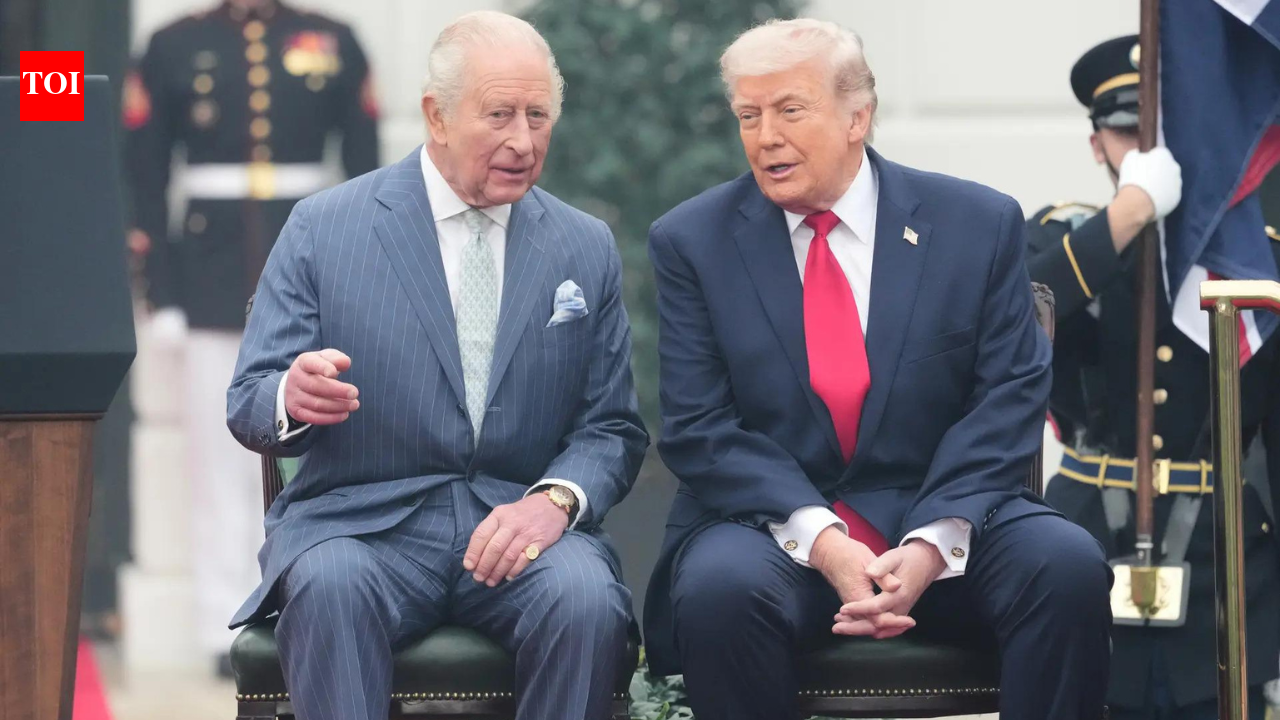
In the gilded halls of the White House, amidst the clinking of crystal and the murmur of diplomatic pleasantries, King Charles III delivered a remark that, while seemingly lighthearted, resonated with centuries of shared history and geopolitical significance. Addressing then-President Donald Trump at a state dinner, the monarch quipped that Americans “would be speaking French” were it not for Britain’s pivotal role in shaping the continent’s destiny. This seemingly innocuous retort, captured in fleeting news cycles, belies a deeper narrative about the Anglo-American 'special relationship,' the echoes of colonial pasts, and the intricate dance of modern diplomacy.
The Historical Echo: A Nod to North America's Past
King Charles’s comment, delivered with characteristic royal aplomb, directly references the French and Indian War (1754-1763), known globally as the Seven Years' War. This monumental conflict reshaped the geopolitical landscape of North America, effectively ending French colonial power east of the Mississippi River and solidifying British dominance. Had the outcome been different, French language and culture might indeed have become more pervasive in the territories that would eventually form the United States. The British victory, though ultimately paving the way for American independence, was crucial in establishing the linguistic and cultural foundations of the nascent nation. The King’s remark serves as a concise, albeit pointed, reminder of this historical bedrock, subtly asserting Britain's foundational influence on American identity. It's a testament to how deeply historical narratives are embedded in national consciousness and how they can be invoked, even humorously, in contemporary diplomatic settings.
The French and Indian War: A Closer Look
The Seven Years' War was a global conflict, but its North American theatre, the French and Indian War, was particularly decisive. It pitted the British Empire, supported by its American colonies and some Native American allies, against the French Empire, also supported by various Native American tribes. The stakes were immense: control over vast territories, lucrative fur trade routes, and strategic waterways. Key battles like the Battle of Quebec (1759) and the Battle of the Plains of Abraham were pivotal, leading to the fall of New France. The subsequent Treaty of Paris (1763) officially ceded most French territories in North America to Great Britain, leaving a lasting imprint on the continent's cultural and political trajectory. Without this British triumph, the linguistic and legal frameworks of what became the United States would undoubtedly have been profoundly different, likely incorporating significant French elements alongside English.
Diplomacy with a Dash of Humor: The 'Special Relationship'
The exchange between King Charles and Donald Trump, while rooted in history, also speaks volumes about the nature of high-level diplomacy, particularly within the context of the 'special relationship' between the United Kingdom and the United States. This relationship, forged in the crucible of two World Wars and cemented by shared democratic values, intelligence cooperation, and economic ties, often allows for a degree of candor and even playful banter that might be unthinkable between other heads of state. The King’s retort, rather than being perceived as an insult, was likely understood as a witty historical reference, a form of diplomatic jousting that acknowledges a deep, if sometimes complicated, bond. It underscores the unique cultural understanding that permits such exchanges to occur without causing offense, instead reinforcing a shared heritage.
Such moments of levity can serve multiple purposes in diplomacy: * Humanizing leaders: They make high-stakes interactions more relatable. * Reinforcing historical ties: They acknowledge shared pasts, even if complex. * Signaling familiarity: They demonstrate a level of comfort and rapport between nations.
The Art of the Royal Quip: Charles's Diplomatic Style
King Charles III, throughout his long tenure as Prince of Wales and now as monarch, has been known for his intellectual curiosity, his keen interest in history, and a dry wit. This incident is not an isolated example but rather consistent with a pattern of engaging with historical context and employing humor in public discourse. Unlike purely ceremonial figures, Charles has often used his platform to subtly convey messages, whether on environmental issues or, in this case, historical lineage. His ability to weave historical facts into a contemporary conversation, even with a figure as unpredictable as Donald Trump, showcases a refined diplomatic skill. It suggests a monarch who is not merely a figurehead but an active participant in shaping narratives and reinforcing national identity through subtle, yet impactful, communication.
Implications for Anglo-American Relations and National Identity
The King’s comment, though brief, touches upon fundamental aspects of national identity. For Americans, it’s a reminder of the complex tapestry of their origins, a blend of indigenous cultures, European colonial powers, and the struggle for independence. For the British, it’s a subtle assertion of their historical influence and a nod to the enduring legacy of the British Empire, albeit viewed through a modern lens. In an era where global alliances are constantly shifting and national narratives are frequently re-evaluated, such historical references serve as anchors. They remind both nations of the deep roots of their relationship, even as they navigate contemporary challenges such as trade disputes, climate change, and geopolitical rivalries. The 'special relationship' continues to evolve, but its historical foundations, as humorously highlighted by King Charles, remain a crucial point of reference, shaping perceptions and guiding interactions for generations to come. The incident underscores that history is not just a collection of facts; it's a living narrative that continues to inform, amuse, and sometimes challenge the present.
Stay Informed
Get the world's most important stories delivered to your inbox.
No spam, unsubscribe anytime.
Comments
No comments yet. Be the first to share your thoughts!