Badenoch Apologizes: Bloody Sunday Footage in Political Clip Reignites Northern Ireland Legacy Debate
Kemi Badenoch, a prominent British Conservative leader, has issued an apology after footage of Bloody Sunday was controversially used in a social media video criticizing a bill on Northern Ireland's legacy issues. The incident has sparked outrage, highlighting the deep sensitivities surrounding the Troubles and the ongoing political challenges in addressing historical injustices. Badenoch distanced herself from the video's creation, emphasizing the need for respectful engagement with such a painful past.
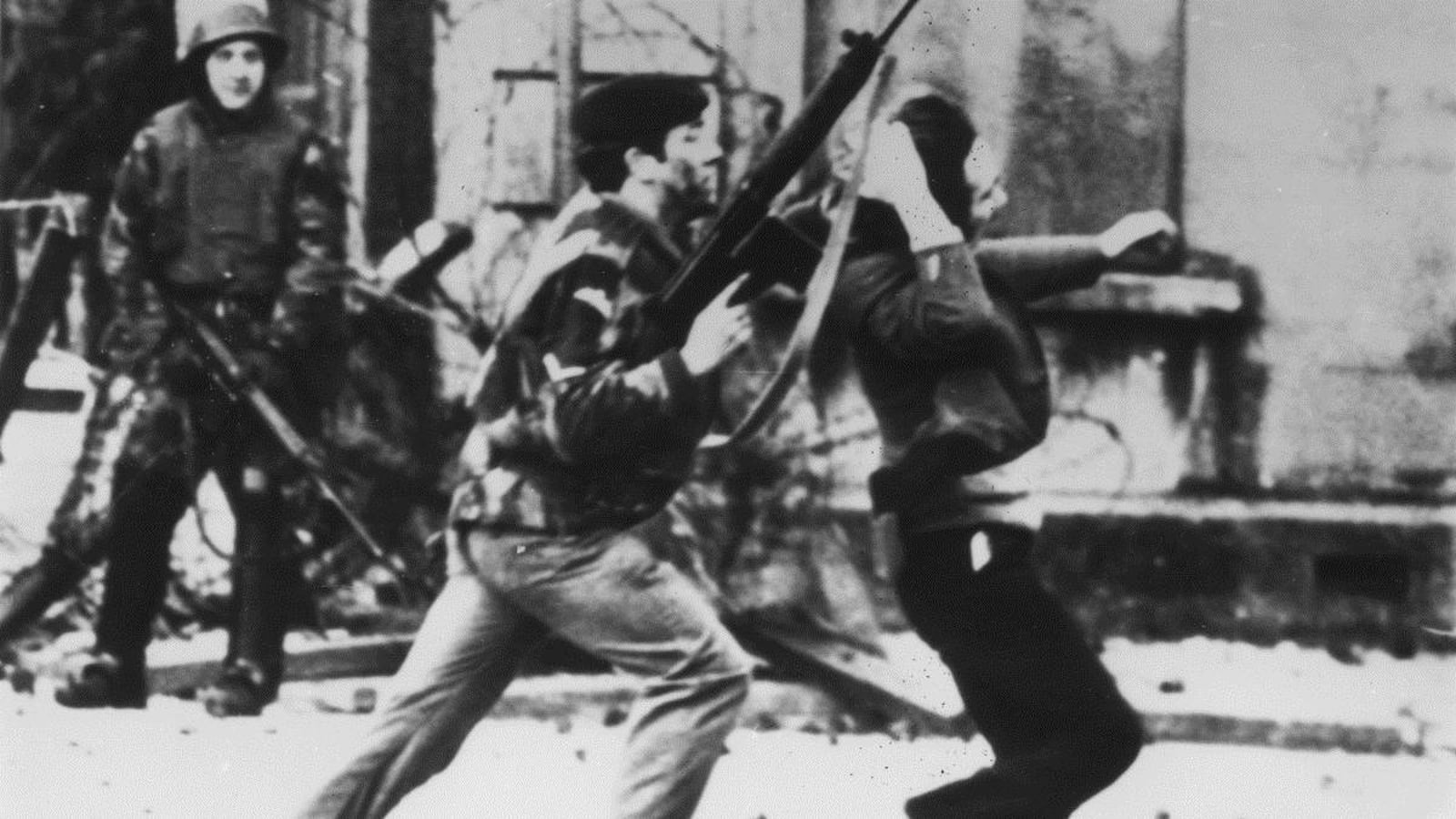
The raw, visceral images of Bloody Sunday – a day etched in the collective memory of Northern Ireland as a symbol of profound injustice and state violence – resurfaced recently in a deeply unsettling context. Kemi Badenoch, a leading figure within the British Conservative Party and a potential future leadership contender, found herself at the center of a political storm after footage from the tragic 1972 event was incorporated into a social media video. The clip, intended to critique a contentious bill addressing legacy issues in Northern Ireland, inadvertently reopened old wounds and ignited a furious backlash, prompting Badenoch to issue a swift and unequivocal apology.
This incident is far more than a mere political gaffe; it underscores the enduring fragility of peace in Northern Ireland and the immense sensitivity surrounding its past. The use of such potent imagery, even if unintended by the senior politician, demonstrates a critical misjudgment and a lack of understanding of the emotional weight carried by events like Bloody Sunday. For many, it felt like a cynical exploitation of historical trauma for contemporary political gain, further complicating the already fraught discussions around reconciliation and justice.
The Unfolding Controversy: A Misstep with Deep Reverberations
The video in question was part of a campaign to criticize the Northern Ireland Troubles (Legacy and Reconciliation) Bill, a piece of legislation that has been met with widespread opposition from victims' groups, human rights organizations, and political parties across the island of Ireland. The bill proposes an effective amnesty for Troubles-era crimes in exchange for cooperation with a new information recovery body, a move vehemently opposed by those seeking justice through traditional legal channels. The social media clip featuring the Bloody Sunday footage aimed to highlight perceived flaws in this bill, but its method proved disastrously counterproductive.
Kemi Badenoch, who serves as the Secretary of State for Business and Trade, quickly disavowed direct responsibility for the video's content. She stated that she did not personally sign off on the clip and that it was produced by a third-party agency. "I absolutely apologise for the offence caused by the unapproved use of the footage," Badenoch said, acknowledging the profound distress it had caused. Her apology, while necessary, did little to quell the initial wave of anger, particularly from families of victims and political leaders in Northern Ireland and the Republic of Ireland.
Critics were quick to point out the insensitivity. SDLP leader Colum Eastwood described the use of the footage as "disgraceful" and "deeply offensive," while others questioned the judgment of those responsible for the campaign. The incident served as a stark reminder that the wounds of the Troubles, despite the passage of decades and the signing of the Good Friday Agreement, remain raw and easily reopened.
Bloody Sunday: A Scar on History
To understand the gravity of this controversy, one must revisit the events of January 30, 1972. On that fateful Sunday, British paratroopers opened fire on unarmed civil rights protestors in the Bogside area of Derry/Londonderry, killing 13 people instantly and injuring many more, one of whom later died from their injuries. The victims were civilians, including teenagers, and the incident became a pivotal moment in the Troubles, fueling republican anger and recruitment into paramilitary organizations.
The initial official inquiry, the Widgery Tribunal, largely exonerated the soldiers, a finding widely rejected by the victims' families and the nationalist community. It took nearly three decades for a new inquiry, the Saville Inquiry, to be established. Its 2010 report concluded that all those killed were unarmed and posed no threat, and that the killings were "unjustified and unjustifiable." This led to a historic apology from then-Prime Minister David Cameron, who described the events as "unjustified and unjustifiable."
The memory of Bloody Sunday is not merely historical; it is a living, breathing part of the identity and political landscape of Northern Ireland. Its imagery – the iconic photographs of Father Edward Daly waving a blood-stained white handkerchief, the bodies on the ground – evokes profound grief, anger, and a persistent demand for accountability. To use such footage lightly or without deep respect is to disregard this painful legacy.
The Legacy Bill: A Catalyst for Renewed Tensions
This incident occurred against the backdrop of intense debate over the Northern Ireland Troubles (Legacy and Reconciliation) Bill. The UK government argues that the bill is necessary to move Northern Ireland beyond its past, offering a path to truth recovery while ending the cycle of investigations and prosecutions that have yielded few convictions. However, opponents, including all major parties in Northern Ireland, the Irish government, and numerous international human rights bodies, contend that it undermines the rule of law, denies victims access to justice, and contravenes international human rights obligations.
Victims' groups, in particular, feel betrayed, arguing that the bill prioritizes the interests of perpetrators over those of the bereaved and injured. They fear it will close off avenues for justice that they have pursued for decades, effectively granting an amnesty for serious crimes. The controversy surrounding the bill is a testament to the fact that, despite the peace process, the legacy of the Troubles remains a deeply divisive and unresolved issue, capable of igniting significant political and social unrest.
Implications and the Path Forward
The Badenoch apology, while necessary, highlights the precarious nature of political discourse when dealing with historical trauma. It serves as a potent reminder for politicians and campaigners to exercise extreme caution and sensitivity when referencing the Troubles. The incident has undoubtedly damaged trust, particularly among those who feel their pain is being weaponized or dismissed.
Moving forward, the challenge remains to find a way to address the legacy of the Troubles that commands broad consensus and respects the rights of victims. The current Legacy Bill, with its widespread opposition, appears unlikely to achieve this. International pressure, including from the Council of Europe and the United Nations, continues to mount against the bill, urging the UK government to reconsider its approach.
The episode involving the Bloody Sunday footage underscores a fundamental truth: peace in Northern Ireland is not merely the absence of violence, but a continuous, delicate process of reconciliation, remembrance, and the pursuit of justice. Any misstep, particularly one that touches upon such profound historical wounds, risks unraveling years of painstaking progress. For politicians like Kemi Badenoch, and indeed for all involved in the governance of the UK and Ireland, the lesson is clear: the past of Northern Ireland demands not just remembrance, but profound respect and understanding, lest its ghosts continue to haunt the present and future political landscape.
Stay Informed
Get the world's most important stories delivered to your inbox.
No spam, unsubscribe anytime.
Comments
No comments yet. Be the first to share your thoughts!