BoJ Holds Rates Amidst Divided Vote, Signals Hawkish Shift on Inflation as Geopolitical Tensions Mount
The Bank of Japan maintained its short-term policy rate at 0.75% despite a notable 6-3 split among board members, with a significant minority advocating for a hike. This decision comes as the BoJ sharply upgraded its inflation outlook, acknowledging the persistent impact of geopolitical tensions, particularly the Iran war, on global commodity prices. The move signals a potential future shift towards tightening, challenging the long-held dovish stance and introducing new uncertainties for global markets and Japan's economic trajectory.
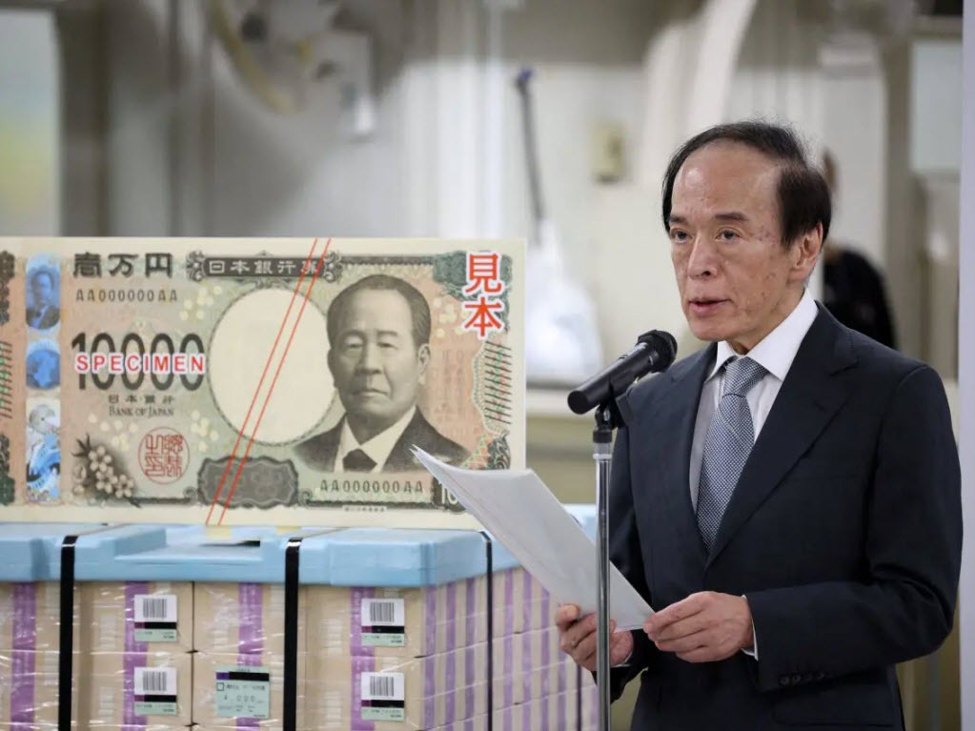
In a move that reverberated through global financial markets, the Bank of Japan (BoJ) on Tuesday announced its decision to keep its short-term policy rate unchanged at 0.75%. While widely anticipated by analysts, the seemingly routine announcement was underscored by a significant internal division, revealing a central bank grappling with evolving economic realities and mounting inflationary pressures. The vote was a striking 6-3 split, with board members Nakagawa, Takata, and Tamura dissenting, advocating for an immediate rate hike. This internal discord, coupled with a sharply upgraded inflation outlook, paints a picture of a central bank on the cusp of a historic pivot, even as it maintains its current course.
The Unwavering Rate and the Divided House
The decision to hold rates at 0.75% marks a period of cautious stability for the BoJ, following its landmark move earlier in the year to exit negative interest rates. For decades, Japan has battled deflation, leading the BoJ to employ unconventional monetary policies, including quantitative easing and yield curve control. The recent shift, however, indicates a growing recognition that the economic landscape has fundamentally changed. The three dissenting votes are particularly noteworthy. Their push for a hike suggests a strong belief within parts of the BoJ that inflation is not merely transitory but is becoming entrenched, necessitating a more aggressive response. This internal debate signals a potential future trajectory where the BoJ may be compelled to act sooner rather than later, challenging its long-held dovish reputation. The market will undoubtedly be scrutinizing future statements and minutes for further clues on the evolving consensus within the board.
Geopolitical Storms and Inflationary Headwinds
A critical factor influencing the BoJ's revised inflation outlook is the escalating geopolitical instability, prominently featuring the Iran war. The conflict has sent shockwaves through global energy markets, driving up oil prices and, consequently, broader commodity costs. Japan, a nation heavily reliant on imported energy and raw materials, is particularly vulnerable to such external shocks. The BoJ's acknowledgment of the "Iran war bite" signifies a direct link between international political events and domestic economic policy. This external pressure complicates the central bank's task, as inflation driven by supply-side shocks is harder to control with conventional monetary tools alone. Furthermore, the global supply chain, still recovering from the pandemic, faces renewed disruptions, contributing to persistent price pressures. The BoJ's updated projections now reflect a more pessimistic view on the longevity and intensity of these inflationary forces, moving away from its previous stance that much of the inflation was cost-push and temporary.
The Hawkish Turn: Implications for Japan's Economy
The BoJ's "significantly more hawkish inflation outlook" is a pivotal development. For years, the central bank struggled to achieve its 2% inflation target sustainably. Now, it appears to be confronting the opposite challenge: managing inflation that is potentially running too hot, or at least proving more stubborn than anticipated. This shift has profound implications for Japan's economy. A sustained period of higher inflation, if not matched by wage growth, could erode household purchasing power and dampen consumer spending. Conversely, if inflation is accompanied by robust wage increases, it could signal a healthier, more demand-driven economic cycle. However, the current inflation appears to be largely cost-driven, posing a dilemma. Businesses face higher input costs, which they may pass on to consumers, but without corresponding demand, this could stifle economic growth. The BoJ's challenge is to navigate this complex environment, ensuring price stability without prematurely stifling nascent economic recovery. The upgraded outlook suggests that the BoJ is now more prepared to tolerate higher rates, or at least acknowledge their necessity, should inflationary pressures persist.
Global Repercussions and Crypto Market Dynamics
The BoJ's stance, while primarily focused on domestic conditions, carries weight in the global financial ecosystem. As the world's third-largest economy, Japan's monetary policy decisions can influence currency markets, bond yields, and investor sentiment worldwide. A more hawkish BoJ could lead to a stronger yen, impacting Japanese exporters but potentially making imports cheaper. In the broader context of global monetary policy, if the BoJ follows other major central banks in a tightening cycle, it could signal a synchronized global effort to combat inflation, potentially affecting capital flows and risk appetite. For the crypto market, specifically, the implications are nuanced. Traditional financial market stability and interest rate differentials often influence the attractiveness of alternative assets like cryptocurrencies. A stronger yen or higher Japanese bond yields might draw some capital away from riskier assets, including crypto. However, if the BoJ's actions are perceived as stabilizing the broader economic environment, it could indirectly foster a more confident investment climate, benefiting established cryptocurrencies. Conversely, if global inflation remains persistent and central banks struggle to contain it, some investors might turn to cryptocurrencies like Bitcoin as an inflation hedge, though this narrative remains debated.
Looking Ahead: A Path Fraught with Uncertainty
The April 2026 BoJ meeting marks a critical juncture. The internal dissent and the upgraded inflation outlook signal that the era of ultra-loose monetary policy in Japan is drawing to a close, albeit slowly and cautiously. The central bank is now caught between the imperative to control inflation and the desire to nurture sustainable economic growth. The path forward is fraught with uncertainty, heavily influenced by the trajectory of global commodity prices, the resolution of geopolitical conflicts, and the domestic wage-price spiral. Investors, businesses, and households alike will be closely watching the BoJ's next moves, anticipating further adjustments to its policy framework. The question is no longer if the BoJ will tighten further, but when and how aggressively. The coming months will undoubtedly test the resolve and adaptability of Japan's central bank as it navigates a new era of economic challenges.
Stay Informed
Get the world's most important stories delivered to your inbox.
No spam, unsubscribe anytime.
Comments
No comments yet. Be the first to share your thoughts!