BRICS Discord: West Asia Conflict Stalls Joint Statement at MENA Meeting
A recent BRICS Deputy Foreign Ministers and Special Envoys meeting on the Middle East and North Africa (MENA) concluded without a joint statement, as member nations failed to reach a consensus on the ongoing West Asia conflict. Instead, a Chair's Summary was issued, highlighting deep concerns over regional instability. This diplomatic impasse underscores the complex geopolitical dynamics and divergent national interests within the influential BRICS bloc regarding one of the world's most volatile regions. The Ministry of External Affairs confirmed the lack of consensus, refuting speculative reports.
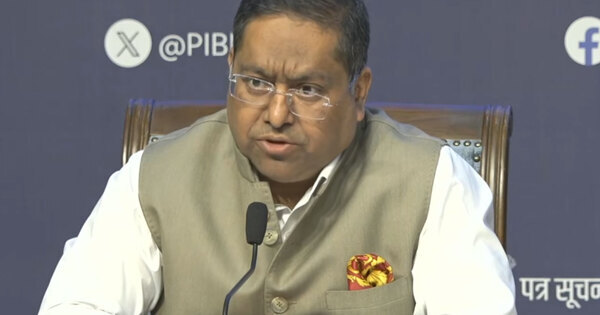
In a significant diplomatic development that underscores the complex geopolitical fault lines within the expanding BRICS bloc, a recent meeting of its Deputy Foreign Ministers and Special Envoys on the Middle East and North Africa (MENA) concluded without the customary joint statement. The Ministry of External Affairs (MEA) confirmed on Monday that the inability to achieve a general consensus among member countries regarding the protracted West Asia conflict was the primary reason for this diplomatic impasse. Instead of a unified declaration, a Chair's Summary was released, reflecting the deep concerns and diverse perspectives on the region's escalating crises.
The meeting, held in the national capital on April 24, brought together representatives from Brazil, Russia, India, China, and South Africa, along with new members like Saudi Arabia, Egypt, UAE, Iran, and Ethiopia, to deliberate on the volatile situation in the Middle East and North Africa. The MEA Spokesperson, Randhir Jaiswal, explicitly stated during an inter-ministerial briefing, "A joint statement was not possible because a general consensus could not be reached among the members—the delegates who attended the BRICS MENA meeting—regarding the ongoing conflict in West Asia." This candid admission highlights the challenges inherent in forging a common stance among a diverse group of nations, even on issues of shared global concern.
The Weight of Disagreement: Why Consensus Matters
The failure to issue a joint statement is more than a mere procedural hiccup; it signals a deeper divergence in strategic interests and diplomatic priorities among BRICS nations concerning the West Asia conflict. Joint statements are critical tools in international diplomacy, serving as declarations of shared intent, common understanding, and collective commitment to specific actions or principles. For a bloc like BRICS, which aims to present a united front on global issues and challenge the existing unipolar world order, the absence of such a statement on a crisis as pivotal as the West Asia conflict can be perceived as a crack in its collective resolve.
Historically, BRICS has sought to project an image of solidarity and mutual cooperation, particularly on matters related to global security and economic development. The recent expansion of the bloc to include key players from the MENA region, such as Saudi Arabia, Egypt, and Iran, was intended to bolster its influence and provide a more comprehensive perspective on regional dynamics. However, this expansion also introduces a broader spectrum of national interests and historical allegiances, making consensus-building inherently more complex. The West Asia conflict, with its intricate web of historical grievances, religious sensitivities, and geopolitical rivalries, presents a formidable challenge to any group attempting to formulate a unified policy.
Navigating a Volatile Region: Key Discussion Points
Despite the inability to issue a joint statement, the Chair's Summary indicated that a wide array of critical issues were discussed, reflecting the gravity of the situation in the MENA region. The discussions covered: * The Palestine issue and the dire humanitarian crisis in Gaza, including the urgent need for humanitarian aid. * The crucial role of UNRWA (United Nations Relief and Works Agency for Palestine Refugees in the Near East) amidst funding controversies. * A firm commitment to a zero-tolerance approach to terrorism. * Welcoming the ceasefire in Lebanon and condemning attacks on UN peacekeeping forces (UNIFIL). * The necessity for post-conflict reconstruction and rehabilitation efforts in Syria. * Political settlement processes in Yemen, Iraq, and Libya. * Addressing the ongoing humanitarian crisis in Sudan.
These points reveal a comprehensive agenda, highlighting the multifaceted challenges facing the region. The emphasis on humanitarian aid, the role of international bodies like UNRWA, and counter-terrorism efforts underscores the immediate concerns. However, the lack of a joint declaration suggests that while there might be agreement on identifying problems, there is significant disagreement on the pathways to solutions or the attribution of responsibility.
Beyond the Impasse: India's Diplomatic Stance and Chabahar Port
MEA Spokesperson Randhir Jaiswal also took the opportunity to address what he termed as "speculative and inaccurate reporting" regarding the BRICS meeting. He referenced earlier multilateral outcomes, such as the India-Arab League Foreign Ministers' meeting, where a joint statement was successfully endorsed by all participants, including Palestine. This reference serves to contextualize India's consistent diplomatic efforts in the region and its ability to foster consensus in other forums, perhaps implying that the BRICS impasse was specific to the dynamics within that particular grouping rather than a broader failure of diplomacy.
Another critical issue touched upon was the Chabahar Port project, a strategic deep-water port in Iran being developed with Indian investment. Jaiswal confirmed that discussions are ongoing with both Iran and the United States regarding the port. He candidly admitted, "Obviously, the current conflict is also a complicating factor." The Chabahar Port is vital for India's connectivity to Afghanistan and Central Asia, bypassing Pakistan, and its development faces challenges due to U.S. sanctions on Iran. The ongoing West Asia conflict further exacerbates these complexities, adding layers of geopolitical risk and uncertainty to the project's future.
Implications for Global Governance and BRICS' Future
The inability of BRICS to issue a joint statement on the West Asia conflict carries significant implications for global governance and the future trajectory of the bloc. In an increasingly multipolar world, organizations like BRICS are seen as potential counterweights to traditional Western-dominated institutions. However, their effectiveness hinges on their ability to act cohesively and speak with a unified voice on critical global issues. This recent development suggests that while BRICS may offer an alternative platform for dialogue, achieving genuine strategic alignment on highly contentious matters remains a formidable hurdle.
For the international community, this signals that even among nations advocating for a more balanced global order, fundamental disagreements persist on how to address crises that have profound humanitarian and geopolitical consequences. It highlights the intricate dance of national interests, historical ties, and ideological leanings that shape international relations. As the West Asia conflict continues to unfold, the world will be watching how BRICS nations navigate these internal divisions and whether they can eventually forge a more unified approach to regional stability and peace. The path forward for BRICS, particularly in projecting a coherent foreign policy, will undoubtedly be tested by such complex and emotionally charged issues, requiring greater diplomatic dexterity and a willingness to bridge significant ideological and strategic divides.
Ultimately, the Chair's Summary, while not a joint statement, serves as a testament to the ongoing dialogue and shared concern among BRICS members regarding the West Asia conflict. Yet, it also stands as a stark reminder of the challenges in translating concern into collective action when national interests diverge so sharply. The incident underscores that the journey towards a truly multipolar world, where diverse powers can effectively coordinate on global challenges, is fraught with complexities and requires continuous, painstaking diplomatic effort.
Stay Informed
Get the world's most important stories delivered to your inbox.
No spam, unsubscribe anytime.
Comments
No comments yet. Be the first to share your thoughts!