Cyberdeck Revolution: How DIY Computing is Redefining Personal Tech Beyond Sci-Fi
Cyberdecks, once the stuff of science fiction, are now at the forefront of a DIY computing revolution. A recent build by WillTechBuilds showcases how these portable, customizable machines are evolving from clunky prototypes to sleek, laptop-like devices, blurring the lines between retro-futurism and modern practicality. This movement empowers users to craft highly personalized computing experiences, challenging the traditional consumer tech market.
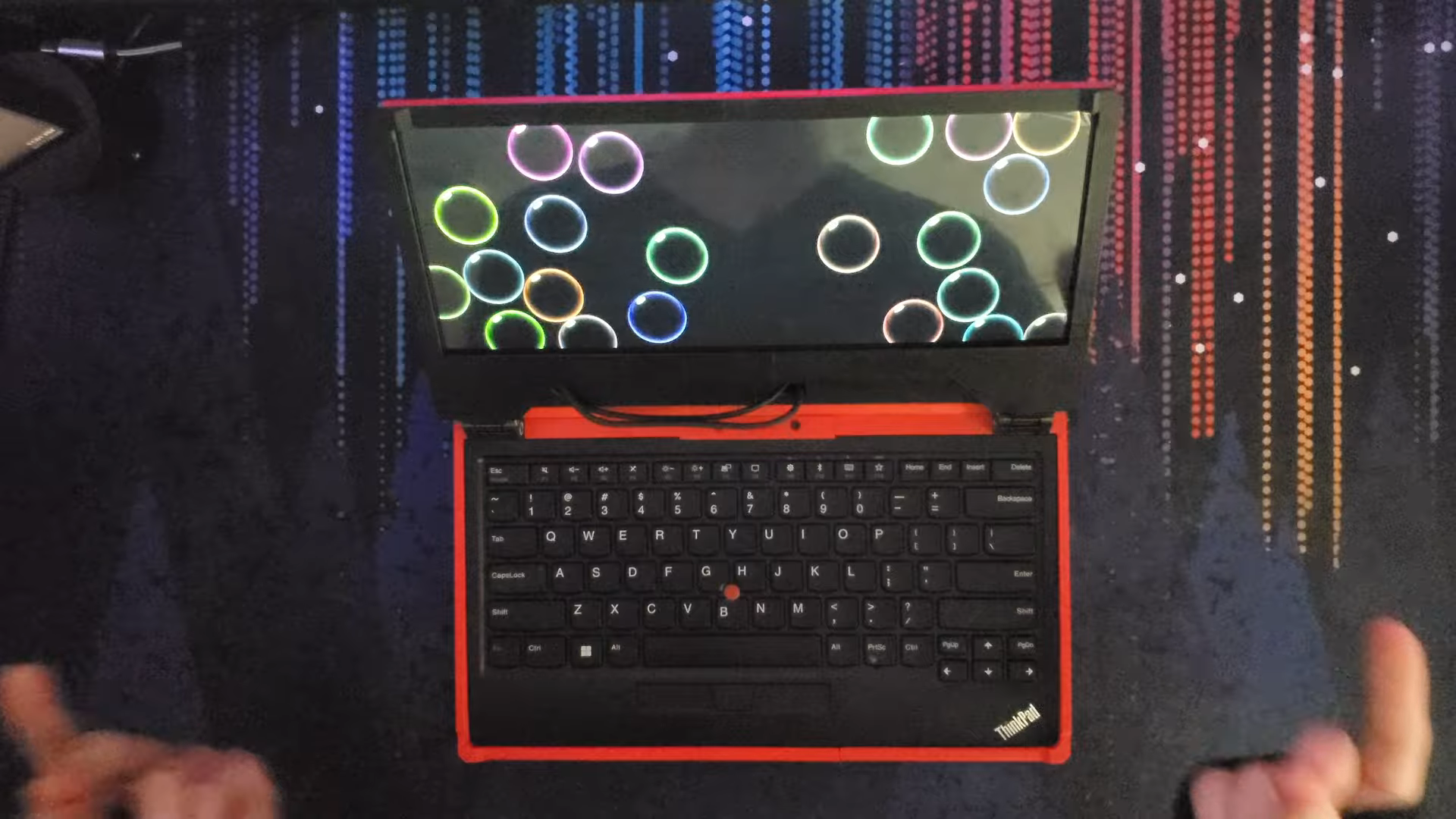
In the annals of science fiction, the cyberdeck has long held a revered, almost mythical status. Picture a hacker hunched over a jury-rigged console, wires spilling out, glowing screens displaying cryptic code – a portable, powerful, and profoundly personal computing device, often more reminiscent of a prop from a Ridley Scott film than anything found on a store shelf. For decades, this vision remained largely confined to the pages of cyberpunk novels and the silver screen. Yet, a burgeoning movement of DIY enthusiasts is now bringing the cyberdeck out of the realm of fantasy and into tangible reality, redefining what personal computing can be.
At its core, a cyberdeck is an intensely personal computing project. Unlike the mass-produced laptops and tablets that dominate today's market, a cyberdeck is built from the ground up, often with off-the-shelf components, 3D-printed parts, and a healthy dose of ingenuity. It’s a rebellion against planned obsolescence and generic design, a testament to the user's desire for ultimate control and customization. The beauty lies in its flexibility: you can craft it to suit your exact needs, whether that's for mobile penetration testing, retro gaming, field data collection, or simply a unique daily driver. This philosophy of maker culture is what truly sets cyberdecks apart.
The Evolution of the Cyberdeck: From Clunky to Contemporary
Historically, early cyberdeck builds often embraced their raw, utilitarian aesthetic. They were chunky, sometimes unwieldy, and prioritized function over form. Think exposed circuit boards, industrial-looking enclosures, and a general air of 'built-not-bought.' This rugged charm was part of their appeal, a direct nod to their dystopian inspirations. However, as 3D printing technology has become more accessible and component miniaturization has advanced, the landscape of cyberdeck design has begun to shift dramatically. Builders are no longer constrained by the limitations of off-the-shelf cases or bulky components.
A prime example of this evolution is a recent build by WillTechBuilds, which has garnered significant attention within the community. This particular cyberdeck represents a significant leap forward, moving away from the traditional bulky, 'breadboard' aesthetic towards something remarkably refined and, dare we say, sleek. By integrating a Raspberry Pi 400 – a compact, keyboard-integrated single-board computer – as its core, WillTechBuilds has managed to create a device that is not only powerful and versatile but also surprisingly compact and ergonomic. This design choice is pivotal, as it allows for a much thinner profile and a more integrated user experience, bridging the gap between a custom-built project and a commercially available laptop.
Key Design Principles and Components
The WillTechBuilds cyberdeck, and others like it, highlight several key design principles that are pushing the boundaries of the genre:
* Integration: Moving beyond separate components wired together, modern cyberdecks often feature highly integrated designs. The Raspberry Pi 400, for instance, combines the CPU, RAM, and keyboard into a single unit, drastically reducing complexity and footprint. * Portability: While early cyberdecks could be cumbersome, the focus is increasingly on true portability. This means lightweight materials, efficient power management, and compact displays. * Customization: Despite the more integrated approach, customization remains paramount. This includes custom 3D-printed enclosures, unique input devices (trackballs, specialized keypads), and tailored software environments. * Power Efficiency: For truly mobile use, efficient power consumption is critical. Builders often incorporate custom battery solutions and power management circuits to maximize uptime. * Display Innovation: From small OLED screens for status updates to integrated touchscreens or even e-ink displays for specific applications, the choice of display is a crucial aesthetic and functional decision.
Beyond the Raspberry Pi 400, common components in cyberdeck builds include various single-board computers (SBCs) like other Raspberry Pi models, ODROID boards, or even more powerful Intel NUCs. Displays range from small 5-inch HDMI screens to larger 10-inch portable monitors. Input devices are highly diverse, often featuring mechanical keyboards, trackpads, trackballs, or even custom-designed key matrices. The enclosure itself is often the most visually striking element, frequently 3D-printed from CAD designs shared within the community, allowing for rapid iteration and personalization.
The Allure of the DIY Aesthetic and Community
The appeal of cyberdecks extends far beyond mere technical specifications. It taps into a primal human desire to create, to understand, and to control the tools we use. In an era dominated by sleek, sealed, and often unrepairable consumer electronics, the cyberdeck stands as a defiant counterpoint. It champions repairability, modularity, and open-source principles. For many, the journey of building a cyberdeck is as rewarding as the destination itself – a process of learning, problem-solving, and engaging with a vibrant global community of fellow makers.
Online forums, subreddits, and YouTube channels dedicated to cyberdecks are buzzing with activity. Enthusiasts share build logs, troubleshoot issues, exchange CAD files for 3D-printed parts, and inspire one another with innovative designs. This collaborative spirit is a cornerstone of the cyberdeck movement, fostering an environment where knowledge is freely shared, and collective creativity flourishes. It's a testament to the power of community-driven innovation, demonstrating that cutting-edge technology doesn't always originate in corporate R&D labs but can emerge from garages and workshops worldwide.
Implications for the Future of Personal Computing
The rise of the cyberdeck movement, particularly builds like WillTechBuilds' more laptop-like iteration, carries significant implications for the future of personal computing. Firstly, it challenges the notion that powerful, portable computing must come in a standardized, mass-produced package. It demonstrates that highly functional and aesthetically pleasing devices can be custom-made, potentially paving the way for more personalized and niche computing solutions in the mainstream.
Secondly, it highlights the growing demand for user agency in technology. Consumers are increasingly wary of closed ecosystems and devices that dictate how they can be used or repaired. Cyberdecks offer an antidote, providing a platform for complete control, from the operating system to the physical hardware. This trend could influence mainstream manufacturers to offer more modular, customizable, and repair-friendly products.
Finally, the cyberdeck movement serves as a powerful educational tool. It encourages individuals to delve into electronics, programming, 3D design, and problem-solving. It demystifies technology, transforming passive consumers into active creators. As the cost of components continues to fall and manufacturing techniques like 3D printing become more sophisticated, we can expect cyberdecks to become even more accessible and diverse.
In conclusion, the cyberdeck is no longer a mere relic of speculative fiction. It is a vibrant, evolving category of personal computing, driven by innovation, community, and a deep-seated desire for personalization. Builds like WillTechBuilds' are proving that these DIY machines can achieve a level of polish and practicality that rivals commercial offerings, pushing the boundaries of what's possible. As technology continues to advance, the line between the futuristic visions of cyberpunk and the tangible reality of our daily lives grows ever thinner, with the humble, yet powerful, cyberdeck leading the charge into a more customizable and user-centric computing future.
Stay Informed
Get the world's most important stories delivered to your inbox.
No spam, unsubscribe anytime.
Comments
No comments yet. Be the first to share your thoughts!