Dalal Street's High-Stakes Week: Nifty's Crucial Support Test Amid Surging Volatility
Dalal Street faces a pivotal week as the Nifty index hovers precariously near its crucial support level of 23,800, signaling a potential deeper corrective phase. Market volatility has surged, demanding extreme caution from traders. Experts advise capital protection and strategic positioning for a potentially range-bound yet highly unpredictable market. The outcome of this support test will dictate the market's immediate trajectory, with global cues and domestic factors playing significant roles.
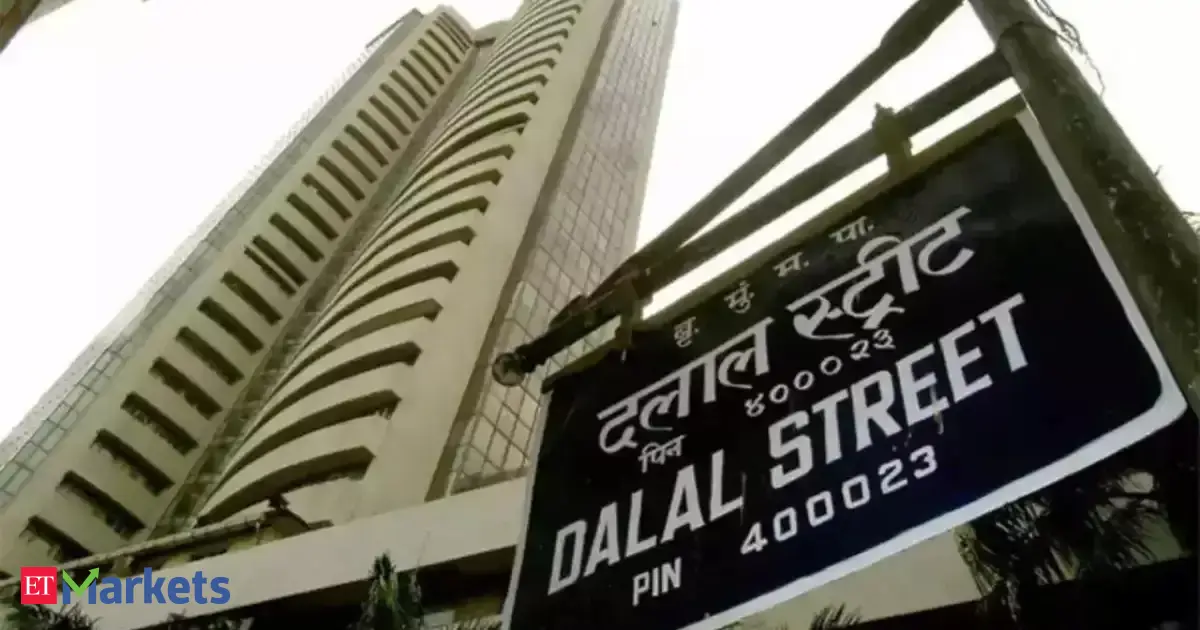
The Indian stock market, often a barometer of the nation's economic pulse, finds itself at a critical juncture as the Nifty 50 index concluded the past week under considerable pressure. Slipping into what analysts describe as a 'corrective phase,' the benchmark index is now teetering on the edge of a crucial support level at 23,800. This precarious positioning has sent ripples of concern through Dalal Street, with market participants bracing for a period of heightened volatility and uncertainty.
The recent downturn follows a period of robust gains, leaving investors to ponder whether this is a healthy correction or the precursor to a more significant pullback. The surge in volatility, as measured by indicators like the India VIX, underscores the prevailing anxiety. For seasoned traders and new entrants alike, the coming days will demand a sharp focus on risk management and a nuanced understanding of market dynamics. The stakes are high, and the market's next major move hinges squarely on its ability to defend this pivotal support.
The Anatomy of a Corrective Phase
A corrective phase in financial markets is a natural, albeit often uncomfortable, part of any bull run. It typically involves a temporary decline in asset prices, usually between 10% and 20%, following a period of sustained upward movement. Its purpose is to 'correct' overbought conditions, shake out weaker hands, and reset valuations to more sustainable levels. The Nifty's recent performance, characterized by a retreat from its all-time highs and increased selling pressure, fits this description.
Several factors contribute to such phases. Profit-booking by institutional investors after significant rallies is a common trigger. Global economic uncertainties, such as shifts in central bank monetary policies, geopolitical tensions, or commodity price fluctuations, can also dampen investor sentiment. Domestically, concerns over inflation, corporate earnings, or upcoming policy decisions can fuel caution. In the current scenario, a combination of these elements appears to be at play, creating a complex environment where market participants are constantly re-evaluating their strategies.
Historically, corrective phases have often paved the way for healthier, more sustainable rallies. However, the depth and duration of these corrections are always unpredictable. The key for investors is to differentiate between a temporary setback and a fundamental shift in market trends. The 23,800 level for Nifty is not just a number; it represents a psychological and technical threshold that could either stabilize the market or open the door to further declines.
The Significance of the 23,800 Support Level
In technical analysis, support levels are price points where a downtrend is expected to pause due to a concentration of demand. The 23,800 level for the Nifty has emerged as a critical psychological and technical barrier. A sustained breach below this point could trigger a cascade of selling, as it might signal a loss of confidence among market participants and invalidate previous bullish patterns. Conversely, a strong rebound from this level would reinforce its importance and suggest that the underlying bullish trend remains intact, albeit temporarily interrupted.
Why is this level so crucial? It often corresponds to previous highs that, once surpassed, turn into new support, or it aligns with significant moving averages or Fibonacci retracement levels. For many traders, it's a line in the sand. If Nifty fails to hold 23,800, the next potential support zones could be considerably lower, possibly around 23,500 or even 23,200, representing a more significant drawdown. This scenario would likely lead to increased fear and potentially faster liquidation by those who entered the market at higher valuations.
Traders are closely watching the volume accompanying any moves around this level. High selling volume on a breach would confirm the weakness, while high buying volume on a bounce would confirm the strength of the support. The interplay of institutional flows, retail participation, and derivatives positioning will be instrumental in determining the outcome of this critical test.
Navigating the Volatile Landscape: Strategies for Traders
The prevailing market conditions demand a cautious and disciplined approach from all market participants. Volatility, while presenting opportunities for agile traders, also significantly amplifies risk. Here are some strategies recommended by market veterans:
* Capital Protection First: The primary goal in a volatile, corrective phase should be to protect existing capital. This might involve reducing exposure, booking partial profits, or tightening stop-losses on existing positions. Aggressive long positions should be approached with extreme caution. * Focus on Quality: In times of uncertainty, high-quality stocks with strong fundamentals, robust balance sheets, and consistent earnings tend to outperform or show greater resilience. Avoid speculative plays that are highly sensitive to market sentiment. * Range-Bound Trading: If the Nifty oscillates around the 23,800 level without a decisive break in either direction, a range-bound trading strategy might be effective. This involves buying near support and selling near resistance, but with tight stop-losses. * Hedging Strategies: For sophisticated investors, using derivatives like options (e.g., buying put options) can provide a hedge against potential downside risk in their equity portfolios. * Stay Informed and Agile: Market sentiment can shift rapidly. Staying updated on global news, domestic economic data, and corporate announcements is crucial. Be prepared to adjust strategies quickly based on evolving market conditions. * Avoid Over-Leveraging: The temptation to use leverage to amplify returns can be strong, but in volatile markets, it can lead to devastating losses. Maintain conservative leverage levels or avoid it altogether.
The Road Ahead: Global Cues and Domestic Factors
While the 23,800 support level is a key domestic indicator, the broader trajectory of Dalal Street will also be influenced by a confluence of global and domestic factors. Globally, the actions of major central banks, particularly the US Federal Reserve, regarding interest rates will continue to cast a long shadow. Any hawkish surprises could trigger capital outflows from emerging markets like India. Geopolitical developments, such as ongoing conflicts or trade disputes, also have the potential to spark risk aversion.
Domestically, the upcoming corporate earnings season will be closely watched for signs of economic health and corporate resilience. Any disappointments could exacerbate selling pressure. Furthermore, government policy announcements, particularly those related to infrastructure, manufacturing, or fiscal measures, could provide either a boost or a drag on sentiment. The monsoon season's progress and its impact on agricultural output and rural demand will also be a significant factor for the broader economy and, consequently, the stock market.
In conclusion, the coming week presents a critical test for the Nifty index and the broader Indian market. The 23,800 support level is a line in the sand, and its defense will be paramount for maintaining investor confidence. While volatility is expected to remain high, offering both risks and opportunities, a disciplined approach focused on capital protection and quality investments will be key to navigating these turbulent waters. Dalal Street is poised for a decisive period, and how it responds to these challenges will shape its path for the immediate future.
Stay Informed
Get the world's most important stories delivered to your inbox.
No spam, unsubscribe anytime.
Comments
No comments yet. Be the first to share your thoughts!