Digital Leap: LTFRB Ends Newspaper Publication Requirement for Franchise Applications
The Land Transportation Franchising and Regulatory Board (LTFRB) has announced a significant policy shift, eliminating the mandatory newspaper publication of franchise applications and hearing notices for Certificates of Public Convenience (CPCs). This move, aimed at streamlining processes and embracing digital platforms, marks a pivotal moment for public transport operators. While promising efficiency and cost savings, the decision also raises questions about transparency and public access to vital information, sparking a broader conversation on modernization versus traditional safeguards.
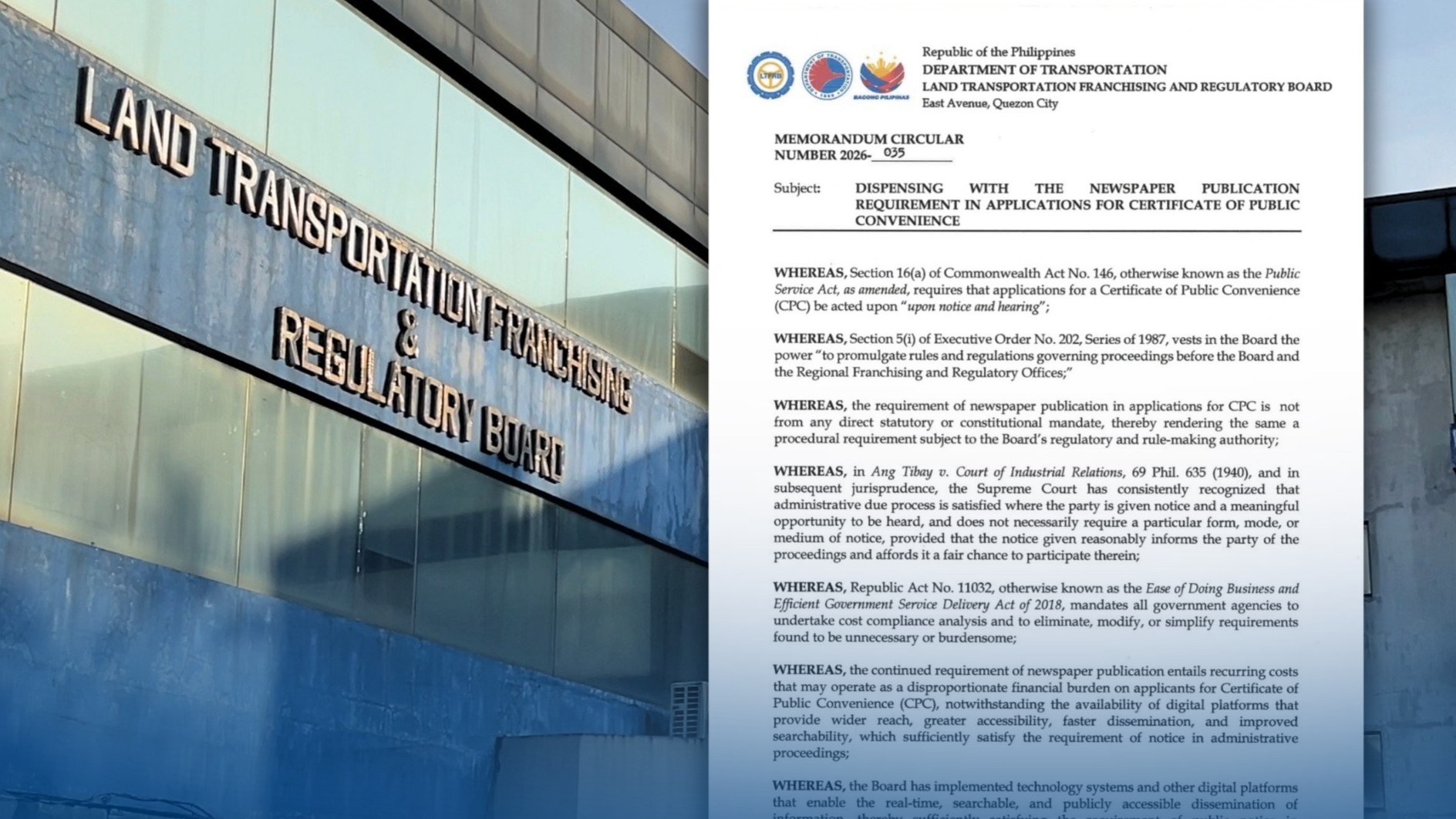
In a bold stride towards modernization, the Land Transportation Franchising and Regulatory Board (LTFRB) has officially declared an end to its long-standing requirement for the publication of franchise applications and notices of hearing in newspapers of general circulation. This landmark decision, directly impacting the issuance of Certificates of Public Convenience (CPCs) for public transport operators, signals a significant pivot towards digital efficiency and away from traditional, often cumbersome, bureaucratic processes. The move, effective immediately, is poised to reshape how public transport franchises are processed and monitored across the nation, promising a more agile and responsive regulatory environment.
For decades, the newspaper publication mandate served as a cornerstone of transparency and public engagement in the franchise application process. It was designed to inform the public, potential competitors, and affected communities about new or renewed transport routes, allowing for objections or interventions. While well-intentioned, this requirement often led to substantial delays and financial burdens for applicants, particularly smaller operators, who had to contend with the costs and logistical challenges of print media. The LTFRB's decision reflects a growing global trend among government agencies to leverage digital platforms for public communication and administrative tasks, aligning with principles of good governance and technological advancement.
The Rationale Behind the Shift: Efficiency and Modernization
The primary drivers behind the LTFRB's policy change are rooted in the pursuit of efficiency, cost reduction, and modernization. In an era dominated by digital communication, relying solely on print media for public notices has become increasingly anachronistic. The internet and social media platforms offer instantaneous, widespread, and often more accessible dissemination of information. By transitioning away from newspaper publications, the LTFRB aims to: * Streamline the application process: Reducing the time and steps involved in securing a CPC, thereby accelerating the deployment of public transport services. * Lessen financial burden: Alleviating the significant costs associated with newspaper advertisements, which can be prohibitive for small and medium-sized enterprises (SMEs) in the transport sector. * Enhance accessibility: Potentially reaching a broader, more diverse audience through digital channels, especially among younger demographics who primarily consume news online. * Improve administrative agility: Allowing the LTFRB to adapt more quickly to changing transport needs and regulatory landscapes without the delays inherent in print-based notice systems.
This strategic shift is not merely about cutting costs; it's about reimagining the regulatory framework for public transportation in a digital age. The LTFRB's leadership has emphasized that this change is part of a broader initiative to digitalize government services, making them more responsive and user-friendly for citizens and businesses alike. The intent is to create a system that is not only faster but also more equitable, by removing barriers that disproportionately affect smaller operators.
Historical Context and Previous Challenges
The requirement for newspaper publication has a deep history, originating from a time when print was the dominant mass medium. Its purpose was to ensure that regulatory actions affecting public services were transparent and open to public scrutiny. However, over the years, this system faced several criticisms:
* High Costs: The expense of publishing notices in newspapers, particularly those with a wide circulation, could run into thousands of pesos, adding a considerable overhead to franchise applications. This cost was often passed on to commuters or absorbed by operators, impacting their financial viability. * Limited Reach: Despite being called "general circulation," the actual reach of newspapers has declined significantly with the rise of digital media. Many segments of the population, especially in remote areas or younger demographics, do not regularly read print newspapers, making the effectiveness of these notices questionable. * Bureaucratic Delays: The process of coordinating with newspapers, ensuring correct publication, and submitting proof of publication often led to administrative bottlenecks, extending the overall processing time for CPCs. * Environmental Impact: The reliance on paper-based processes also carried an environmental footprint, an increasingly relevant concern in modern governance.
The LTFRB's move can be seen as a direct response to these long-standing challenges, seeking to replace an outdated mechanism with one more suited to contemporary realities. It reflects a governmental acknowledgment that the tools for public engagement have evolved, and regulatory bodies must evolve with them.
Implications for Stakeholders: Operators, Commuters, and Transparency Advocates
The immediate implications of this policy change are far-reaching and affect various stakeholders differently.
For public transport operators, particularly those seeking new franchises or renewing existing ones, the most immediate benefit is the reduction in both cost and processing time. This could translate into: * Faster service deployment: New routes or additional units can be approved and deployed more quickly, potentially improving public transport availability. * Lower operational costs: Savings from publication fees can be reinvested into vehicle maintenance, driver welfare, or potentially lead to more competitive fares. * Simplified compliance: A less complex application process can reduce the administrative burden on operators.
However, the transition also presents challenges. The LTFRB must ensure that the digital alternatives for public notification are robust, accessible, and equally effective in reaching all relevant parties. Without a clear and comprehensive digital strategy, there is a risk that the public and other interested parties might miss crucial information.
For commuters and the general public, the impact is two-fold. On one hand, a more efficient franchise system could lead to improved and expanded public transport services. On the other hand, concerns about transparency and public participation are paramount. The traditional newspaper notice, despite its flaws, provided a tangible record and a clear avenue for public input. The LTFRB must establish equally effective digital mechanisms for:
* Public awareness: How will the public be informed about new routes, fare adjustments, or changes in transport services? * Objection and intervention: What digital channels will be provided for individuals or groups to raise concerns or object to applications? * Record-keeping: How will digital notices be archived and made accessible for historical review and accountability?
Transparency advocates and civil society organizations will be closely monitoring the implementation of this policy. Their primary concern will be to ensure that the shift to digital does not inadvertently reduce public oversight or create digital divides, where those without internet access are left uninformed. The LTFRB's success will hinge on its ability to implement a digital notification system that is not only efficient but also inclusive and fully transparent.
The Path Forward: Digital Infrastructure and Public Engagement
The LTFRB's decision is a critical step, but it is just the beginning. The success of this policy hinges on the development and effective implementation of a robust digital infrastructure for public notices. This includes:
* Dedicated online portal: A user-friendly, easily navigable website or online portal where all franchise applications and hearing notices are promptly published and archived. * Multi-platform dissemination: Utilizing various digital channels such as social media, email newsletters, and potentially even SMS alerts to reach a broader audience. * Public feedback mechanisms: Implementing clear and accessible online forms or platforms for public comments, objections, and inquiries. * Digital literacy initiatives: Potentially collaborating with local government units and NGOs to bridge the digital divide and ensure that all segments of the population can access these online resources. * Legal framework updates: Ensuring that the existing legal framework is updated to officially recognize digital publications as valid forms of public notice.
This move by the LTFRB is indicative of a larger trend in governance towards digital transformation. While the promise of efficiency and modernization is significant, the true measure of its success will be its ability to uphold and even enhance the principles of transparency, public participation, and equitable access to information. As the nation moves forward, the LTFRB's journey will serve as a crucial case study for other government agencies contemplating similar digital leaps, highlighting the delicate balance between innovation and public accountability in an increasingly digital world.
Stay Informed
Get the world's most important stories delivered to your inbox.
No spam, unsubscribe anytime.
Comments
No comments yet. Be the first to share your thoughts!