Gaza Flotilla Interception: Two Activists Detained, Raising International Tensions
The recent interception of an aid flotilla bound for Gaza by Israeli forces has escalated international scrutiny, with two prominent activists, Saif Abu Keshek and Thiago Ávila, now facing questioning in Israel. While the majority of participants were released in Greece, the detention of these individuals on suspicion of 'affiliation with a terrorist organization' and 'illegal activity' respectively, reignites debates over humanitarian aid access to Gaza and the legality of such naval blockades. This incident underscores the persistent humanitarian crisis in the Palestinian territory and the complex geopolitical landscape surrounding it.
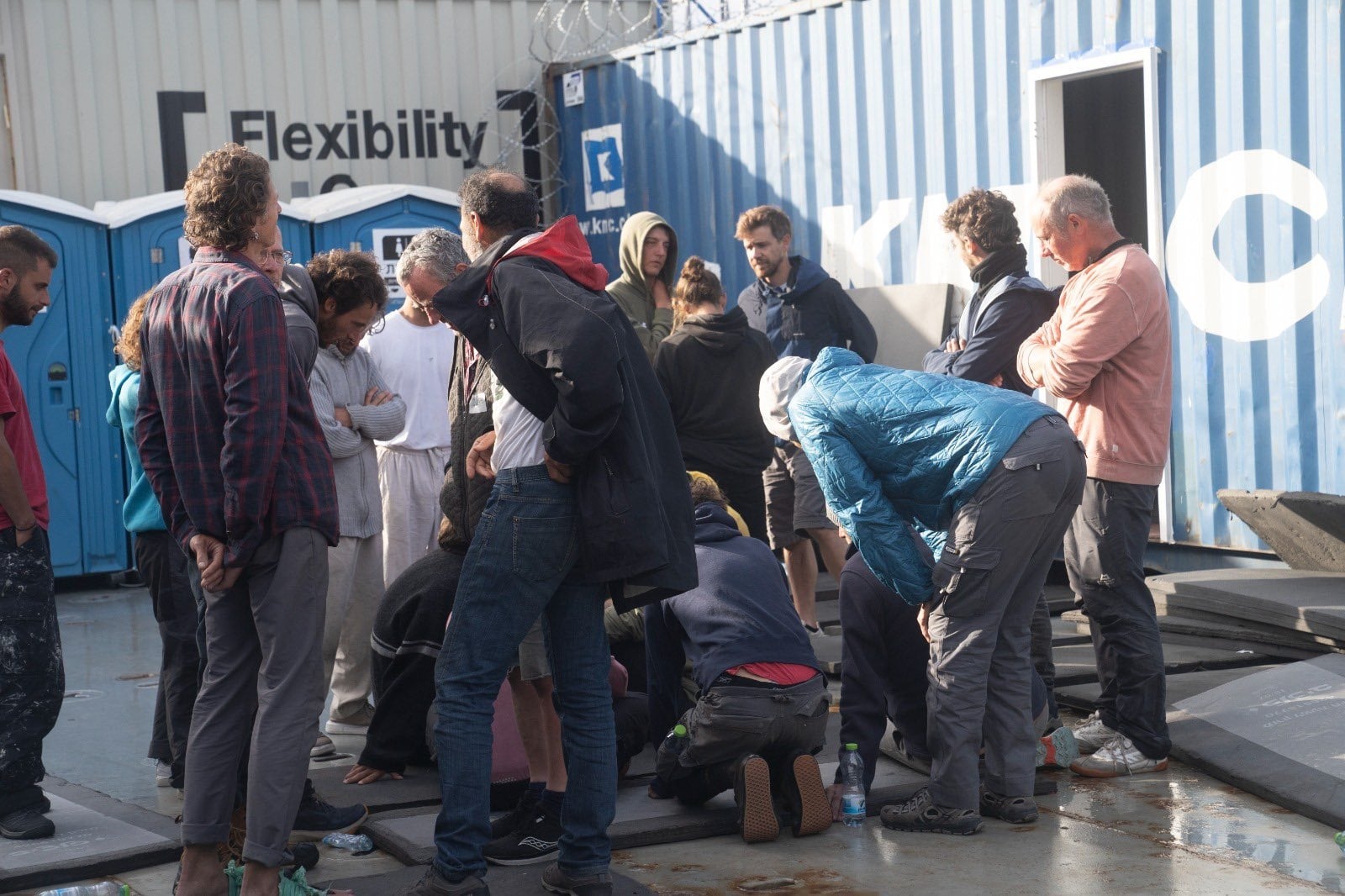
In the fraught waters of the Eastern Mediterranean, a familiar and contentious drama recently unfolded, reigniting global debate over the humanitarian situation in Gaza and the legality of naval blockades. An aid flotilla, attempting to break the Israeli blockade of the Palestinian territory, was intercepted by Israeli forces in international waters off Crete. While most of the activists aboard were subsequently released in Greece, two key figures – Saif Abu Keshek, described as an organizer, and Thiago Ávila, a prominent activist – have been brought to Israel for questioning, facing serious allegations that have amplified the already high tensions.
This incident is not an isolated event but rather the latest chapter in a long-running saga of attempts to deliver aid to Gaza by sea, often met with forceful Israeli intervention. The detention of Abu Keshek, who the Foreign Ministry alleges is 'suspected of affiliation with a terrorist organization,' and Ávila, suspected of 'illegal activity,' casts a long shadow over the intentions and actions of all parties involved, drawing sharp criticism from human rights organizations and international observers.
The Interception and Detention: A Closer Look
The flotilla, comprising several vessels, had set sail with the explicit aim of delivering humanitarian supplies to Gaza, a territory under a comprehensive Israeli and Egyptian blockade since 2007. Israeli authorities maintain that the blockade is a necessary security measure to prevent the smuggling of weapons to Hamas, the militant group controlling Gaza. Critics, however, argue that it constitutes collective punishment of Gaza’s 2.3 million residents, leading to severe shortages of essential goods, medical supplies, and reconstruction materials.
Upon interception, Israeli naval commandos boarded the vessels. The operation, according to Israeli statements, was conducted without significant resistance from the activists. However, the subsequent transfer of Abu Keshek and Ávila to Israel for interrogation, rather than their immediate release with the others, signals a more serious legal and security approach by the Israeli government. The Foreign Ministry's specific charges against them – 'affiliation with a terrorist organization' for Abu Keshek and 'illegal activity' for Ávila – suggest that Israel views these individuals not merely as humanitarian activists but as actors engaged in more illicit undertakings. This distinction is crucial, as it elevates the stakes from a simple breach of blockade to potential national security threats.
Humanitarian organizations, including those involved in the flotilla, have vehemently denied any links to terrorism and insist on the purely humanitarian nature of their mission. They argue that the interception in international waters constitutes a violation of international law and the freedom of navigation. The legal ramifications of such an interception, particularly regarding the jurisdiction over individuals detained in international waters, are complex and often contested.
Historical Context: A Decade of Flotilla Confrontations
The recent incident evokes strong memories of the 2010 Mavi Marmara flotilla confrontation, a pivotal moment that dramatically altered the discourse around the Gaza blockade. In that infamous event, nine Turkish activists were killed by Israeli commandos during a raid on a ship attempting to break the blockade, leading to a severe diplomatic crisis between Israel and Turkey. An additional activist later died from injuries sustained during the raid. The UN Palmer Report, commissioned to investigate the incident, found Israel’s naval blockade of Gaza to be legal but criticized the excessive force used by Israeli forces.
Since then, numerous smaller flotillas have attempted to reach Gaza, almost all of them intercepted by the Israeli navy without major casualties, though often resulting in arrests and deportations. These actions are part of a broader strategy by pro-Palestinian groups to draw international attention to the humanitarian crisis in Gaza and challenge the legitimacy of the blockade. For Israel, each interception is framed as a necessary measure to uphold its security and sovereignty, preventing any circumvention of its naval control over Gaza's access points.
The consistent pattern of these confrontations highlights a fundamental impasse: Israel's security concerns versus the international community's calls for humanitarian access and an end to the blockade. The detention of specific individuals like Abu Keshek and Ávila suggests a shift in Israeli strategy, perhaps aiming to deter future flotilla attempts by targeting organizers with more severe legal consequences rather than simply deporting participants.
The Humanitarian Crisis in Gaza: A Persistent Reality
The backdrop to these flotilla attempts is the dire humanitarian situation in the Gaza Strip. Years of blockade, coupled with multiple military operations and internal political divisions, have left Gaza on the brink of collapse. According to the United Nations Office for the Coordination of Humanitarian Affairs (OCHA), over 80% of Gaza's population relies on humanitarian assistance. Key indicators paint a grim picture:
* Unemployment: Among the highest globally, particularly for youth. * Infrastructure: Severely damaged, with inadequate access to clean water, electricity, and sanitation. * Healthcare: Overwhelmed and under-resourced, struggling to cope with chronic diseases and trauma. * Food Security: High levels of food insecurity, exacerbated by restrictions on imports and exports.
These conditions fuel the determination of activists to challenge the blockade, viewing their actions as a moral imperative. The argument from these groups is that if the blockade were truly about preventing weapons, Israel would allow all other goods to flow freely. The reality, they contend, is a broader economic strangulation that punishes the entire population. Israel counters that Hamas exploits any opening for dual-use goods, making a comprehensive blockade essential.
International Law and Geopolitical Implications
The legality of Israel's naval blockade of Gaza remains a contentious issue in international law. While the UN Palmer Report affirmed the legality of the blockade itself in the context of armed conflict, it did not endorse the methods used in all interceptions. Human rights lawyers and pro-Palestinian advocates often cite the principle of freedom of navigation and the laws of armed conflict that prohibit collective punishment of civilians.
From a geopolitical perspective, the incident further complicates Israel's relations with various international actors. The involvement of activists from different nationalities often draws diplomatic protests from their respective governments. The allegations against Abu Keshek, if substantiated, could be used by Israel to bolster its narrative about the security necessity of the blockade and to discredit the flotilla movement. Conversely, if the charges are seen as baseless or politically motivated, it could further erode Israel's international standing and fuel accusations of human rights abuses.
The United States, a key ally of Israel, typically supports Israel's right to self-defense and security measures, while also expressing concerns about the humanitarian situation in Gaza. European nations and the UN generally call for greater humanitarian access and a relaxation of the blockade, often criticizing Israel's actions in international waters. The incident therefore serves as a microcosm of the broader Israeli-Palestinian conflict, highlighting the deep divisions and the difficulty of finding common ground.
Looking Ahead: The Future of Aid and Access
The detention of Saif Abu Keshek and Thiago Ávila marks a significant development in the ongoing struggle for Gaza. Their questioning in Israel, potentially leading to formal charges, could set a precedent for how future flotilla participants are treated. It may deter some activists, but it could also galvanize others, turning the detained individuals into symbols of resistance against the blockade.
For the people of Gaza, the incident underscores their continued isolation and dependence on external aid, which remains precarious and often politicized. The international community faces renewed pressure to address the underlying causes of the humanitarian crisis, whether through diplomatic means to ease the blockade or by finding alternative, secure routes for aid delivery.
Ultimately, the interception of this flotilla and the subsequent detentions serve as a stark reminder that the Gaza issue is far from resolved. It is a complex tapestry woven with threads of security, humanitarianism, international law, and deeply entrenched political narratives. As the legal proceedings against Abu Keshek and Ávila unfold, the world will be watching, seeking clarity not just on their fate, but on the future of access to Gaza and the prospects for peace in a region perpetually on edge.
Stay Informed
Get the world's most important stories delivered to your inbox.
No spam, unsubscribe anytime.
Comments
No comments yet. Be the first to share your thoughts!