Global Press Freedom Plummets to 25-Year Low Amid 'Unacceptable Impunity,' Warns UN Chief
Global press freedom has reached a critical 25-year low, with UN Secretary-General Antonio Guterres condemning the 'unacceptable impunity' surrounding crimes against journalists. A staggering 85% of these offenses go unpunished, while over half of all countries now face 'very serious' conditions for media independence. This crisis, marked by rising violence and political hostility, threatens the very foundations of democracy and informed public discourse, as highlighted on World Press Freedom Day.
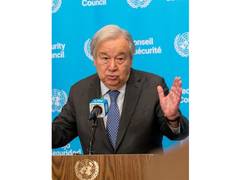
In a stark and sobering assessment delivered on World Press Freedom Day, UN Secretary-General Antonio Guterres issued a dire warning: global press freedom has plummeted to its lowest point in 25 years. This alarming decline is not merely a statistic; it represents a profound threat to democracy, human rights, and the public's right to know. Guterres unequivocally stated that without a free press, there can be no true democracy, no justice, and no peace, emphasizing that “truth-tellers must be safe.”
The Secretary-General's concerns are echoed by organizations like Reporters Without Borders (RSF), whose latest indices paint a grim picture. The data reveals that a staggering 85 percent of crimes committed against journalists go unpunished, fostering an environment of 'unacceptable impunity' that emboldens perpetrators and silences critical voices. Furthermore, 52.2 percent of countries worldwide are now classified as being in a 'very serious' condition regarding press freedom, indicating a pervasive and worsening crisis across diverse geopolitical landscapes.
The Alarming Statistics: A World in Decline
The figures presented by the UN and RSF are not just numbers; they represent lives endangered, stories untold, and truths suppressed. The 25-year low in press freedom signifies a systemic breakdown in the protections afforded to journalists, who are increasingly targeted for their work. This trend is fueled by a confluence of factors, including rising political hostility, the proliferation of disinformation, and the weaponization of legal and economic pressures against media outlets. The impunity rate of 85% is particularly chilling, sending a clear message to those who would harm journalists that they can often do so without consequence. This lack of accountability creates a vicious cycle, where violence begets more violence, and the space for independent reporting shrinks.
Moreover, the fact that over half the world's nations are in a 'very serious' state for press freedom means that billions of people live in environments where access to reliable, unbiased information is severely curtailed. This impacts everything from public health initiatives to electoral integrity, undermining the very fabric of civil society. In these regions, journalists face not only physical threats but also sophisticated digital surveillance, arbitrary detention, and economic strangulation, making their crucial work nearly impossible.
The Erosion of Trust and the Rise of Disinformation
The decline in press freedom is inextricably linked to the erosion of public trust in media and the rampant spread of disinformation. When independent journalists are silenced or intimidated, the vacuum is often filled by state-controlled narratives, propaganda, and malicious falsehoods. This creates a deeply fractured information environment where citizens struggle to distinguish fact from fiction, leading to increased polarization and a diminished capacity for informed decision-making.
Disinformation campaigns, often orchestrated by state actors or powerful interest groups, exploit the vulnerabilities created by a weakened press. These campaigns not only spread false information but also actively seek to discredit legitimate news sources, further eroding public confidence. The rise of social media, while offering new avenues for communication, has also become a fertile ground for the rapid dissemination of unverified content, making the role of professional, ethical journalism more critical than ever in sifting through the noise and presenting verified facts.
Geopolitical Tensions and the Targeting of Journalists
The current geopolitical landscape, marked by conflicts, political instability, and rising authoritarianism, has exacerbated the dangers faced by journalists. In war zones, reporters are often targeted directly, becoming casualties of conflict or victims of deliberate attacks aimed at controlling the narrative. Beyond active conflict, journalists investigating corruption, human rights abuses, or environmental crimes frequently face threats from powerful individuals, organized crime syndicates, and even state security forces.
In many countries, new laws ostensibly designed to combat 'fake news' or 'terrorism' are being weaponized to suppress dissent and criminalize legitimate reporting. These legislative measures often carry harsh penalties, including lengthy prison sentences, effectively chilling investigative journalism and forcing self-censorship. The UN's call for the safety of 'truth-tellers' is a direct response to this systematic targeting, highlighting the urgent need for international mechanisms to protect media professionals and hold their attackers accountable.
The Path Forward: Reaffirming the Value of a Free Press
Addressing this global crisis requires a multifaceted approach. First and foremost, there must be a renewed commitment from governments worldwide to uphold and protect press freedom, not merely in rhetoric but through concrete actions. This includes repealing restrictive laws, ensuring transparent legal processes, and actively prosecuting those who commit crimes against journalists.
Secondly, international bodies and civil society organizations must continue to advocate tirelessly for media independence, providing support to journalists in peril, and shining a light on abuses. Financial and logistical support for independent media, especially in challenging environments, is crucial for sustaining diverse voices and counteracting monopolistic tendencies.
Finally, the public has a vital role to play. By demanding access to reliable information, supporting independent journalism, and critically evaluating news sources, citizens can help create an environment where a free press can thrive. The future of democracy and an informed citizenry hinges on the ability of journalists to report without fear or favor. As Secretary-General Guterres underscored, a free press is not a luxury; it is the bedrock of a just and peaceful society. The global community must act decisively to reverse this dangerous trend and ensure that truth-tellers can indeed be safe.
Stay Informed
Get the world's most important stories delivered to your inbox.
No spam, unsubscribe anytime.
Comments
No comments yet. Be the first to share your thoughts!