Hegseth Under Fire: Congress Grills Defense Secretary on Costly Iran War Amid Budget Scrutiny
Defence Secretary Pete Hegseth faced a hostile reception from skeptical Democrats on Capitol Hill, marking his first congressional appearance since the Trump administration initiated the war with Iran. Lawmakers grilled Hegseth on the conflict's mounting costs, its unclear objectives, and the administration's proposed military budget. The tense exchanges highlighted deep divisions and growing concerns over the war's sustainability and strategic rationale, raising questions about accountability and future policy.
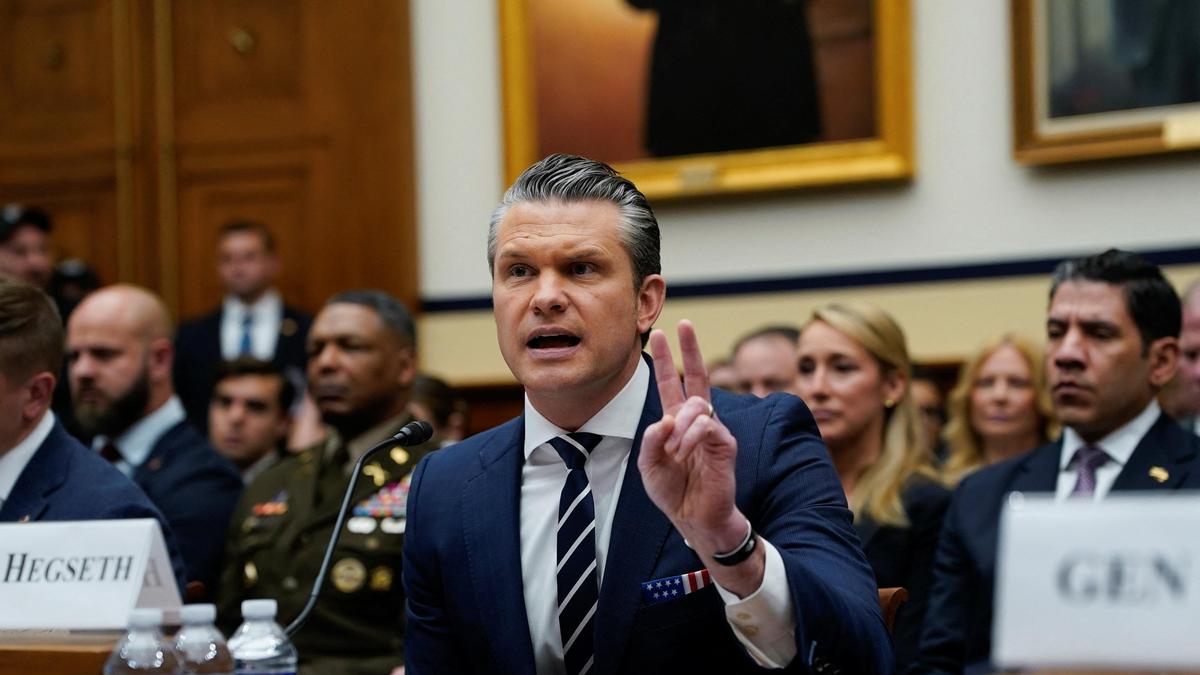
Washington D.C. – In a highly anticipated and often acrimonious session, Defence Secretary Pete Hegseth found himself in the congressional hot seat on Wednesday, April 29, 2026, facing a barrage of questions and criticisms from a predominantly skeptical Democratic-led committee. This marked Hegseth's inaugural appearance before Congress since the Trump administration's controversial decision to engage in a full-scale military conflict with Iran, a war that has now stretched on for an unspecified but clearly costly duration. The atmosphere was thick with tension, reflecting the deep partisan divide and growing public unease over a conflict whose objectives remain, for many, frustratingly opaque.
The Unfolding Crisis: A War Without Clear Endpoints
The war with Iran, initiated under circumstances that many critics still question, has evolved into a protracted and expensive endeavor. Lawmakers, particularly from the opposition benches, expressed profound frustration over the lack of a coherent strategy for victory or even a clear definition of what 'victory' would entail. "Secretary Hegseth, we are now months, if not years, into this conflict, and the American people, not to mention this body, are still waiting for a clear explanation of our end goals," asserted Representative Eleanor Vance, a senior Democrat on the House Armed Services Committee. Her sentiment was echoed by several colleagues who pointed to the significant human and financial toll the war has already exacted. The initial justifications for intervention, ranging from alleged nuclear proliferation threats to regional destabilization, have seemingly broadened or become muddled over time, leading to accusations of mission creep and a lack of transparency from the Pentagon.
Budget Battles and Fiscal Frictions
A central point of contention during the hearing was the administration's proposed military budget, which Democrats argued was disproportionately inflated by the ongoing war in Iran. Critics highlighted that the budget not only failed to adequately address domestic priorities but also seemed to underestimate the true long-term costs of the conflict. "Your budget proposal, Secretary, appears to be built on an optimistic fantasy rather than the grim reality of war," stated Senator Marcus Thorne, a leading voice on the Senate Appropriations Committee. He cited independent analyses suggesting the war's actual costs were significantly higher than official projections, potentially straining the national debt to unprecedented levels. Hegseth, in his defense, maintained that the proposed budget was a necessary investment in national security, designed to ensure American dominance and protect vital interests in a volatile region. He emphasized the need for sustained funding to counter Iranian aggression and support allied forces, though he offered few specifics on how these funds translated into tangible progress towards ending the conflict.
The Human Cost and Regional Instability
Beyond the fiscal implications, the hearing also delved into the profound human cost of the war. Questions were raised about troop deployments, casualty figures, and the psychological impact on service members. Democrats pressed Hegseth on the strategy for protecting civilian populations in the conflict zone and the broader humanitarian crisis unfolding in the region. The war has undeniably exacerbated existing instabilities, leading to significant displacement, infrastructure damage, and a heightened risk of wider regional conflagration. Experts cited during the hearing, though not present, have repeatedly warned that the conflict risks drawing in other regional powers, potentially escalating into a much larger and more devastating war. The Defence Secretary acknowledged the challenges but reiterated the administration's commitment to minimizing civilian casualties and adhering to international law, though these assurances did little to assuage the concerns of skeptical lawmakers.
Historical Echoes and Future Implications
Many lawmakers drew parallels between the current conflict and past protracted wars, notably the Iraq War, warning against repeating historical mistakes. The lack of a clear exit strategy and the seemingly ever-expanding scope of operations resonated with painful memories of previous interventions that spiraled out of control. "We have seen this playbook before, Secretary," remarked Representative Anya Sharma, a veteran legislator. "A war started on questionable intelligence, with shifting objectives, and an ever-increasing price tag. The American people deserve better than a rerun of past failures." The implications for U.S. foreign policy and global standing are profound. A prolonged, costly, and ultimately inconclusive war in Iran could severely diminish American influence, strain alliances, and divert critical resources from other pressing global challenges, from climate change to emerging geopolitical rivalries. The hearing underscored the urgent need for a re-evaluation of the administration's strategy and a more transparent dialogue with Congress and the public.
A Path Forward? Accountability and Redefining Objectives
The tense congressional exchanges with Secretary Hegseth highlight a critical juncture for U.S. foreign policy. The path forward, as articulated by many lawmakers, must involve a rigorous re-assessment of the war's objectives, a transparent accounting of its costs, and a clear strategy for its conclusion. There is a growing demand for greater congressional oversight and accountability, with calls for more frequent and detailed briefings from the Pentagon. The debate also extends beyond the immediate conflict to the broader question of America's role in the Middle East and the efficacy of military intervention as a primary tool of foreign policy. As the war continues to unfold, the pressure on the Trump administration and Secretary Hegseth to provide concrete answers and a credible roadmap to peace will only intensify. The future of American engagement in the region, and indeed the credibility of its foreign policy, hangs in the balance, awaiting a resolution to a conflict that has already proven immensely challenging and divisive.
Stay Informed
Get the world's most important stories delivered to your inbox.
No spam, unsubscribe anytime.
Comments
No comments yet. Be the first to share your thoughts!